
Senate committee approves social work licensure compact to ease cross‑state practice
Get AI-powered insights, summaries, and transcripts
Subscribe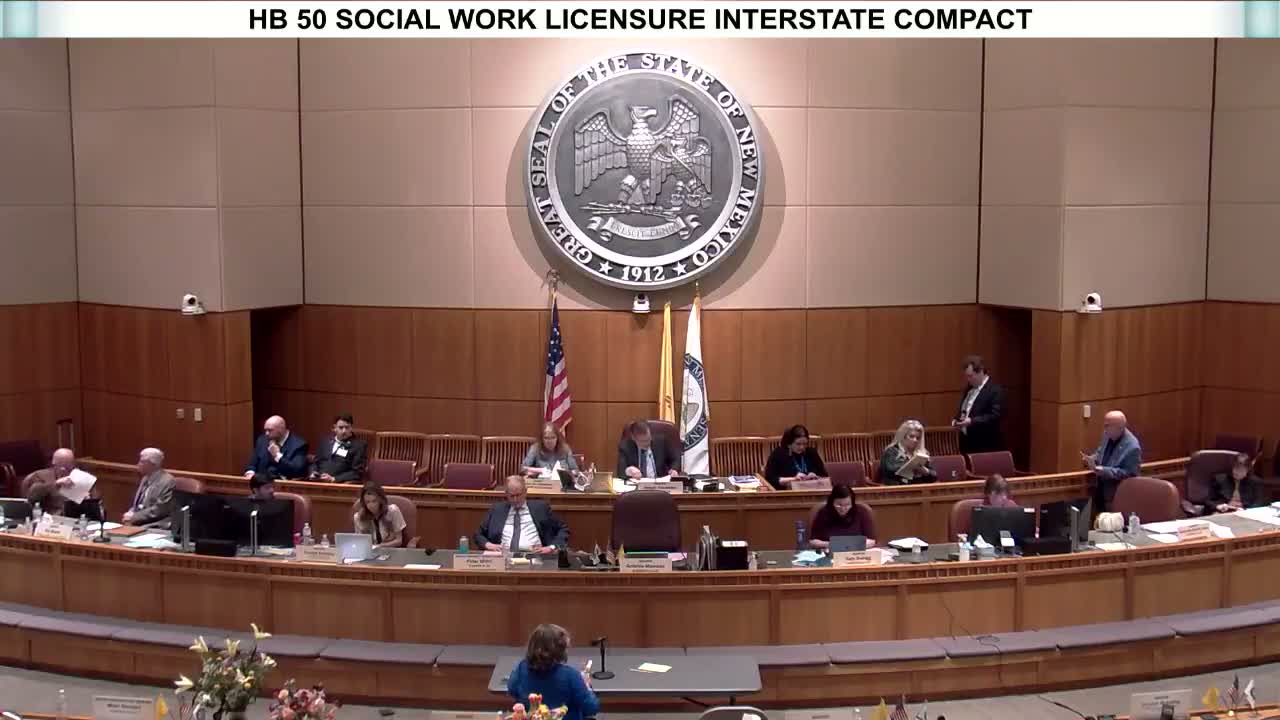
Summary
The Senate Judiciary Committee gave House Bill 50 a due‑pass recommendation after members said the compact will reduce licensing delays and support behavioral‑health workforce mobility; the bill was altered to preserve state venue, remove immunity and protect subpoena access through New Mexico courts.
The Senate Judiciary Committee unanimously recommended a due pass for House Bill 50 after senators and supporters described it as a tool to modernize social work licensure and expand access to care.
Senator Cynthia (Linda) Lopez and Senator Trujillo presented the Social Work Licensure Interstate Compact, which they said allows licensed social workers in New Mexico to practice across member states without obtaining a separate license, supporting professionals who move, travel or provide telehealth across state lines.
Nick Bukas, director for behavioral health services at the New Mexico Health Care Authority, said the authority "stands in strong support" of the bill, noting its benefits for behavioral health workforce development. Nick Madison, a trial lawyer, also supported the bill and cited two features that influenced his backing: the compact lacks a qualified‑immunity provision and does not mandate out‑of‑state venue for disputes.
Committee discussion focused on safeguards added to align the compact with New Mexico law. Members described edits that require New Mexico judicial involvement for subpoenas, removed a fixed out‑of‑state venue requirement so venue language is now silent in the bill, and excluded provisions that would create additional immunity or a "loser pays" rule. Senators praised prior negotiation work to adapt model compact language to state law and emphasized protecting access to state courts for dispute resolution.
The chair announced a due‑pass recommendation on House Bill 50; the record shows no objections and the committee proceeded by affirming the motion. The bill will advance to the next stage on the Senate calendar.