Committee approves substitute to create transferable tax credit for rehabbing vacant buildings into affordable housing
Loading...
Summary
The committee passed the HB77 committee substitute 7–3 to establish a transferable tax credit intended to incentivize rehabilitation of vacant, blighted and abandoned buildings into affordable housing, with guardrails tied to the Affordable Housing Act and Mortgage Finance Authority oversight; lawmakers raised concerns about tracking and a $100 million capacity figure.
The House Commerce & Economic Development Committee voted 7–3 to pass the committee substitute for House Bill 77, a bipartisan measure that would create an incentive‑based, transferable tax credit to spur rehabilitation of vacant, blighted and abandoned properties into affordable housing.
The bill’s presenter described the substitute as an incentive tool designed to direct private investment toward rehabilitating underutilized downtown buildings and other vacant properties. “This is an incentive based tool to increase local economic development growth and create affordable housing in vacant, blighted, and abandoned buildings,” the presenter said.
Housing advocates and industry witnesses urged the committee to approve the measure. Roger Valdez of the Center for Housing Economics said the law would allow remediation costs to be eligible and pointed to thousands of vacant properties statewide, including at least 1,000 in Albuquerque. Miles Conway, CEO of the New Mexico Home Builders Association, told members that developers can execute these projects more quickly using existing infrastructure.
The committee focused on guardrails: the substitute ties eligibility to being a qualified grantee under the Affordable Housing Act, which triggers long‑term land‑use restriction agreements enforced by the Mortgage Finance Authority (MFA). Committee members asked how clawbacks and transfers of credits would be enforced; presenters said MFA regulation, reservation processes, and reporting will be used and emphasized that the bill’s cited $100 million figure refers to capacity/reservation for tax credits, not a direct appropriation.
Some members raised fiscal and oversight questions. One lawmaker cited a Legislative Finance Committee concern that broadly transferable credits can be difficult to track and sometimes subsidize projects that would have proceeded without credits.
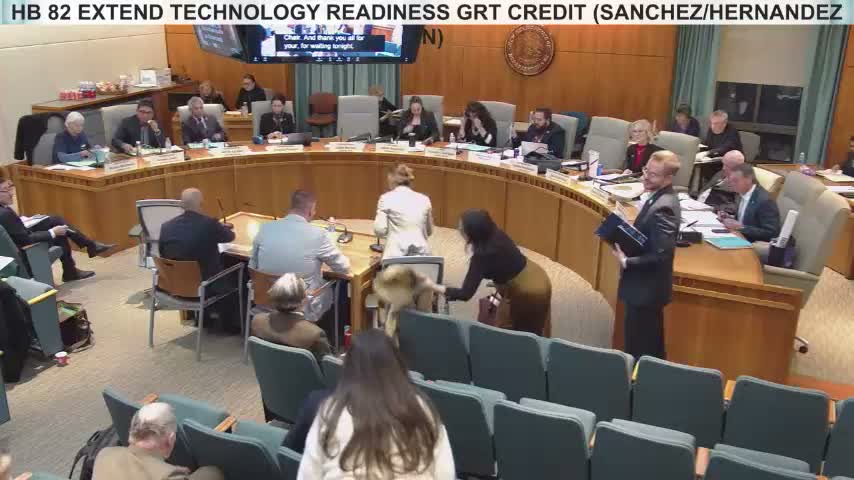
Representative (sponsor) moved passage of the committee substitute; the roll‑call vote was 7 yes, 3 no. The substitute will advance from committee for further consideration.
What’s next: The substitute moves on as the committee’s recommendation and may face further review in tax or finance committees for fiscal analysis.