
Committee hears bill to modernize Public Regulation Commission agency; members press for clearer guardrails
Get AI-powered insights, summaries, and transcripts
Sign Up Free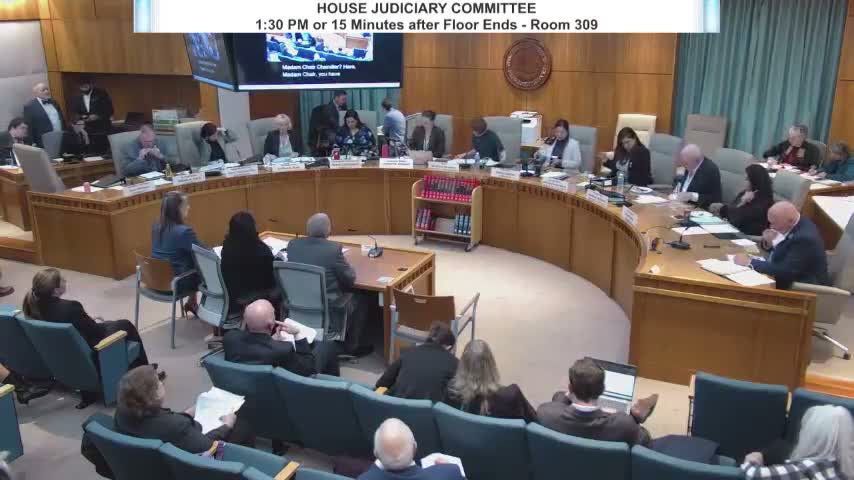
Summary
Representative Ortez introduced HB70 to reorganize the Public Regulation Commission support agency and create a utility oversight fund to retain regulatory fees. Committee members asked for clearer language on Open Meetings Act compliance, ex parte notices and the role of hearing examiners; sponsors agreed to meet with legislators to refine the bill.
Representative Ortez opened the committee by presenting House Bill 70, which would separate the duties of the Public Regulation Commission from the work of its supporting agency, clarify the chief of staff’s day‑to‑day responsibilities, and establish a utility oversight fund to allow the PRC to retain fees collected from regulated entities rather than sending those dollars to the general fund. Ortez said the restructuring would give the agency flexibility to adapt to changes in renewable energy, grid modernization and broadband.
The sponsor told the committee the proposal preserves legislative and executive oversight while removing outdated statutory mandates such as fixed bureau or division structures. The bill also clarifies the commission’s authority to seek injunctive relief when utilities break the law, and the sponsor introduced commission experts including Greg Nyberg and a chief of staff who stood for questions.
During public comment the committee received limited in‑person support; Sherry Goranhorse of PNM said the bill modernizes the system and promotes transparency. No one spoke in opposition during the live public comment portion.
Representative Richard McQueen pressed several procedural and due‑process concerns, asking how a smaller commission would comply with the Open Meetings Act and how the bill treats the role of hearing examiners versus staff attorneys. PRC witnesses said the bill provides flexibility, permitting the commission to direct whether a hearing examiner must issue a written recommended decision, but emphasized that substantive deliberations must happen in noticed sessions. PRC officials also said staff routinely file non‑substantive pro se e‑mails to the docket and that the proposed language intends to avoid over‑noticing trivial calendar or scheduling communications.
Several members remained uneasy that the draft could blur roles between commissioners, hearing examiners and agency attorneys and could narrow notice of some ex parte contacts. In light of those concerns the sponsor agreed to meet with Representative McQueen and committee staff to work through statutory language rather than pursue an immediate committee vote.
The committee did not take a final vote on HB70; the sponsor and members agreed to continue negotiations and return with clarified statutory text.