
Madison approves first reading to rezone two parcels for potential data-mining facility
Get AI-powered insights, summaries, and transcripts
Sign Up Free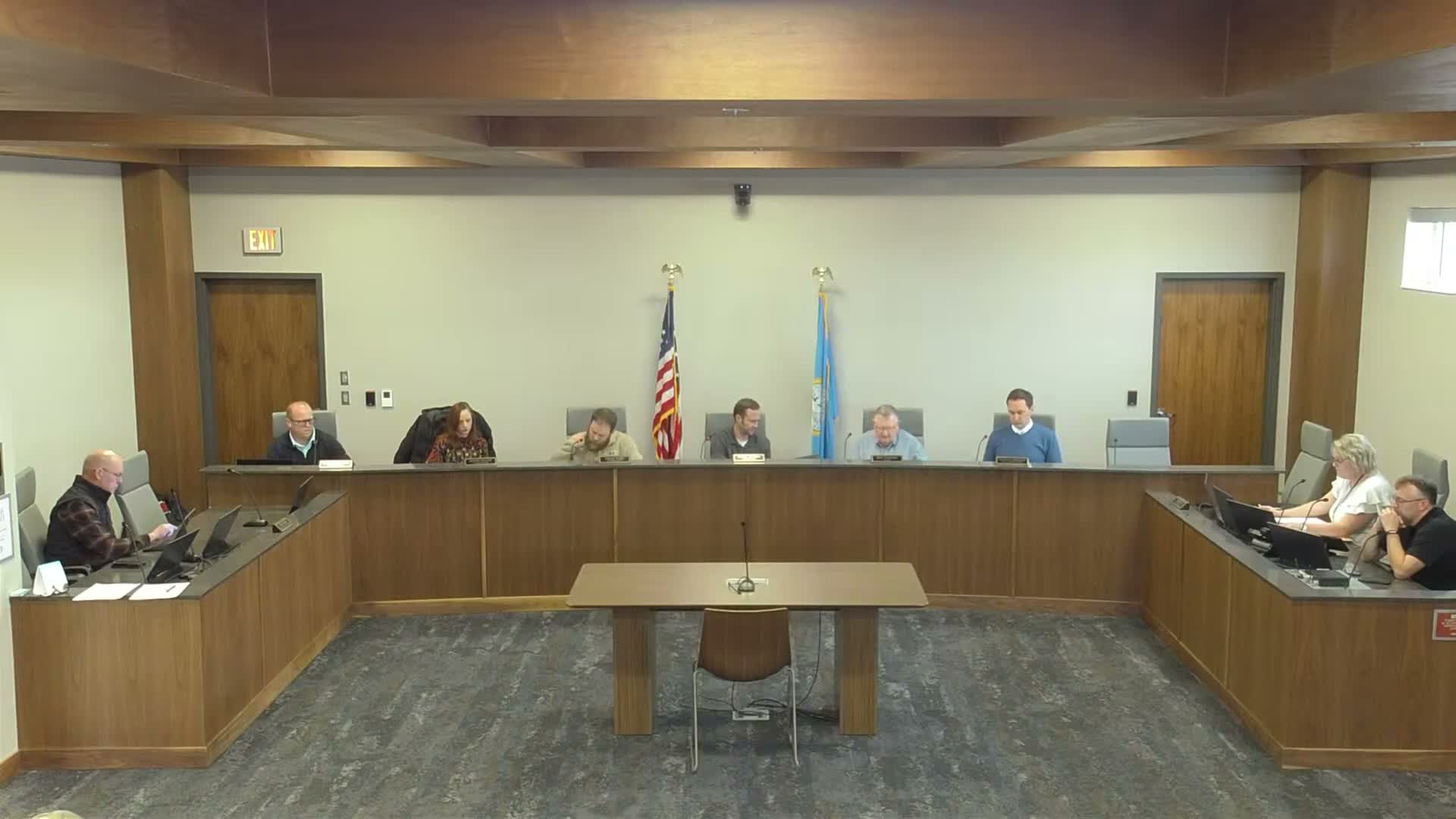
Summary
The Madison City Commission voted to approve the first reading of Ordinance 1685 to rezone two parcels to light-manufacturing, clearing the way for later talks with a potential data-mining operator; staff and a public commenter focused on power needs, data-rate eligibility and next regulatory steps.
MADISON — The Madison City Commission on first reading approved Ordinance 1685 to rezone two city parcels to light-manufacturing, a preliminary step that would make the sites eligible for potential data-mining or small data center operations. The vote was taken after public comment and a staff presentation explaining constraints and next steps.
Jamieson, a city staff member, introduced the ordinance as a continuation of a previously tabled item and said the planning commission recommended approval. A planning-commission vote tally was corrected during the meeting to 4–2. City staff emphasized this was only a first reading; a second reading and subsequent planning-and-zoning review — including conditional-use permitting and site-specific conditions such as sound mitigation — would be required before any facility could proceed.
Resident Craig Hoffman, who spoke during public comment, asked whether the proposal would be a “pit mining” or data-mining operation, whether it could expand beyond initial container-like facilities and how such growth would affect city power. "My name is Craig Hoffman," he said before raising concerns about scale and grid capacity.
City staff and a Heartland Energy representative told the commission the project is currently being discussed as roughly a 10-megawatt load expected to run continuously. City staff said the municipal system (excluding DSU) is approximately 15 megawatts in total, and that adding a 10-megawatt customer would still leave room for an additional 2–5 megawatts of growth under current assumptions. Staff emphasized that larger expansions that require system upgrades would be the responsibility of the applicant and spelled out in any future contract or service agreement.
Staff also explained data-rate eligibility tied to Heartland Energy would require minimum usage levels (discussed in the meeting as roughly 5 megawatts and above), and that the city had signed a letter of intent to pursue discussions with a company identified as Gig Energy. A Heartland representative said the new load would be interruptible — the utility could curtail service if needed — and that Heartland has vetted prospective firms to some extent.
Mayor Lindsay called the voice vote after discussion; the motion carried. The ordinance’s first reading now advances to a second reading at a future commission meeting, and any prospective operator would then face planning-and-zoning review and a conditional-use process that would address site design, noise mitigation and other local impacts.
Actions at the meeting related to the ordinance included a motion to approve the first reading of Ordinance 1685 (amend Appendix B, zoning section 17.02). The motion was seconded and passed by voice vote; the commission will consider a second reading before final adoption.