
Civil Rights and Judiciary Committee advances substitute House Bill 2,385 after split vote over liability rules
Get AI-powered insights, summaries, and transcripts
Sign Up Free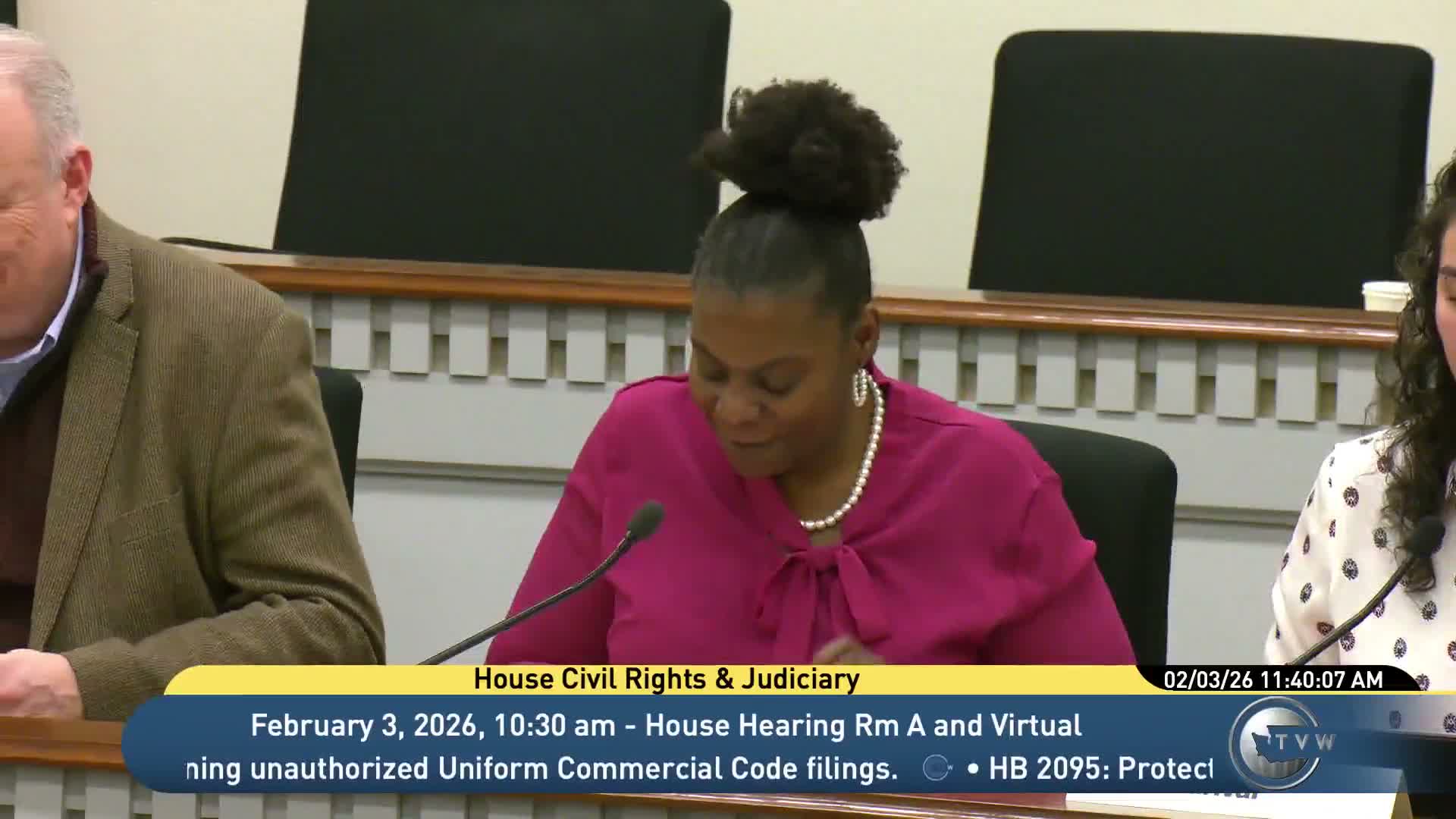
Summary
By an 8-5 vote Feb. 3, the Civil Rights and Judiciary Committee reported a substitute labeled 'House Bill 2,385' out of committee with a due-pass recommendation after debate over burden-shifting and joint liability for harms to vulnerable roadway users.
The Civil Rights and Judiciary Committee on Feb. 3 voted 8-5 to report a substitute identified in committee as 'House Bill 2,385' out of committee with a due-pass recommendation after a contentious debate over how the bill allocates legal burdens in cases involving vulnerable users of public roadways.
Vice Chair Representative Farber, speaking in favor, said the bill "is about making sure that vulnerable users who are accessing our roadways, who are harmed in that process have the opportunity to receive adequate remedies." Farber described the measure as the product of collaboration and urged colleagues to support the substitute.
Representative Abel and others raised concerns about provisions that could shift the burden of proof. Representative Abel argued judges and juries should resolve claims and warned that some burden-shift mechanisms can prevent meritorious claims from being heard, urging the committee to adopt an amendment that would remove a proposed burden shift. "Let them do their jobs," Abel said, framing the courts as the appropriate forum for resolving negligence claims.
Representative Jacobson said he supported the bill "for today" but flagged several reservations, including the presumption of negligence the bill creates for certain cases, the possibility of expanded joint-and-several liability, and the risk that changes could encourage additional litigation. Jacobson said he hoped the bill could be refined before floor consideration.
After debate, staff called a roll. The roll call recorded eight ayes and five nays; staff then announced that by that vote the "substitute with House Bill 2,385 is reported out of committee with a due pass recommendation." The committee record does not show a final floor action in committee; the procedural result is a due-pass recommendation to the next stage.
What it means next: The committee reported the substitute to the next legislative stage with a due-pass recommendation; any further amendments or floor consideration would take place in the full chamber.
Sources: Committee proceedings, Civil Rights and Judiciary Committee, Feb. 3. Quotes and vote totals are drawn from the committee transcript.