
Senate committee hears package of tax deferrals and financing tools aimed at boosting affordable housing
Get AI-powered insights, summaries, and transcripts
Subscribe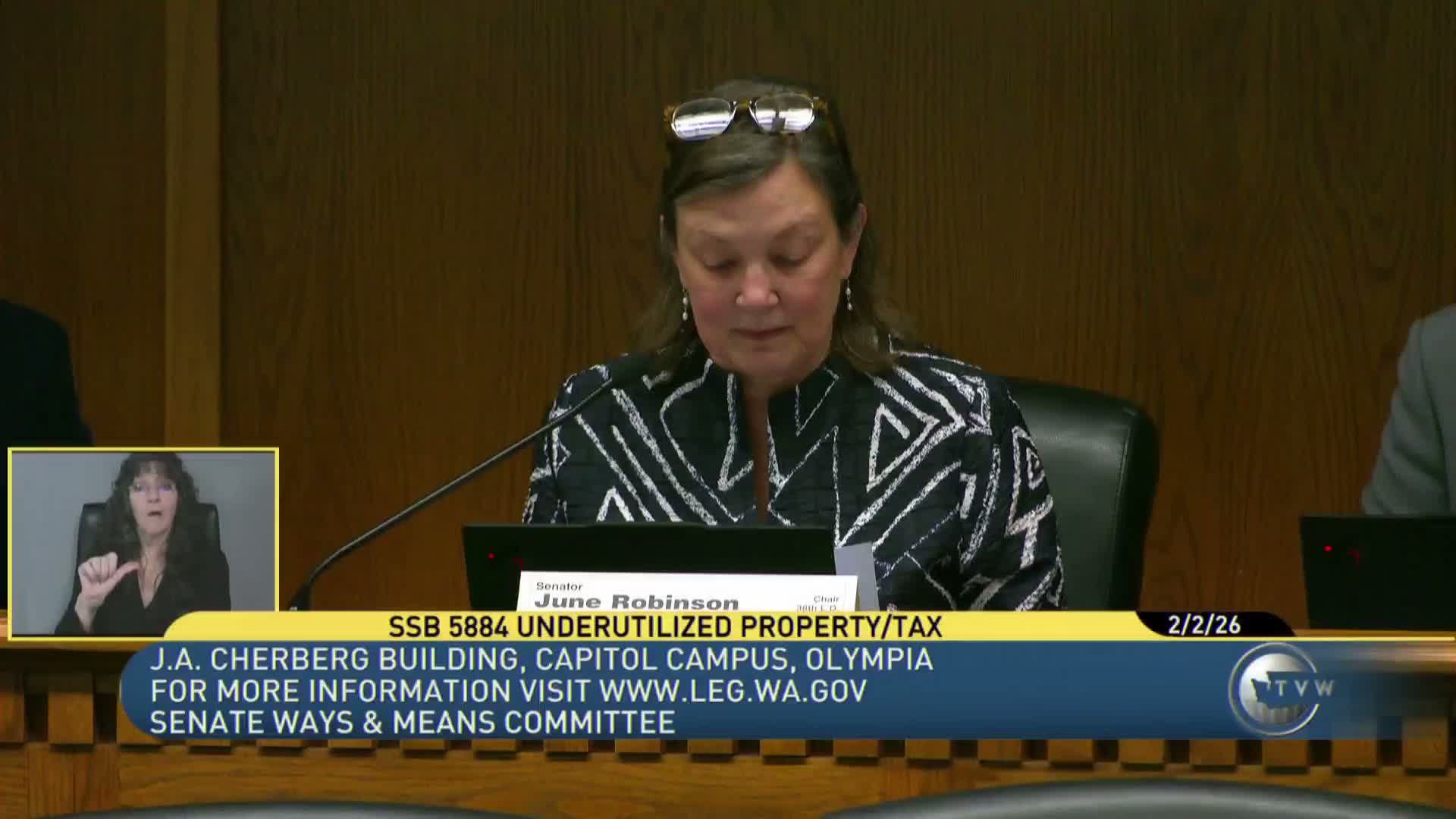
Summary
The Senate Ways and Means Committee heard multiple bills Feb. 2 to expand sales/use tax deferrals, extend temporary property tax exemptions and create financing tools aimed at unlocking affordable and workforce housing; developers, cities and nonprofits supported the measures while some contractors warned about labor agreement language.
The Washington Senate Ways and Means Committee on Feb. 2 heard a set of bills sponsors and advocates say would make it easier to build affordable and workforce housing by lowering upfront costs and expanding financing options.
Committee staff said Substitute Senate Bill 5,884 would widen an existing sales and use tax deferral — originally limited to vacant surface parking lots in urban centers — to include vacant, partially used or underutilized land suitable for multifamily housing. Under current and proposed rules, qualifying projects generally must reserve at least 50% of units for very low, low and moderate‑income households; the bill would let a city designate areas with reduced affordability requirements where projects could meet a 20% affordability floor. Alia Kennedy, committee staff, said the fiscal note estimates a state revenue reduction of roughly $2.7 million in the current biennium and about $12.5 million in the next biennium if the bill advances.
Developers and city officials described localized benefits. Kitty Klitsky, a Spokane city council member, said the city had pilot tested the incentive and that it helped conditional approvals for projects equating to hundreds of units. "These projects were unlikely to proceed without the incentive," Klitsky testified, adding the flexibility would help projects "pencil" and bring new life to underutilized downtown properties.
At the same time, some construction trade representatives objected to language they said could encourage project‑level labor agreements that limit bidders. Carolyn Logan of the Associated Builders and Contractors Inland Pacific Chapter said language in the bill’s Section 5 could be interpreted to favor project labor or community workforce agreements that go "beyond prevailing wage and apprenticeship utilization," and argued such terms could discourage small, nonunion contractors from bidding.
Committee staff also briefed related measures. Senate Bill 6,256 would expand a temporary property tax exemption for nonprofit‑owned low‑income rental housing during initial construction and renovation to include portions of property that will later be used for qualifying nonprofit purposes (childcare, behavioral health, youth services), and extend the exemption period from two years to three. Witnesses representing nonprofit housing developers and interlocal housing partners described how a third year of temporary exemption could materially affect project feasibility, citing examples in which an added year could save hundreds of thousands of dollars on certain projects.
Two bills would change financing and program rules. Substitute Senate Bill 6,018 would modernize the Washington State Housing Finance Commission statute to permit additional tools, including limited forms of direct lending and longer bond counsel terms; the commission’s leadership said statutory debt limits would remain in place. Substitute Senate Bill 6,028 would establish a Commerce‑administered revolving loan fund for mixed‑income affordable homeownership development, with loans to be proportional to the affordable share and subject to a 99‑year affordability requirement. Habitat for Humanity’s chief advocacy officer, Ryan Donahue, testified that lower interest construction financing for small infill projects could save tens of thousands of dollars per unit and make projects feasible.
Supporters across the testimony — cities, county housing agencies, Mercy Housing Northwest, Habitat for Humanity and nonprofit developers — argued these changes are technical, targeted and modest in fiscal scale but important for unlocking complex developments that co‑locate services like childcare and behavioral health. Several witnesses requested targeted amendments: developers and some housing providers asked that affordability mix requirements be adjusted to better fit workforce housing finance models; a construction trade witness asked sponsors to remove or clarify language that might be read to require project labor agreements.
No formal votes were taken; the committee proceeded to later bills on the agenda.
The committee moved the hearing along and asked staff and interested parties to provide suggested amendment language on the affordability mix and labor‑agreement concerns. If the bills advance, the next steps will be committee markup and floor consideration in subsequent legislative committee calendars.