Get Full Government Meeting Transcripts, Videos, & Alerts Forever!
Get email alerts on the Motorcycle Fees topic
No spam. Unsubscribe anytime.
Committee hears bill to create lower motorcycle registration fee, staff estimates multimodal revenue loss
Summary
House Bill 2,601 would create a motorcycle‑specific lower weight‑fee category ($15) effective July 2027. Staff estimate it would affect about 190,000 transactions and reduce multimodal transportation account revenue by roughly $3.8 million per year (about $7.6 million in the next biennium); sponsor and riders called it an equity fix.
House Bill 2,601 would add a new, lower registration weight‑fee category specifically for motorcycles so they would pay $15 instead of the current $35 weight fee tied to the lowest vehicle weight class. Committee staff said the new fee would take effect in July 2027.
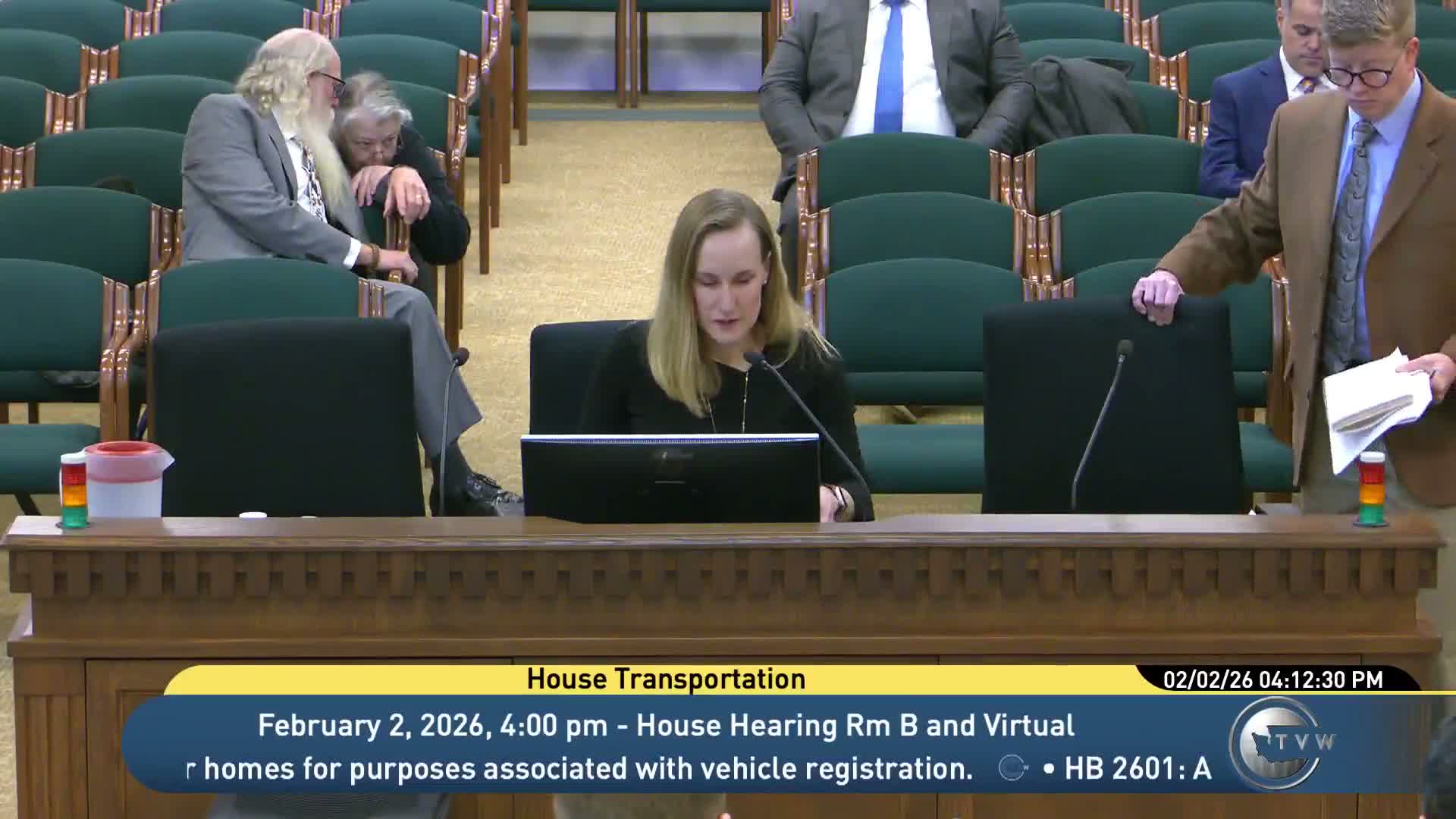
Lily Smith, committee staff, summarized the current rule that motorcycles pay the $35 fee tied to the lowest weight category (vehicles under 4,000 pounds) and explained the bill would create a motorcycle‑specific, lower fee. Mark Mattson, fiscal staff, estimated the change would affect approximately 190,000 transactions and reduce revenue flowing to multimodal transportation accounts by about $3.8 million per year (about $7.6 million in the next biennium), with a Department of Licensing programming cost of roughly $20,000.
Sponsor Representative Addison Richards (26th District) described the measure as one of fairness for working‑class and retired riders, noting "there is no motorcycle that is 4,000 pounds" and urging support. Larry Walker, volunteer legislative affairs officer for Abate of Washington, testified in support and said the group requested a 2027 effective date to give agencies time to reallocate funds. "We've been trying to do this for many, many, many years," Walker said, arguing the fee better matches the weight and wear motorcycles place on roads.
Committee members asked clarifying questions; no vote was recorded in the session. The public hearing record shows the committee closed testimony and proceeded to the next bill.