
Bill would exempt manufacturer‑described travel vans from Sound Transit motor‑vehicle excise tax
Get AI-powered insights, summaries, and transcripts
Subscribe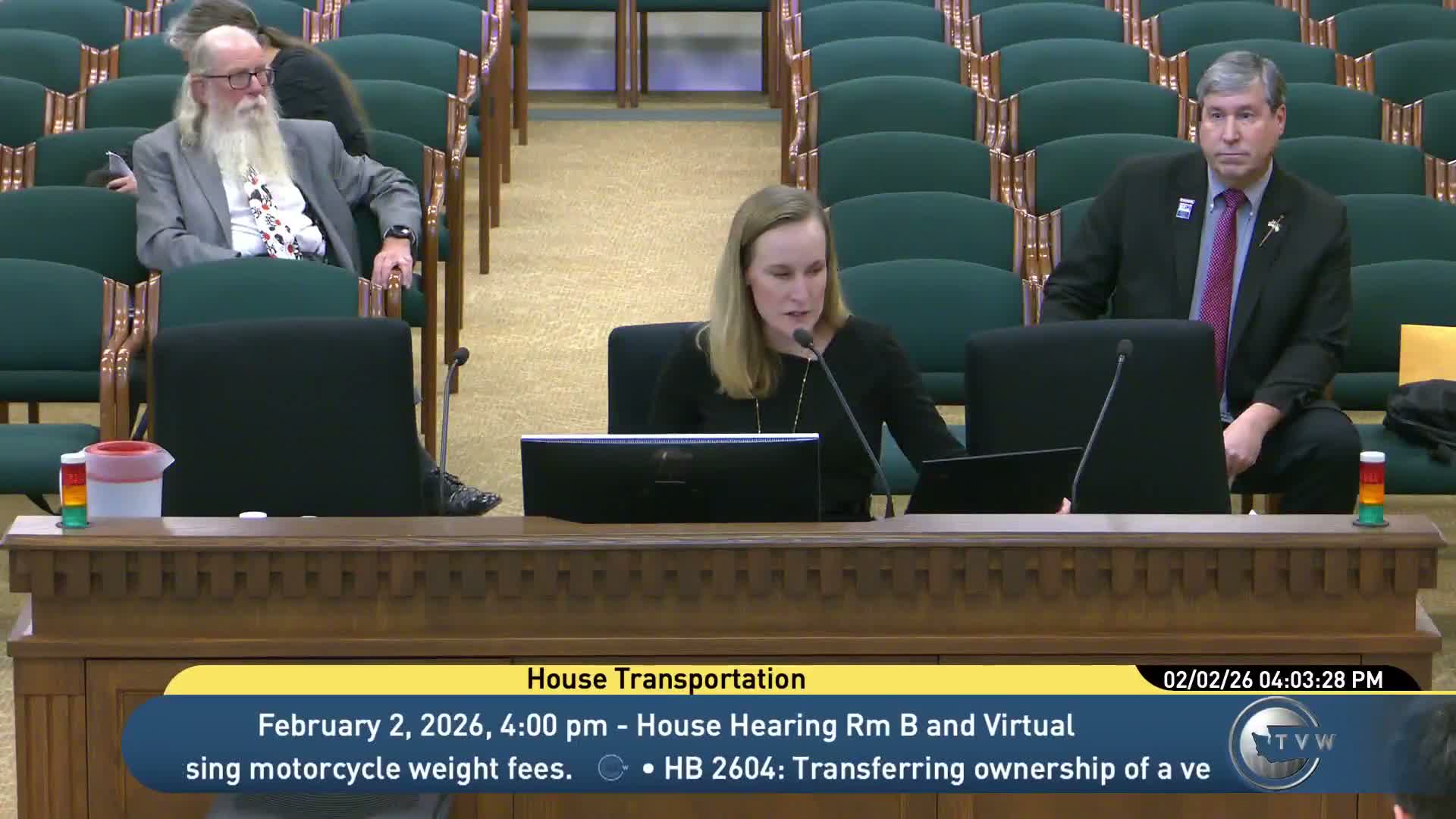
Summary
House Bill 2,305 would exclude 'travel' or 'camper' vans from a 1.1% regional motor vehicle excise tax and create a new DOL category; staff estimate it affects about 200 taxpayers and DOL flagged a $129,000 one‑time programming cost for FY2027. Public testimony raised equity and sales‑tax concerns.
House Bill 2,305, introduced at a Feb. 2 public hearing, would distinguish manufacturer‑described "travel" or "camper" vans from motor homes and exclude travel vans from the 1.1% Sound Transit motor vehicle excise tax applied at registration.
Lily Smith, staff to the committee, told members that the bill "differentiates travel vans from motor homes" and defines travel vans by manufacturer description and by a body that fully encloses the driver and offers aspects of a temporary living area. Sandy Myers, fiscal staff, said the Department of Revenue listed no fiscal impact because it expects costs to be absorbed within existing resources, but the Department of Licensing listed a one‑time programming cost of $129,000 in fiscal year 2027 to add a new category ensuring travel vans are excluded. Myers said the change "would impact approximately 200 taxpayers," while revenue impacts were listed as indeterminate.
Sponsor Representative Michael Keaton (25th District) framed the bill as an affordability and classification issue, saying some owners now pay as much as $1,326.25 a year to register a small vehicle and arguing the current classification treats smaller travel vans like higher‑cost motor homes.
Dennis Rhodes, a South Hill resident testifying in support, urged the committee to consider how the tax is applied in Pierce, King and Snohomish counties and said owners are effectively taxed on accessories and interior conversions. "I'm paying RTA taxes on the cost of interior appliances, solar panels, air conditioners, heating system, cabinetry, plumbing, and electronics," Rhodes said, and he provided written attachments and asked the committee to accept those materials before action day.
Committee members had brief technical questions about the vehicle‑count estimate and costs; no vote or committee action was taken in the recorded session. The hearing record shows the public comment period closed and the committee moved on to the next bill.