
House committee advances substitute for HB 2489 limiting criminalization of life-sustaining activities on public property
Get AI-powered insights, summaries, and transcripts
Sign Up Free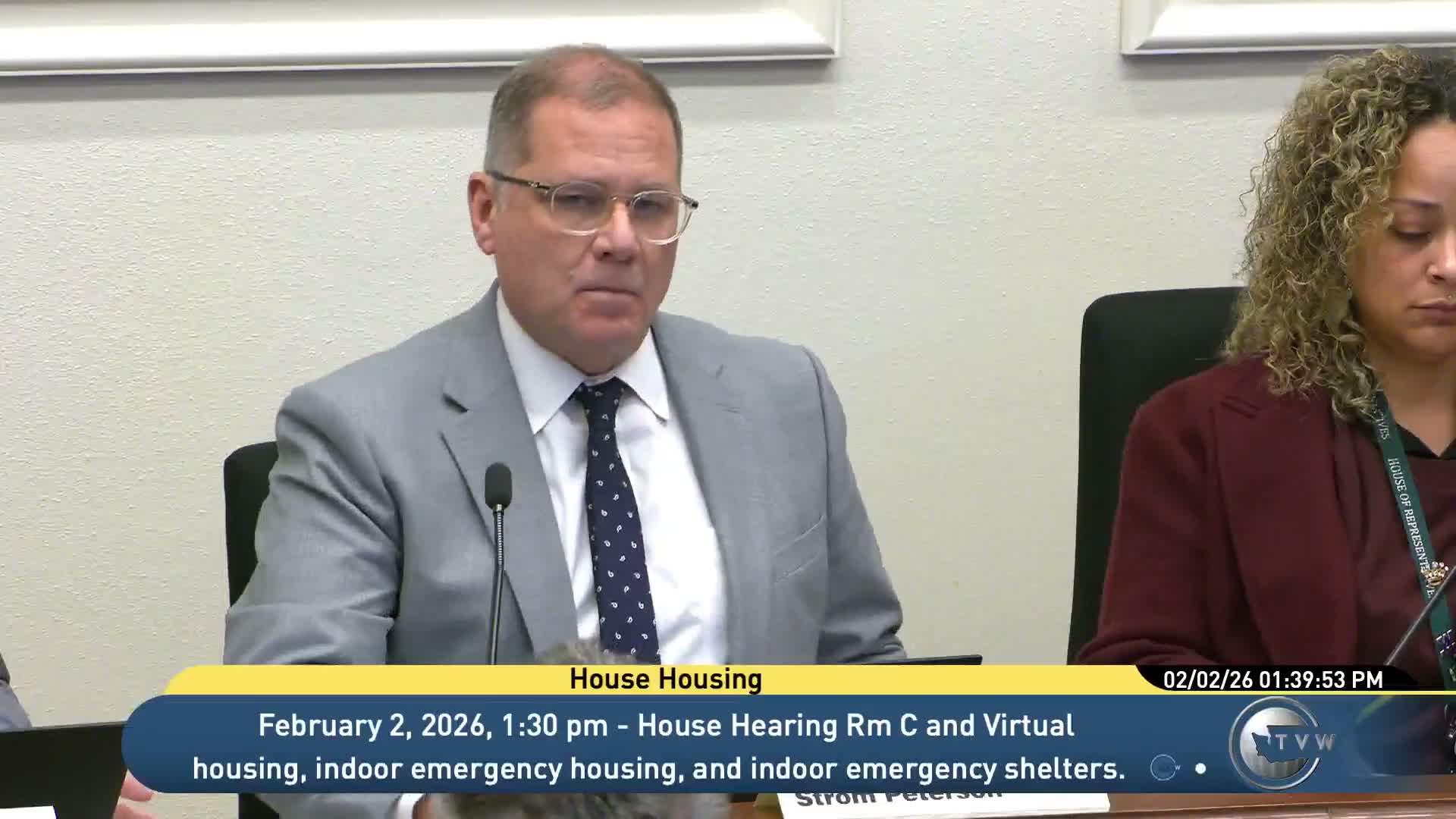
Summary
The House Housing Committee advanced substitute House Bill 2489, which would bar local governments from criminalizing life-sustaining activities on public property unless adequate alternative shelter space was demonstrably available; the substitute, with several amendments adopted or withdrawn, was reported out by a 9–8 vote.
The House Housing Committee on Feb. 2 voted to report substitute House Bill 2489 out of committee with a "do pass" recommendation after a detailed staff briefing and amendment debate. Audrey Vasek, staff to the committee, walked members through the substitute by Representative Gregersen, which would prohibit local laws that criminalize or penalize life-sustaining activities on public property unless the jurisdiction can demonstrate adequate alternative shelter space was available at the time and place of the conduct.
The proposed substitute narrows the definition of "life-sustaining activities" to moving, resting, sitting, standing, lying down, sleeping, protecting oneself and personal property from the elements, eating and drinking, and it adds an "imminent" standard for exemptions where conduct creates an imminent, articulable risk of serious harm or obstructs emergency ingress/egress or compliance with disability-access laws. The substitute also allows local governments to adopt policies for verifying shelter bed availability, coordinating with providers, offering outreach and voluntary engagement before enforcement, providing notice and opportunity to relocate, and storing personal property. It authorizes interlocal agreements to establish regional coordinated entry or shelter capacity.
Members discussed multiple amendments. Representative Barkis moved VAS 243 to allow enforcement of public-space rules at park facilities where children are likely to be present regardless of shelter availability; Representative Entenmann opposed the amendment, arguing it would undermine the uniform standard in the substitute; the amendment failed. Representative Zahn moved VAS 245 to clarify that portable mats and beds in drop-in overnight shelters, including those run by faith organizations, qualify as adequate alternative shelter space; that amendment was adopted. Representative Engel's amendment on weapons screening (VAS 247) and Representative Dufo's amendment (VAS 246) were withdrawn; staff clarified that if shelters require weapons screening and an individual cannot store a weapon, that shelter might not qualify as "adequate alternative shelter" under the bill as drafted.
Supporters, including the sponsor Representative Gregersen and Representatives Timmons and Zahn, said the substitute seeks to create a consistent statewide standard and encourage regional coordination of shelter capacity. Opponents including Representatives Dufo and Lowe expressed concern about local capacity, enforcement burdens, and potential effects on public safety and local maintenance of public spaces. The final roll-call produced 9 ayes and 8 nays; substitute HB 2489 was reported out of committee with a due-pass recommendation.
The committee adjourned for the week after the vote; staff indicated they would follow up with members regarding questions raised during debate.