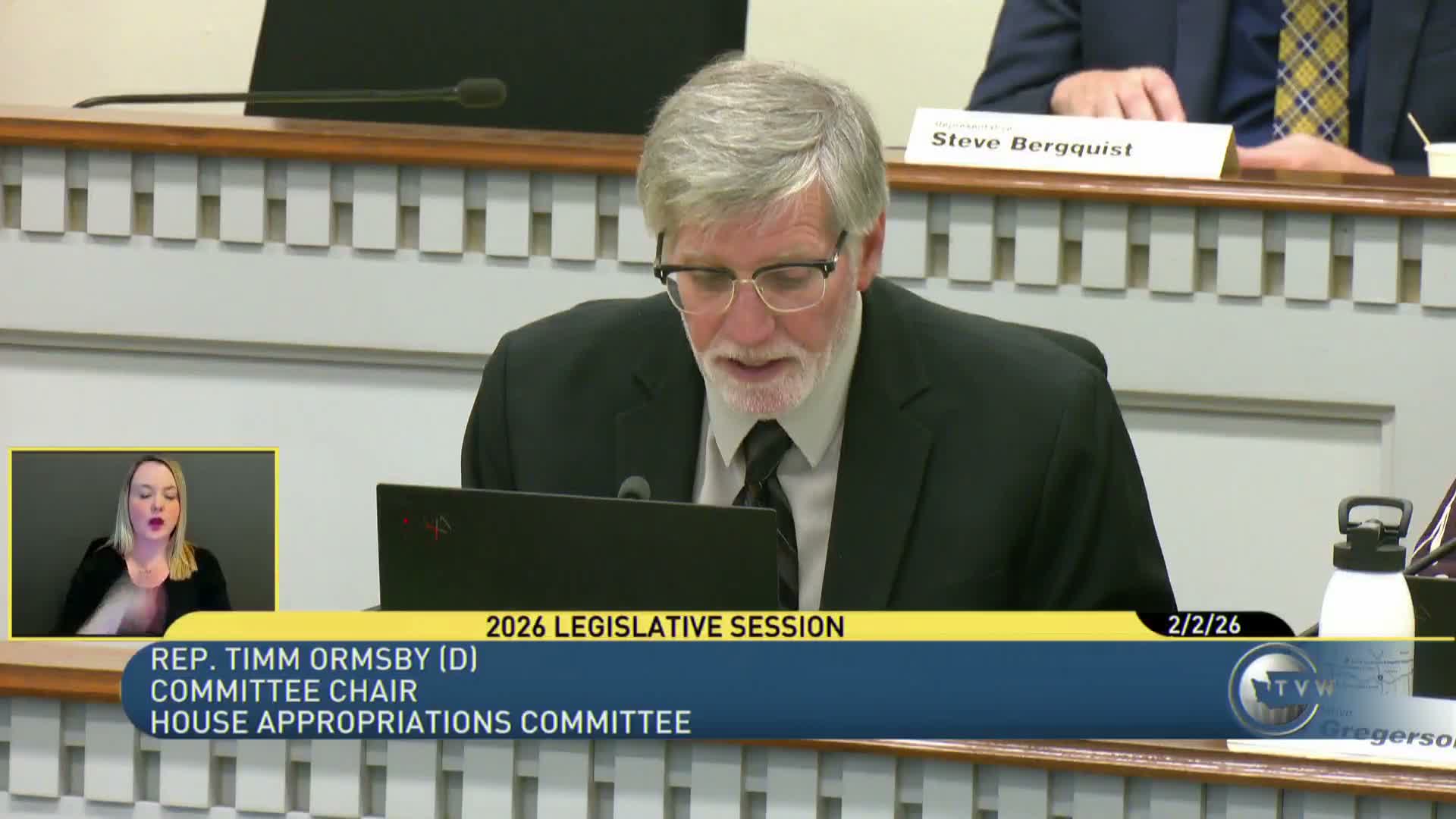
Committee hears competing views on taxing nonprofit insurers’ surplus to fund premium help
Loading...
Summary
Supporters told the Appropriations Committee that taking a small portion of nonprofit insurers’ excess surplus could expand Cascade Care premium assistance; insurers and business groups warned the measure would destabilize nonprofit plans and raise costs for customers. The committee heard staff fiscal estimates but took no final vote on the bill.
Supporters and opponents presented sharply different pictures of House Bill 2073 at an Appropriations Committee hearing. The bill would require nonprofit health carriers to submit surplus amounts to the Office of the Insurance Commissioner (OIC) and authorize the OIC, beginning July 1, 2026, to deem a carrier’s surplus "excessive" if it exceeds 600% of its risk-based capital (RBC) requirement and then require payment of 3% of that determined excess into the state health care affordability account to fund Cascade Care premium assistance.
In a staff briefing, Megan Morris, staff to the committee, said the OIC would make the annual determination and listed procedural safeguards including the carriers’ right to request hearings. Morris noted the fiscal analysis on a senate companion estimated that, based on 2024 year‑end reported surplus, 13 nonprofit carriers exceeded the 600% RBC threshold and that OIC projected roughly $80 million in additional revenue for fiscal year 2027, while acknowledging uncertainty because carriers could alter financial practices.
Witnesses for the bill urged lawmakers to act. Patrick Connor of NFIB said surplus ‘‘should be returned to consumers’’ or directed to affordability programs, and that previous requests to account for surplus in rates have not been enforced. Sam Hatzenbieler of the Economic Opportunity Institute cited OIC data showing large growth in surplus holdings and called the proposal a modest reinvestment of unspent premiums and investment earnings back into the safety net. Jim Freeberg of the Patient Coalition of Washington said the measure builds on the health care affordability account and would help families who pay thousands annually for exchange coverage.
Insurers and business groups warned of risk to nonprofit carriers. David Foster of the Association of Washington Healthcare Plans said nonprofit plans are required to hold higher reserves and lack parent‑company capital access, so pulling funds could weaken local balance sheets. Carrie Tellesen (testifying for Regence BlueShield) argued reserves average about $3,100 per member and are a necessary safety net for paying claims. Gary Strandigan of Premera Blue Cross said taxing nonprofit plans would raise costs and could fail to produce stable revenue, and he noted Premera’s recent losses and tax contributions.
Committee members asked whether reducing surplus would increase pressure for higher premiums; witnesses acknowledged reserves can act as a short‑term buffer but stressed that the full and long‑term impacts depend on carrier responses and the OIC’s exercise of discretion and hearings process.
The committee did not take a final action on HB 2073 during this meeting; the public hearing concluded and staff were directed to prepare briefings on other bills.