Cannabis industry seeks packaging changes to cut plastic; health officials warn of child‑safety risks
Loading...
Summary
Senate Bill 63‑03 would let LCB allow multi‑use resealable packaging and loosen per‑serving wrapping for edibles, and require removable‑battery standards for vapes. Producers and sustainability groups said changes reduce millions of pieces of plastic; poison‑center and public‑health witnesses warned looser unit‑dose rules increase accidental ingestions, particularly among young children.
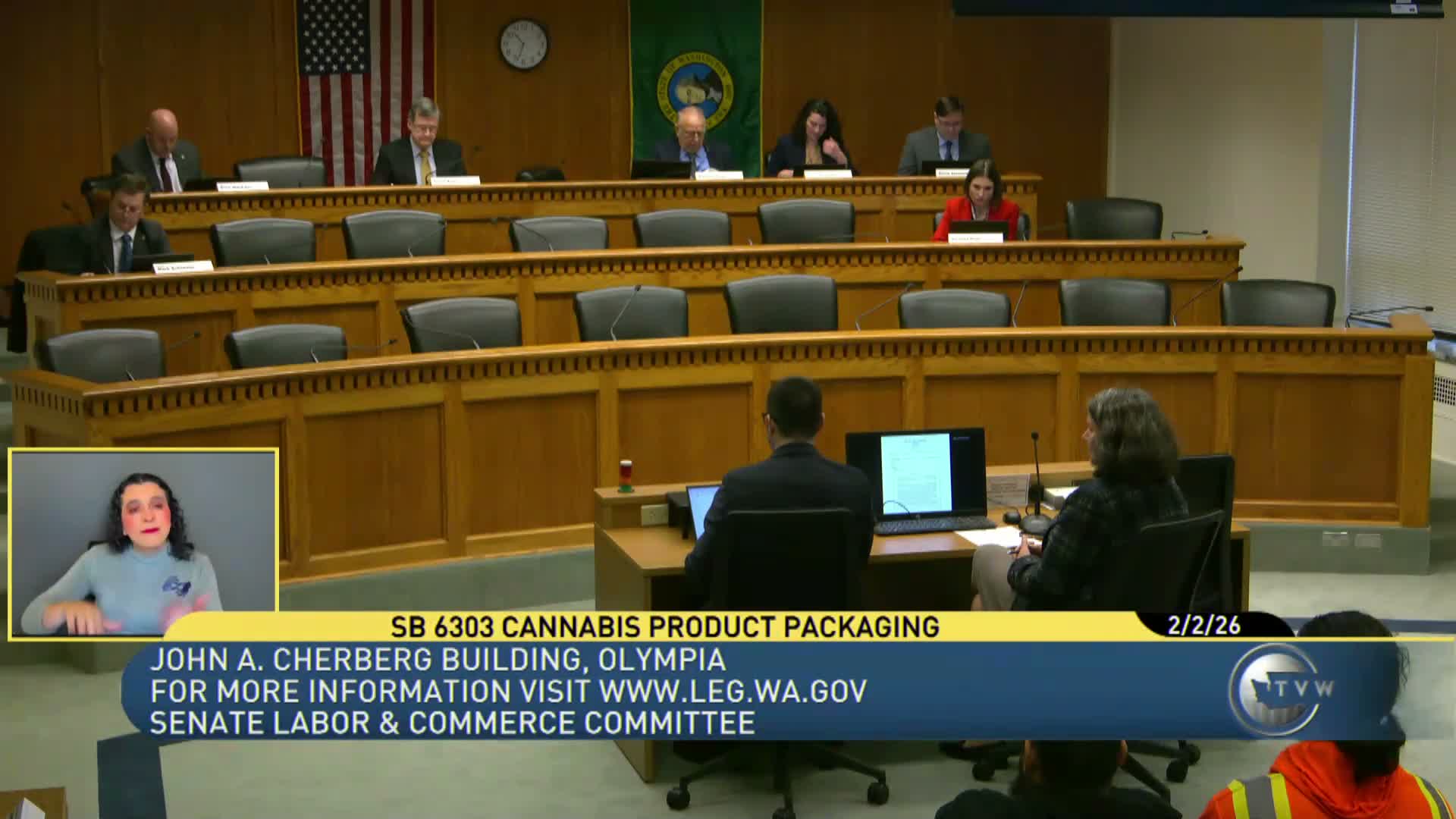
Marlon Ioannis, committee staff, summarized Senate Bill 63‑03 on Feb. 2, saying the bill directs the Liquor and Cannabis Board to adopt rules that permit certain solid cannabis edibles to be sold in single multi‑use resealable containers without individual wrapping when conditions are met, allow multi‑unit packaging for concentrates if the package does not exceed authorized purchase amounts, and to adopt technical standards for removable batteries in vapor devices with a one‑year phase‑in.
Sponsor Senator Sharon Shoemake said growers and producers want sustainable packaging options and noted that reusable containers and batch tagging could substantially reduce plastic waste. "They would like to implement some of these policies, create less solid waste," Shoemake said, and signaled willingness to compromise on some provisions to secure sustainability gains.
Industry witnesses (producers, Cannabis Alliance, processors) testified that removing single‑use wrapping could eliminate tens of millions of pieces of plastic annually and that batch tracking preserves traceability while reducing waste. Bethany Rondeau and others said a 36‑month transition for removable batteries would allow manufacturers and retailers to adapt.
Opposition included the Washington State Public Health Association and the Washington Poison Center. Dr. Jimmy Leonard, chief clinical officer of the Washington Poison Center, said Washington's strict unit‑dose packaging correlates with comparatively low rates of serious pediatric cannabis poisonings and urged maintaining current protections. "Children do not respond well to high doses of cannabis," Leonard said, and he recommended preserving unit‑dose rules to limit unintentional ingestions.
Witnesses also discussed battery safety: proponents welcomed mandatory removable‑battery standards to enable recycling and reduce landfill fires, and some public‑health witnesses endorsed that portion of the bill while opposing relaxed edible packaging.
The committee heard extensive pro and con public testimony and concluded the SB 63‑03 record; parts of the bill were set for continued consideration the following day. No final committee vote appears in the transcript.