Get Full Government Meeting Transcripts, Videos, & Alerts Forever!
Get email alerts on the Interest Arbitration topic
No spam. Unsubscribe anytime.
Counties, cities back adding 'ability to pay' to arbitration standards; unions warn of weakened bargaining
Summary
Senate Bill 61‑35 would add employers' financial ability to pay as a factor for interest arbitration panels for uniform personnel. County and city associations said the change creates parity with state arbitration; Teamsters representatives said it would undermine collective bargaining and could be used to stall wage improvements.
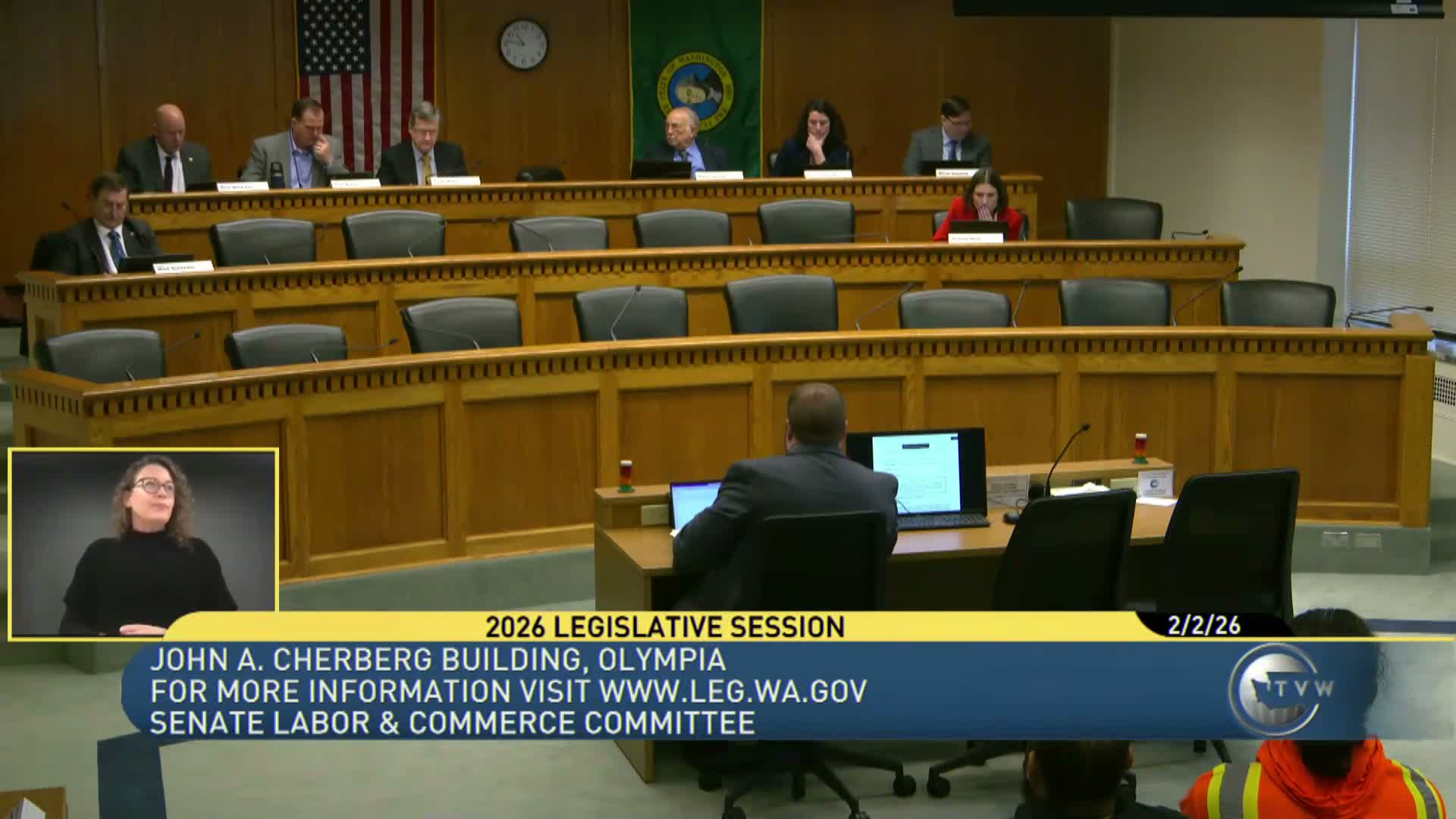
Committee staff summarized Senate Bill 61‑35 on Feb. 2, explaining that the bill would add consideration of an employer's financial ability to pay when interest arbitration panels make determinations for uniform personnel under existing law.
Paul Jewell, speaking for the Washington State Association of Counties, said most counties report significant or severe fiscal pressure and urged the committee to move the bill forward as a modest cost‑control tool. "All but one that responded said the pressure was significant or severe," Jewell said, and he cited existing statutory language that gives the state similar consideration under RCW 41.56.530.
Candace Bach of the Association of Washington Cities said allowing arbitrators to consider a jurisdiction's ability to pay merely provides more information to panels and does not require decisions that favor employers.
Opponents included Darren Smith, business representative and president of Teamsters Local 231, and Carl Kelsler of Teamsters Local 760, who argued the change would weaken collective bargaining power and could be used by employers to delay concessions or suppress wages. "This proposal would change bargaining for all uniform personnel ... and undoes the great work the legislature did last year," Smith said.
The committee closed public testimony on SB 61‑35 after several pro and con panels; the record shows 5 pro and 22 con submissions. No committee vote on final passage was recorded in the transcript.