Get Full Government Meeting Transcripts, Videos, & Alerts Forever!
Get email alerts on the Tax Equity Insurance topic
No spam. Unsubscribe anytime.
Committee hears competing views on insurer exemption fix and retroactivity
Summary
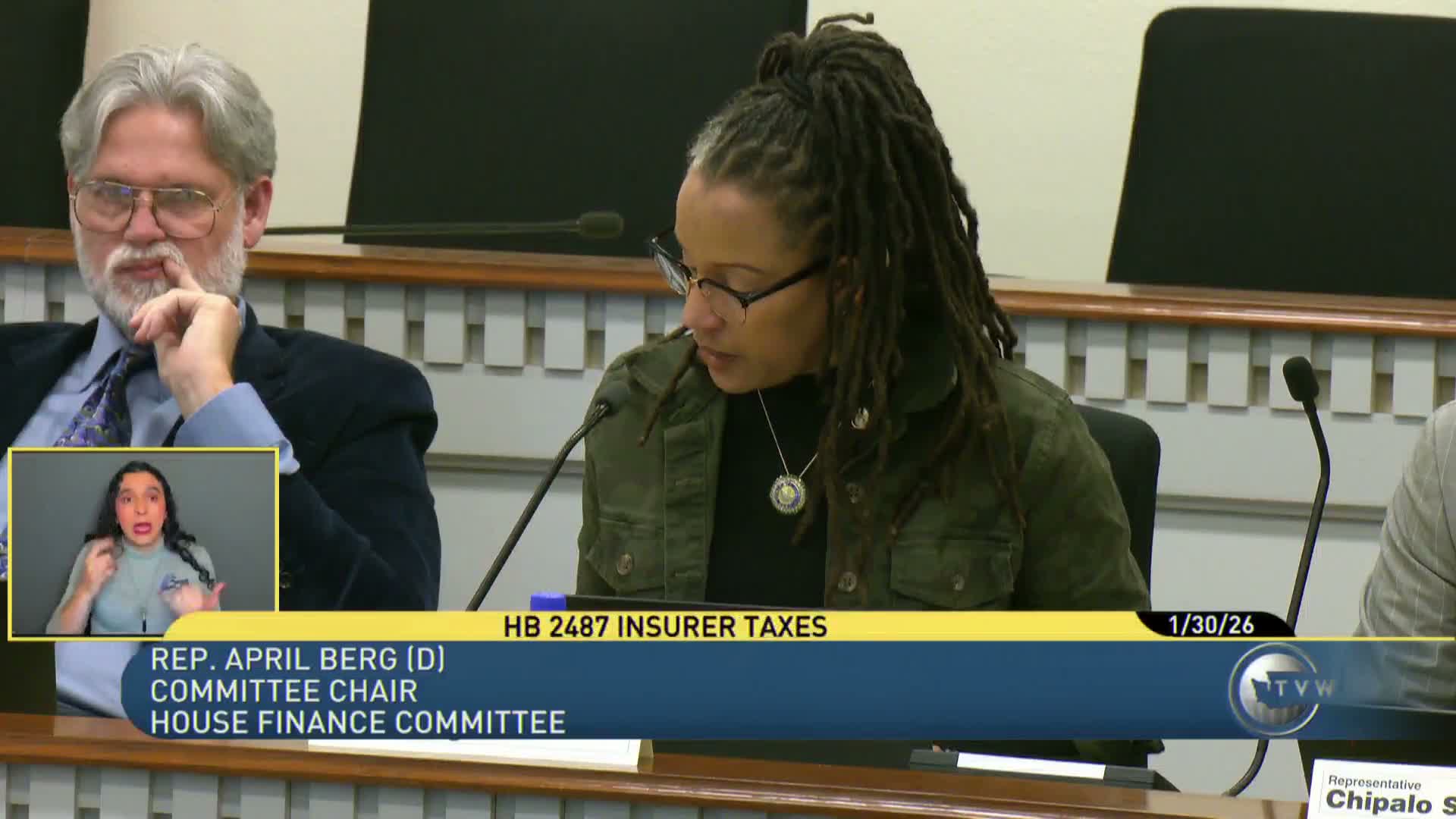
HB 2487 would tighten the insurance‑premium exemption to the state's B&O tax following a 2024 Washington Supreme Court decision. The Department of Revenue and consumer‑advocacy groups supported closing a perceived loophole; insurers warned retroactive application to 2019 could raise premiums and pose fairness concerns.
House Bill 2,487 would modify the insurance premium exemption to the business‑and‑occupation tax to expressly limit it to gross premiums on which the insurer paid the state premium tax. Staff explained the change responds to the Washington Supreme Court's 2024 decision in Involve Pharmacy Solutions Inc. v. Department of Revenue and would apply both prospectively and retroactively to Oct. 2, 2019, although it would not affect final judgments already beyond appeal.
John Brzezinski and Steve Ewing of the Department of Revenue said the bill is a technical fix to preserve tax equity and avoid inadvertent exemptions for downstream affiliates. "What the bill does is make sure Washington's tax code does not reward some businesses over others based on an arbitrary distinction," a DOR representative summarized.
Health‑industry groups and insurers opposed retroactivity. Carrie Tellefson of Regence and Christine Brewer of Premera Blue Cross said that retroactive tax exposure would be unfair to companies that had complied with the law as interpreted at the time and warned that increased tax liability could be passed to policyholders via higher premiums. Consumer and patient advocates including the Patient Coalition and Economic Opportunity Institute supported closing the loophole and said the change would restore intended tax fairness.
Staff cited Department of Revenue fiscal estimates of approximately $55.6 million in increased receipts for the 2025–27 biennium and $17.2 million for 2027–29. The committee heard mixed testimony and did not take a vote on Jan. 30, returning the measure for further deliberation.