Get AI Briefings, Transcripts & Alerts on Local & National Government Meetings — Forever.
Bills to let local governments incentivize grocery stores draw wide support
Loading...
Summary
HB 2297 would allow cities/counties to use property‑tax exemptions, B&O credits and sales‑tax exemptions to preserve and attract grocery stores in underserved zones. Sponsors and public‑health, anti‑hunger and local government groups broadly supported the measure but flagged fiscal and design tradeoffs.
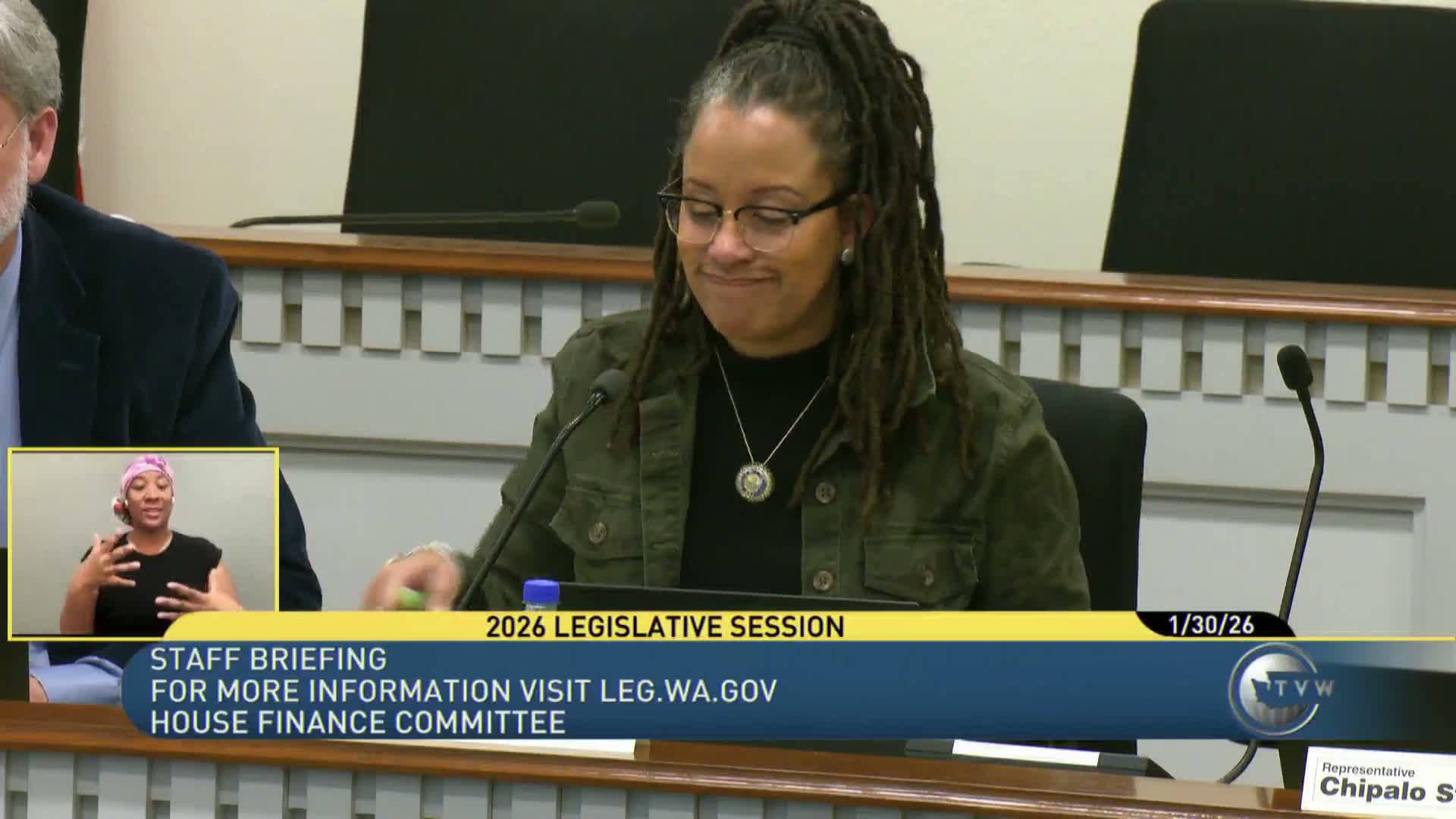
House Bill 2,297 drew broad stakeholder support when staff and the prime sponsor briefed the House Finance Committee on Jan. 30. Staff described a multi‑part bill that authorizes local preferential B&O rates, a 30‑year property‑tax exemption for qualifying grocery stores (excluding land value), a B&O tax credit with a $5 million statewide cap, and sales‑tax exemptions for certain purchases. Staff said the bill takes effect July 1, 2026, and noted preliminary fiscal estimates showing a decrease to the general fund in the near term.
Representative Daria Farvar, prime sponsor, said she introduced the bill after the closure of a major grocery store in her Lake City neighborhood and framed the proposal as a local, targeted tool to address food‑access deserts. "My community is devastated by this loss," Farvar said, describing the bill as part of a three‑bill package to stabilize neighborhood grocery access.
Public health, anti‑hunger and local government groups—including Northwest Harvest, Public Health Seattle & King County, the Latino Community Fund, PCC Community Markets and the Washington State Association of Counties—testified in strong support. Paul Jewell of the Association of Counties said the proposal is useful to counties but flagged a concern about a sales‑tax exemption in section 201 that could cumulatively reduce local revenues; he asked that the exemption be voluntary for local governments.
Industry witnesses including the Washington Food Industry Association and independent grocers said the bill reflects stakeholder work and could help preserve independent stores; several witnesses urged the bill explicitly include consumer‑owned co‑ops. The committee did not take action on Jan. 30 and suspended further consideration after testimony to allow staff to follow up on definitional questions and local‑revenue impacts.
Key fiscal details: staff noted a General Fund decrease estimated at $1.3 million (25–27 biennium) and $3.2 million (27–29 biennium), with implementation costs and reporting requirements specified in the bill text.