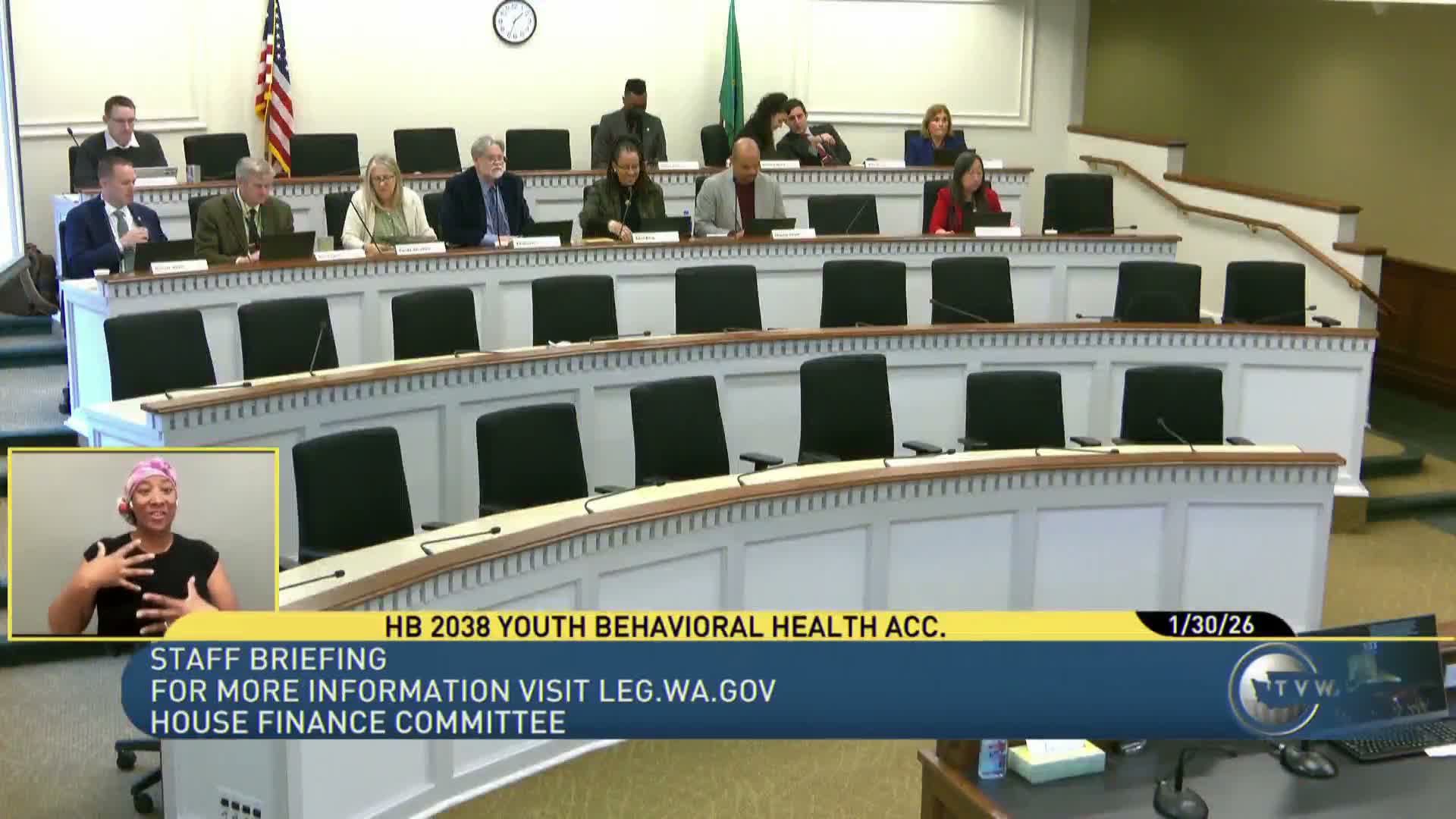
House committee hears divided views on social-media tax to fund youth behavioral health
Loading...
Summary
Lawmakers heard staff and sponsor briefings and hours of public testimony on HB 2038, a proposed 0.4% additional B&O tax on social‑media platforms that would fund a Youth Behavioral Health Account. Youth advocates urged investment; industry groups warned the targeted tax could be unlawful and counterproductive.
The House Finance Committee heard a briefing and public testimony on House Bill 2,038 on Jan. 30. Staff told the committee the proposal would impose an additional business-and-occupation tax equal to 0.4% of gross income reported under retailing and service classifications for businesses "operating a social media platform," effective Jan. 1, 2027, with receipts deposited into a new Youth Behavioral Health Account for programs aligned to the Washington Thriving plan.
Representative Lisa Kallen, the prime sponsor, cited public‑record research and state youth‑survey data in support of the bill. "IG is a drug," she said, quoting a meta‑researcher as she framed the legislation around reported harms to adolescents and the need to fund prevention and early‑intervention services. Kallen pointed to 2023 Healthy Youth Survey responses showing rising problematic internet use among 8th, 10th and 12th graders.
Youth witnesses told the committee the proposal would direct resources to a pressing crisis. "We exist in a world where logging off these apps renders us disconnected from our school peers and friends," student testifier Mahi Malati said, urging lawmakers to invest in studying youth behavioral health through the proposed account.
Industry and technology groups opposed the targeted levy. Max Martin of the Association of Washington Business said his members "care deeply about the mental health of children" but argued the state should fund programs from general revenues rather than a selective tax on one sector. Rose Feliciano of TechNet warned the measure could violate the federal Permanent Internet Tax Freedom Act, saying it "singles out social media companies while exempting other online services." Amy Harris of the Washington Technology Industry Association said many platforms already have teen‑safety features and urged a no vote.
Committee staff said a fiscal note has not been finalized; staff referenced a preliminary DUR estimate and prior fiscal notes that suggested a multi‑million dollar revenue impact. The committee suspended the bill's hearing to return later for additional public testimony and analysis.
The committee did not take any votes during the Jan. 30 session; next steps were not set at the close of testimony.