Get Full Government Meeting Transcripts, Videos, & Alerts Forever!
Get email alerts on the Privacy And Data Protection topic
No spam. Unsubscribe anytime.
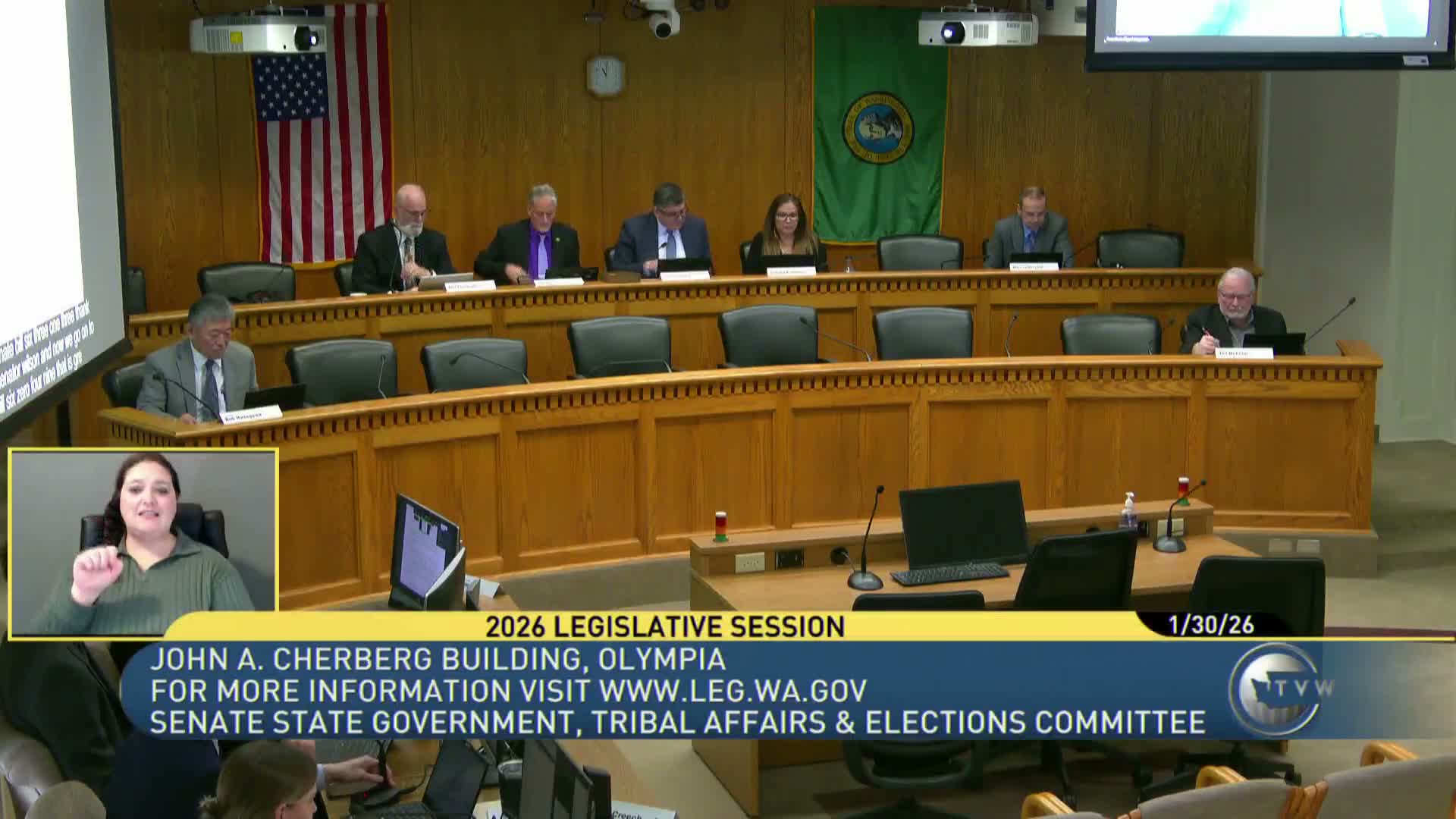
Bill to protect individual responses on voluntary surveys draws student testimony and agency support
Summary
Senate Bill 6,049 would exempt individual voluntary survey responses from public disclosure for state employees and students taking the Healthy Youth Survey; OFM and other agencies support the narrow exemption while students testified they fear reidentification and stalking risks.
Senate Bill 6,049 would expand public-records exemptions to protect individual, voluntarily provided survey responses from disclosure — covering executive branch employee engagement surveys and line-level responses to the Healthy Youth Survey for students.
Senator Claire Wilson, the bill’s sponsor, said the exemption responds to re‑identification risks in small agencies or small schools and seeks to preserve candid participation. “Because some agencies are smaller it wouldn't take much to determine the identity of some respondents, which in effect, can have a chilling effect,” Wilson said.
Sherry Sawyer of the Office of Financial Management told the committee the proposal is a narrow exemption that preserves anonymized and aggregated data while protecting individuals. “Even when names are removed… advanced data matching can make it possible to re‑identify those individuals,” Sawyer said.
Four students from Kirkland and Lake Washington schools told the committee they support the bill, describing experiences and fears about stalking, harassment and reidentification from school-held records. Ella Nielsen, a senior who testified in person, urged legislators to protect student safety: “This bill reassures students that honesty will not be punished and that our personal experiences are not public property.”
Committee staff recorded a large number of pro sign-ins for the bill and substantial opposition sign-ins on the earlier related bill; the public hearing on SB 6,049 was closed after testimony. The bill’s supporters say it will protect privacy for vulnerable populations while continuing to allow release of aggregate findings for transparency.
What’s next: the committee closed the hearing; any amendments or committee movement will depend on staff follow-up and member concerns about scope and exceptions.