
Senate bill would require auditor inventory and annual high-risk list to spot fraud across state programs
Get AI-powered insights, summaries, and transcripts
Sign Up Free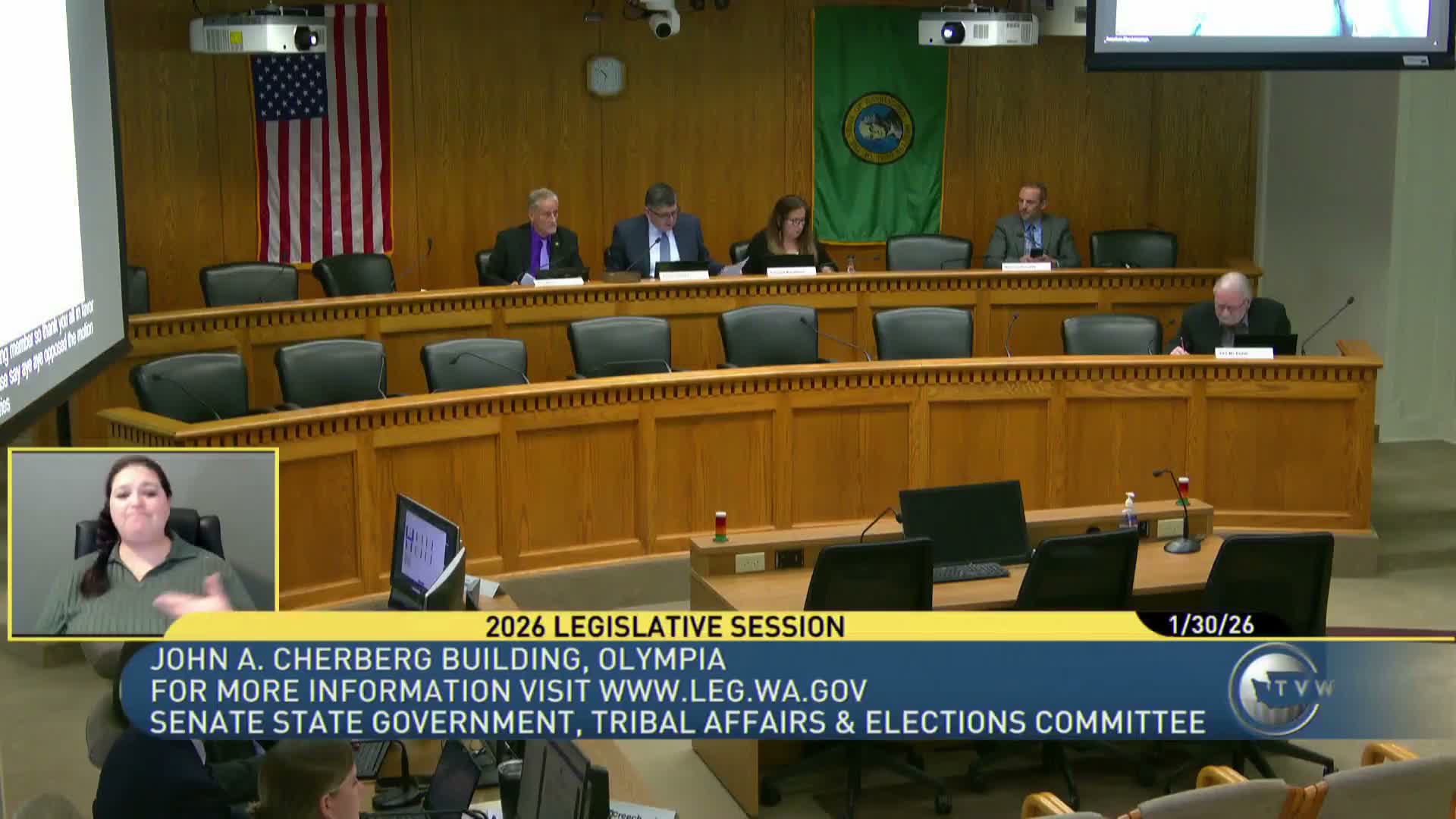
Summary
Senate Bill 6,215 would direct the State Auditor to inventory programs audited in the prior 10 years and produce an annual statewide high-risk list to identify programs susceptible to fraud; sponsor cited Minnesota childcare fraud as an impetus and a fiscal note estimates $2.6M in 2025-27.
Senate Bill 6,215 would require the State Auditor to compile, by July 1, 2026, an inventory of state programs audited in the prior 10 years and, beginning July 1, 2027, to publish an annual statewide high‑risk list identifying programs that present elevated risk to the state.
The bill’s sponsor, Senator Drew Hansen, said the measure is driven by concerns raised after recent fraud reports from other states. “The people of Washington state have a right to expect that when we are spending public money, we are frugal and we are careful and we have safeguards in place to protect against fraud,” Hansen said at the committee hearing.
Greg Vogel, committee staff, told the panel the inventory must include descriptions of internal controls, summaries of relevant audit findings and recommendations, and updates on corrective actions. Vogel also noted the bill calls for plain-language presentations to help non‑technical readers understand risk profiles.
Scott Nelson, Director of Legislation and Policy for State Auditor Pat McCarthy, told the committee the State Auditor’s Office (SAO) has concerns about scope and capacity. “This is an entirely new program for SAO which we have no current source of funding,” Nelson said, noting SAO retains audit records for five years while the bill asks for a 10‑year inventory. He also questioned whether SAO is the right entity to host the function and warned the July 2026 delivery date would be “physically impossible” without additional resources.
The bill includes a fiscal note that estimates $2,600,000 for the 2025–27 biennium and ongoing costs of $3,500,000 in future biennia. Hansen acknowledged the fiscal concerns and suggested another entity, such as JLARC, might be appropriate if SAO cannot host the program.
No formal action was taken on the bill at the public hearing; the committee closed the hearing after receiving public comment and staff testimony. The bill’s proponents argued the proposal would make it easier for legislators and the public to identify programs needing closer oversight; auditors cautioned about workload, record retention limits and the need for clearer definitions of “program.”
What’s next: the committee closed the public hearing on SB 6,215; any future movement will depend on follow-up among the sponsor, staff and the State Auditor’s Office.