Get Full Government Meeting Transcripts, Videos, & Alerts Forever!
Get email alerts on the Land Bank topic
No spam. Unsubscribe anytime.
Land bank bill draws support from cities and housing authorities, raises technical tax questions
Summary
SB 6,214 would authorize land bank authorities, exempt qualifying land bank property from certain taxes, and require affordability covenants on at least half of land; cities, counties and housing authorities largely supported the bill while the Department of Revenue flagged verification language and one rural testifier warned about land being locked from local markets.
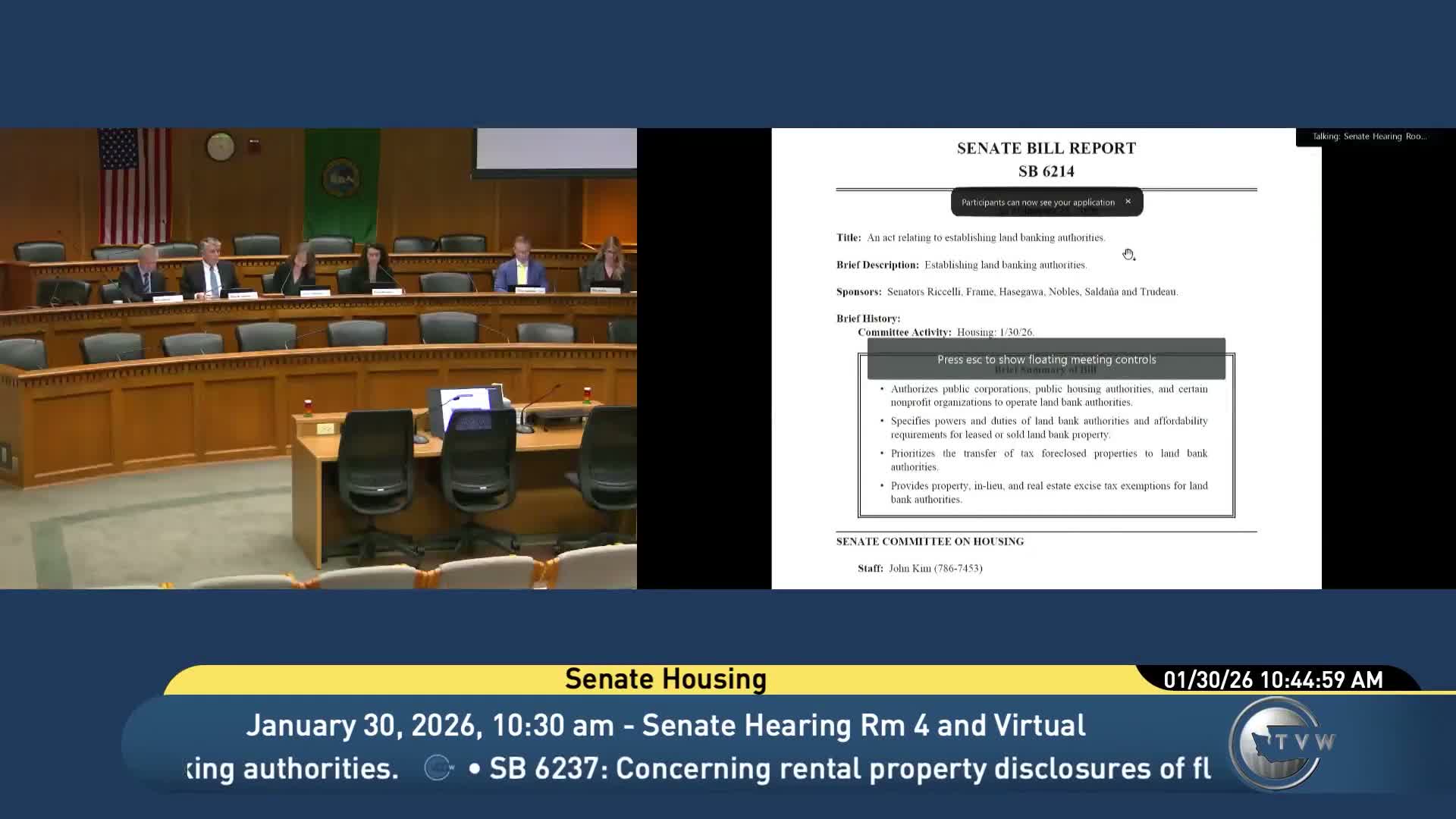
Committee staff described Senate Bill 6,214 as a proposed substitute that would authorize public corporations, public housing authorities, and 501(c)(3) nonprofit organizations to operate as land bank authorities that can acquire, manage, improve, lease, transfer, or dispose of property for affordable housing.
John Kim, committee staff, told the panel the proposal requires at least 50% of land subject to deed or covenant restrictions for affordability for at least 30 years, requires annual reports from land bank officials, and includes tax preferences that would exempt qualifying land bank property from property tax, in-lieu excise tax (for public corporations), and real estate excise tax when property is transferred to or by a land bank authority. Staff noted the Department of Revenue estimated $88,000 in operating expenditures to implement a property tax exemption and that a revised fiscal note would be requested if the substitute is adopted.
Local leaders and housing organizations offered broad support in public testimony. "We know land is essential for development, affordability, and economic growth," said Council Member Katie Klitzky of Spokane, urging passage. Amy Manning, executive director of the Spokane Regional Land Bank, described the bill as an important tool to lower acquisition and holding costs and accelerate affordable housing development. Housing authorities and the Association of Washington Housing Authorities also testified in support.
The Department of Revenue signed in pro but asked for technical fixes: Kate Armstrong said the department cannot administer the proposed exemption as written because the bill does not clearly define "land bank authority" or provide a verification method for qualifying entities, and offered amendment language developed with the House sponsor.
Opposition came from a rural speaker, Eric Pratt, who warned the measure could lock up land and affect conservation ownership in some counties. Supporters countered that land banks would prioritize affordable housing and community uses and could help clear title and move idle parcels into productive use.
Testimony emphasized the bill is a tool not a panacea: proponents said land banking can be one component of a broader affordable housing strategy that includes predevelopment support, priority access to surplus and tax-foreclosed properties, and partnerships with mission-driven developers.
The committee paused the public hearing after substantial testimony and moved to executive session for other items on the agenda.