Get Full Government Meeting Transcripts, Videos, & Alerts Forever!
Get email alerts on the Housing Energy topic
No spam. Unsubscribe anytime.
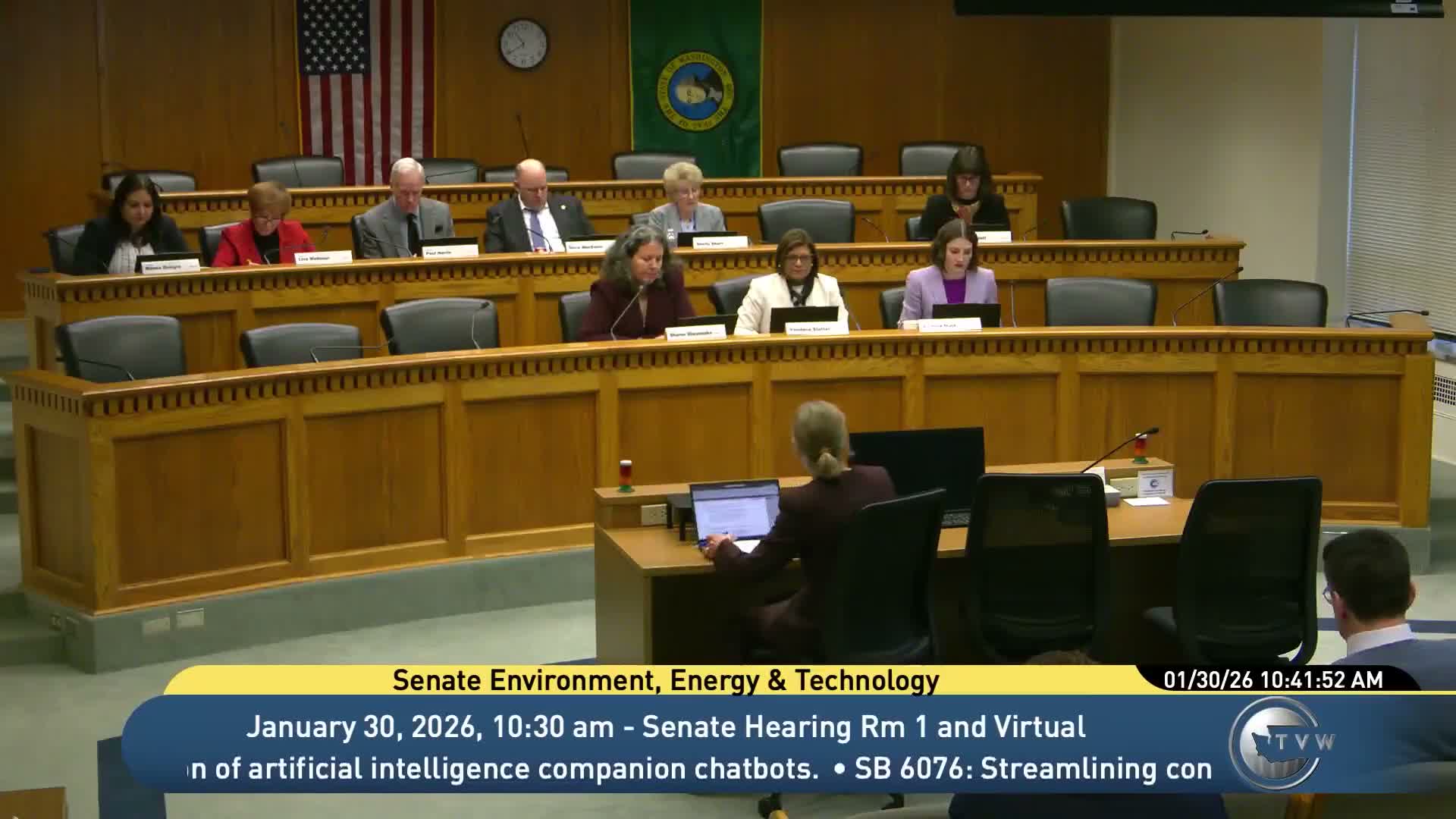
Committee hears bill to expand weatherization to community-scale projects for low-income households
Summary
SB 6223 would allow «community-scale» weatherization projects under the Low Income Weatherization Program, prioritize low-income households, and authorize Commerce to adopt implementing rules; supporters said the change would accelerate work to protect thousands of low-income Washington households.
The Senate Environment, Energy and Technology Committee heard Senate Bill 6223, which would authorize community-scale weatherization projects to be eligible for funding under Washington’s Low Income Weatherization Program and allow Commerce to adopt rules to implement the change.
Kim Cushing, staff to the committee, said the bill defines a community-scale project as one that includes multiple dwelling units in the same neighborhood where overlapping environmental, social or economic conditions may adversely affect residents. Cushing noted a fiscal estimate tied to the capital budget and rulemaking assumptions and said the fiscal note anticipates approximately $285,000 for the 2025–26 biennium and $125,000 for the following biennia to support complex rulemaking and administration.
Senator Hunt, sponsor, described weatherization as a "win-win" that saves households money, improves community resilience and reduces strain on the electrical grid. Multiple witnesses testified in strong support. Linda Garcia, policy director at Washington State Community Action Partnership, said the bill creates a practicable pathway to scale weatherization and emphasized health and safety benefits for seniors and families in older homes.
John Tsang of Spark Northwest said weatherization is essential for immigrant, low-wealth, rural and Indigenous communities and cited a 2023 needs assessment finding that the state must work 14–18 times faster to meet the 2031 goal of weatherizing all low-income homes. Alan Carbert of the State Energy Office described technical changes, including shifting eligibility to community-level criteria and using tools such as the Washington Health Disparities Map to target resources. Caitlin Crannan of Washington Conservation Action said the program currently serves fewer than 1% of eligible households annually and that over 375,000 households in poverty need weatherization services.
Vice chair closed public testimony after staff reported 447 pro, 2 con, 0 other. The committee did not take formal action on SB 6223 during the public testimony portion recorded in the transcript.