Divided testimony on bill linking predator mitigation to ungulate declines; committee holds HB 2221
Loading...
Summary
HB 22 21 would require WDFW to trigger predator mitigation when certain ungulate populations fall 25% below a 10‑year rolling average. Agency staff raised feasibility and cost concerns; conservation scientists warned lethal removal may be ineffective; tribes, counties and producers offered both support and opposition. The committee announced it will hold the bill for further work.
House Bill 22 21, which would require the Washington Department of Fish and Wildlife to designate ungulate populations at risk and initiate predator mitigation when counts drop 25% below the 10‑year rolling average, prompted strongly divided testimony on Jan. 30.
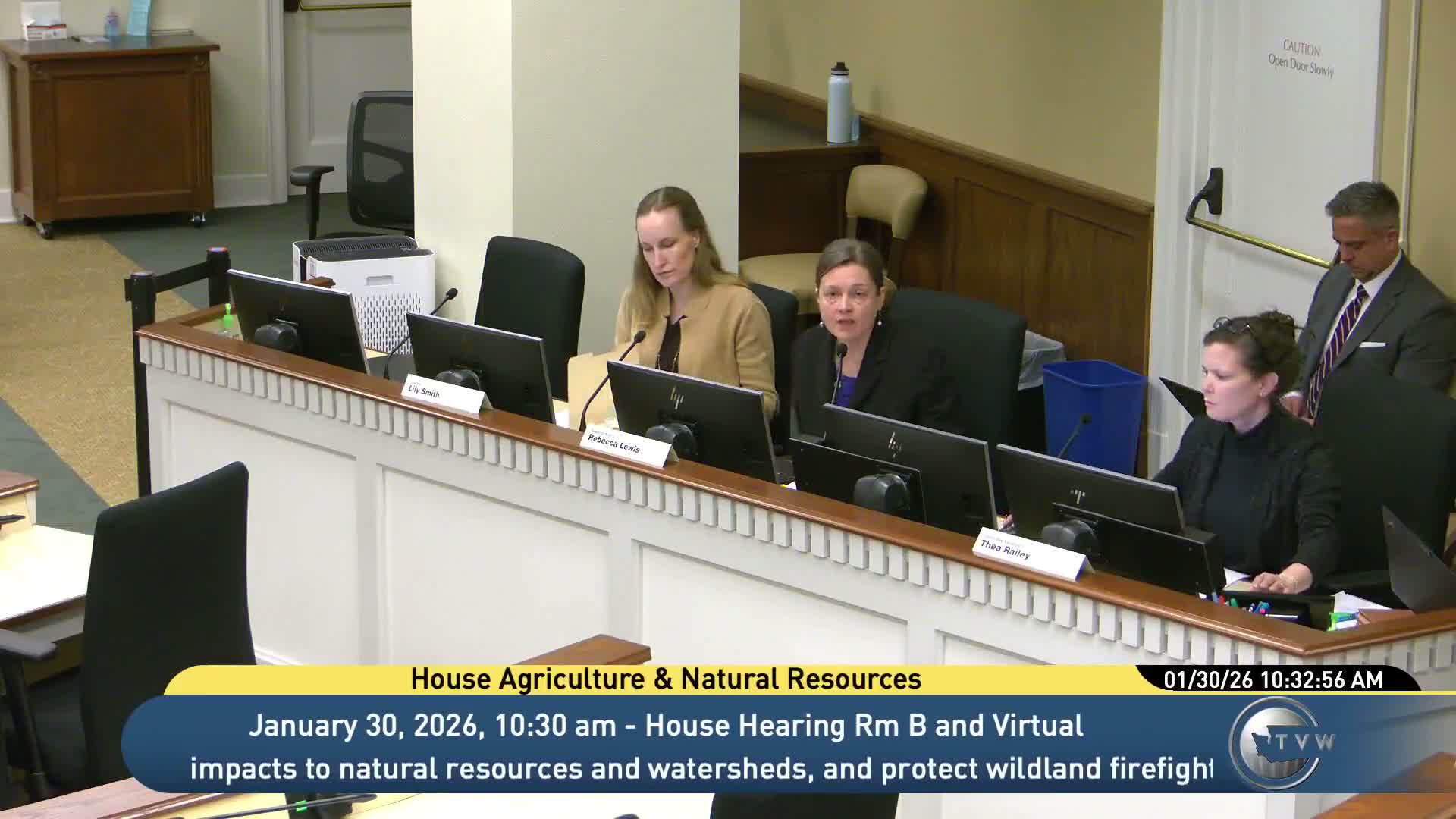
WDFW staff (Mick Cope) told the committee some bill requirements are logistically and financially impractical, flagged the challenge of meeting historic harvest benchmarks, and said implementation costs for population surveys and mitigation would exceed existing budgets. Cope urged the agency be given time to work with the sponsor on feasible implementation details.
Conservation scientists and environmental groups, including witnesses from Washington Wildlife First and the Sierra Club, opposed the bill. Francisco Santiago Avila and others cited the predator‑prey research project that found habitat, forage availability, vehicle collisions and disease are primary drivers of ungulate fluctuations and argued that targeted predator control would likely have limited value and could hamper long‑term recovery and disease control.
By contrast, tribal representatives, county sheriffs, ranchers and local officials described steep local declines in deer and elk, livestock depredation, and the loss of hunting tourism. Michael Moran (Confederated Tribes of the Colville Reservation) and Ferry County Commissioner Zach Trudell urged stronger predator management tools and more funding for WDFW; Sheriff Paul Boudreaux described frequent depredation calls.
Stakeholders from the livestock and hunting communities supported many bill provisions but raised objections to in‑state translocation of predators; the Washington Cattlemen's Association and Farm Bureau asked for modifications. Several witnesses recommended amendments to align the bill with WDFW science and to refine translocation language.
After hearing extensive testimony and noting ongoing amendment discussions, the committee chair announced the bill would be held for further action over the summer to allow sponsor and staff to pursue amendment work. No formal vote was taken.