
Bill to exempt sensitive personal data from public records draws split testimony
Get AI-powered insights, summaries, and transcripts
Subscribe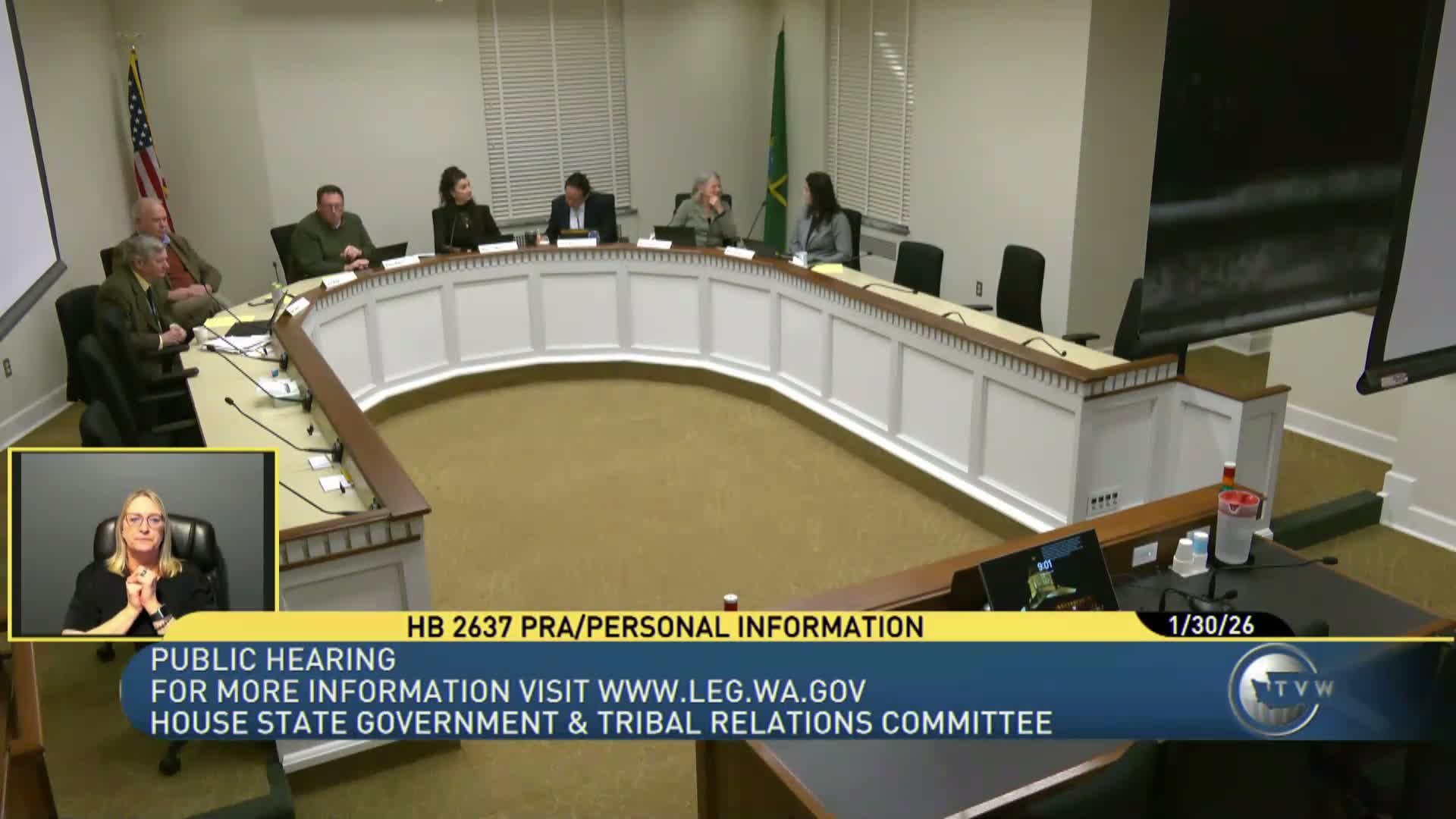
Summary
House Bill 2637 would add exemptions under the Public Records Act for categories of sensitive personal information (age, addresses, birthplace, precise geolocation, government identifiers); supporters framed it as privacy and child‑safety protection, while opponents warned it could erode transparency and create accountability gaps.
House Bill 2637, which would exempt specified categories of personal information from public disclosure under the Public Records Act (PRA), drew competing testimony over privacy, public safety and transparency.
Sponsor Representative Mia Gregersen said the bill is focused on personal privacy, not limiting government oversight, and argued that protecting sensitive data helps people participate in public processes. "This is about personal privacy," Gregersen told the committee, adding the bill is not intended to weaken transparency or accountability.
Supporters including the League of Women Voters and Commissioner Ping Ping (Commission on Asian Pacific American Affairs) said the measure would reduce identity theft risks and protect children and vulnerable communities amid heightened enforcement activity. Lydia Zepeda of the League argued that prohibiting public inspection of identifying details is "common sense and common courtesy."
Opponents, including media representatives and Jeanne Magdua, cautioned that broad exemptions could create an accountability 'black hole' by restricting access to voter, property and campaign records. Roland Thompson, representing newspaper and broadcaster associations, warned the language could close records currently necessary for public oversight and commercial functions.
Committee staff said the PRA already contains many targeted exemptions and that this bill proposes an expansion; questions centered on scope, enforcement and how the exemptions would interact with existing disclosure needs.
The committee took no final vote on HB 2637 during the session.