Get Full Government Meeting Transcripts, Videos, & Alerts Forever!
Get email alerts on the Conservation Education topic
No spam. Unsubscribe anytime.
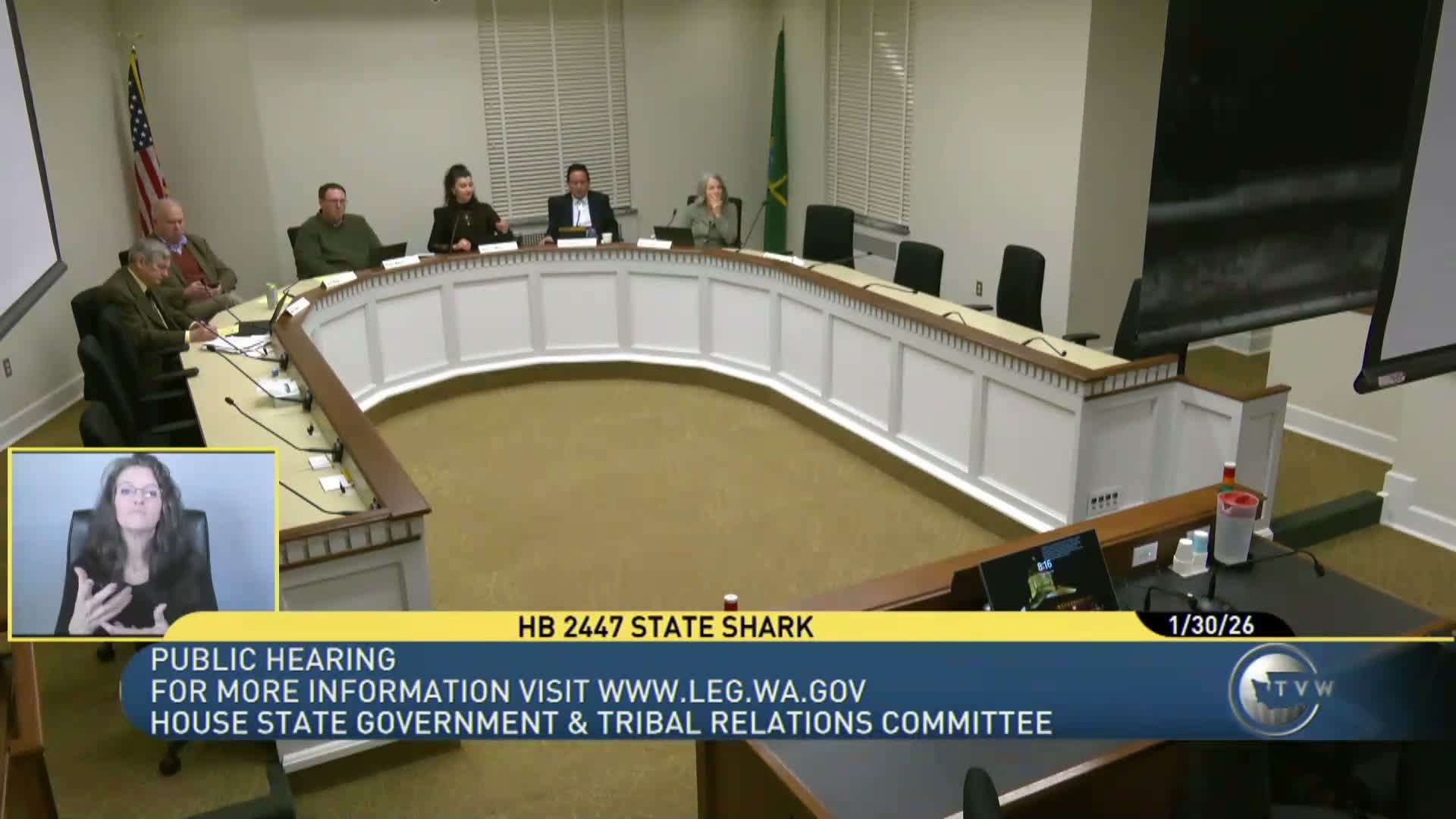
Committee hears support for making the bluntnose sixgill the state shark
Summary
House Bill 2447 would designate the bluntnose sixgill shark as Washington’s official state shark; testimony from scientists, city officials and schoolchildren emphasized education, conservation and potential ecotourism benefits.
Lawmakers and community members told the House State Government and Tribal Relations Committee they support House Bill 2447, which would designate the bluntnose sixgill shark as Washington’s state shark.
Representative Christine Reeves, sponsor of the bill, said sightings of sixgills in her district provide an opportunity for recognition and increased ocean education. "I think this is a great opportunity to bring a little bit of joy and happiness to this legislative session," Reeves said.
Supporters ranged from local officials to scientists and students. Anthony Hempstead, representing the city of Des Moines (which declared July 6 "sixgill Shark Day"), said the designation could support ecotourism and honor a species he called "a neighbor that was here before the Cascades were even hills." Dr. Danny Contreras of the Seattle Aquarium noted the species’ deep‑water habit and said the aquarium does not house sixgill sharks, adding that new sixgill research is planned this summer: "We actually don't have any 6 gill sharks because they're deep water sharks." Testimony from Surfrider Foundation and Puget Soundkeeper framed the bill as a way to foster stewardship and awareness of threats such as bycatch and pollution.
Several student witnesses testified in favor, and proponents stressed education and conservation goals rather than regulatory change.
The committee concluded the hearing after multiple panels of in‑person and remote testimony; no committee vote on HB 2447 was recorded during this session.