Get Full Government Meeting Transcripts, Videos, & Alerts Forever!
Get email alerts on the Nonprofit Fundraising topic
No spam. Unsubscribe anytime.
Committee hears bill to raise nonprofit bingo and raffle revenue threshold to $15,000
Summary
The State Government and Tribal Relations Committee heard testimony supporting House Bill 1364, which would raise the gross‑revenue exemption for charitable bingo, raffles and amusement games from $5,000 (est. 1987) to $15,000 to account for inflation and lower compliance costs for volunteer groups.
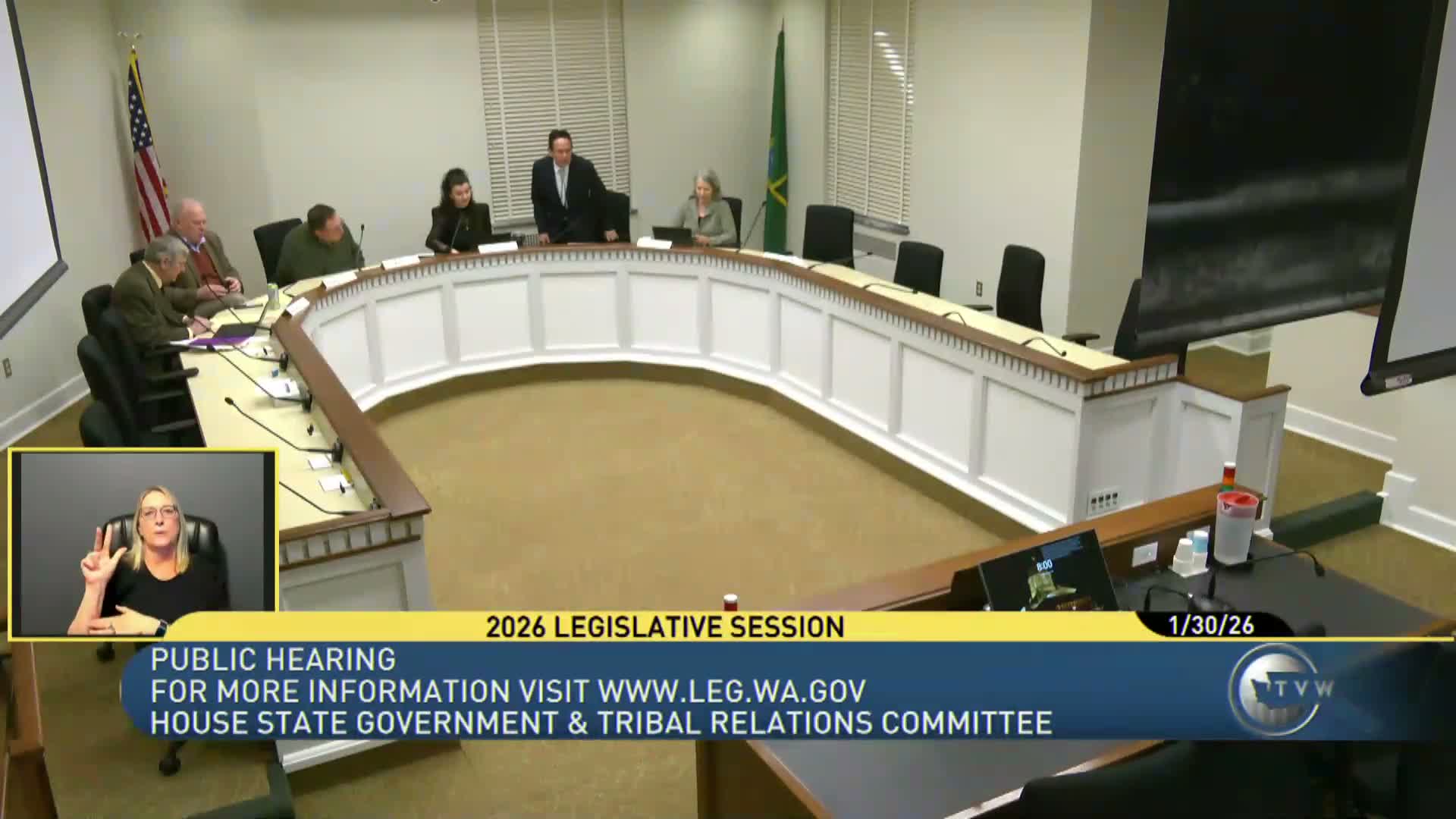
The House State Government and Tribal Relations Committee heard testimony in support of House Bill 1364 on Feb. 4, which would raise the gross revenue threshold that lets charitable and nonprofit organizations operate bingo games, raffles and amusement activities without a Washington State Gambling Commission license.
Representative Ed Orcutt (District 20), the bill’s prime sponsor, told the committee the $5,000 exemption was set in 1987 and that raising it to $15,000 is “an inflationary adjustment,” not an expansion of gaming. He said the change applies only to nonprofit groups and does not alter licensing or tax rules for for‑profit gaming operations.
An in‑person witness, Erin Thoney of Woodland, described rising costs for one evening of bingo — including facility rental and chair/table fees — and said outdated thresholds make fundraising harder for volunteer organizations. “Updating this law would enable fundraising efforts to better match their current financial demands,” Thoney said.
Staff explained the bill also raises local tax thresholds so that local governments would not tax bingo or amusement games conducted by eligible nonprofits unless their combined gross receipts exceed the higher limit. Staff noted a fiscal note is available in the committee bill packet.
Supporters emphasized the bill targets small, volunteer‑run fundraisers such as youth sports leagues and PTA events. Opponents were not heard during the public testimony period. If advanced by the committee, the bill would proceed to the next legislative stage per regular scheduling rules.
The hearing was closed after testimony and the committee resumed other business.