
Senate committee hears split testimony on tougher penalties for plumbing contractors
Get AI-powered insights, summaries, and transcripts
Subscribe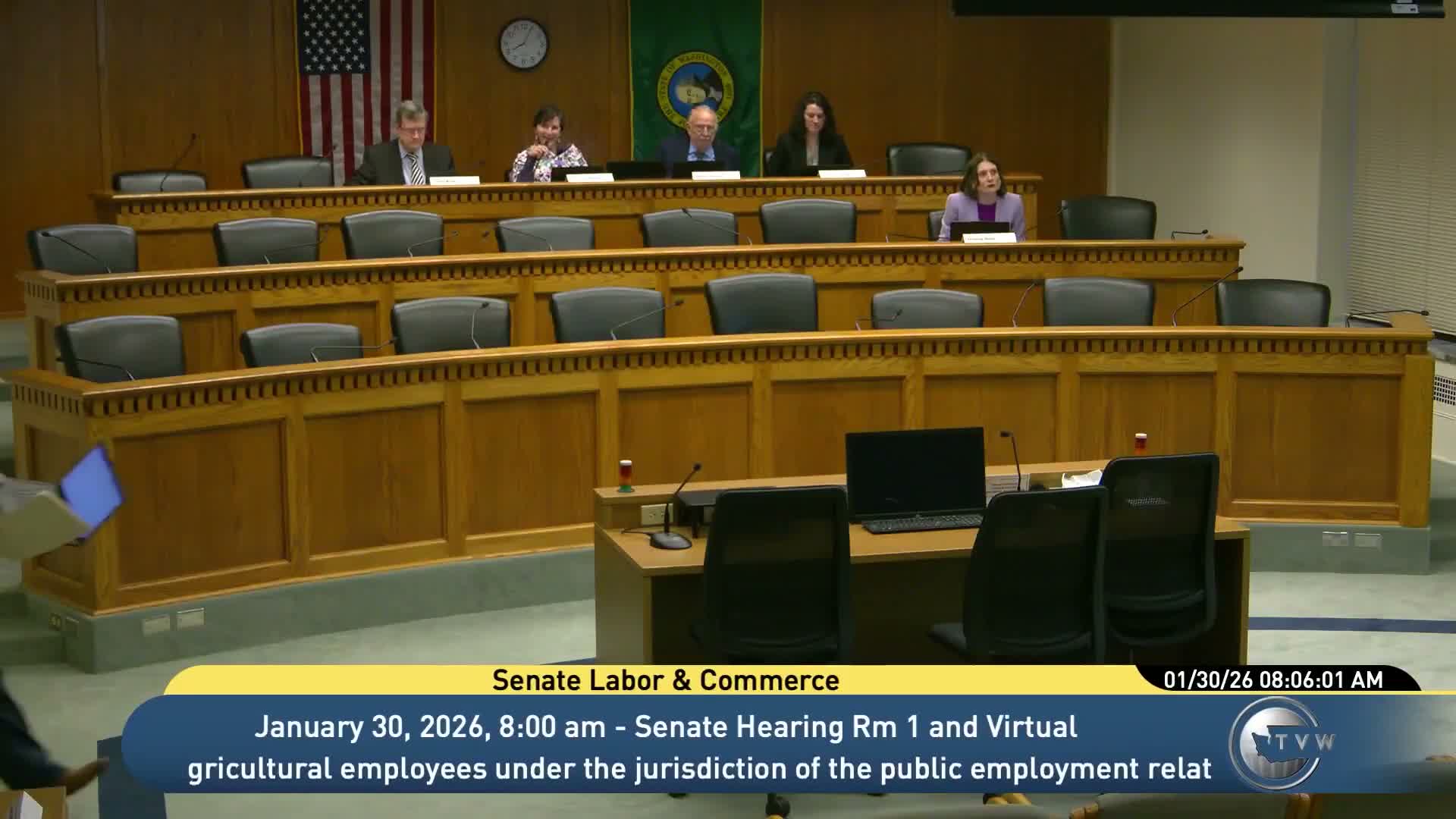
Summary
Supporters told the Senate Labor & Commerce Committee that SB 6,197 gives L&I meaningful tools to punish repeat violators and protect public health; opponents — especially smaller nonunion service contractors — warned the bill’s suspension thresholds and rulemaking approach could unfairly punish legitimate, reactive service businesses and risk livelihoods.
Senate staff and witnesses on Friday debated a bill that would tighten penalties for repeat plumbing infractions and give the Department of Labor and Industries (L&I) broader enforcement options.
Jared Sachs, staff to the Labor & Commerce Committee, told the committee that Senate Bill 6,197 keeps existing licensing and certification requirements but separates penalties for residential and nonresidential plumbing work and raises the suspension trigger for nonresidential infractions to five violations in five years. He also said the bill allows L&I to require corrective action plans and, in some cases, issue two‑year suspensions for repeat offenders; the fiscal note attached to the staff report indicated no immediate fiscal impact.
Senator Victoria Hunt, the bill’s prime sponsor, told the committee the legislation aims to reduce unlicensed plumbing and repeat infractions that threaten safety and undercut law‑abiding contractors. “We want to make sure that truly bad actors … have a way to make sure that those repeat violations aren’t continuing,” she said.
Supporters included labor and contractor groups who argued current fines are ineffective against repeat violators. Michael Tranzu of the Mechanical Contractors Association said when “our contractors play by the rules, we expect others to do so as well.” Jason Hewitt of the UA Plumbers and Pipefitters pressed the safety argument: “When repeat violators face only fines, those laws lose their effectiveness.” Antonio Cruz, a journeyman commercial plumber and member of the Governor’s Plumbing Advisory Board, urged passage on public‑health grounds and said he has seen “the same infractions often committed by the same contractors.”
Opponents — largely small, nonunion service contractors and representatives of industry groups — warned the bill does not adequately distinguish between construction plumbing, which is planned and staged, and service plumbing, which is reactive and driven by emergency calls and short‑notice work. Gordon Bach, a plumbing contractor, said “construction plumbing and service plumbing are fundamentally different business models,” and argued applying construction‑style enforcement to service work would create compliance risk without improving safety. Carolyn Logue of the Associated Builders and Contractors said the penalties could unintentionally put smaller contractors’ livelihoods at risk.
Several witnesses asked for clearer statutory language rather than leaving key enforcement definitions to rulemaking. Juliana Sanchez, a contractor, said the process could become “subjective enforcement” if statutory limits are not spelled out. Dusty Hoyer, who participated in stakeholder talks, told the committee that “those conversations were productive, but they were not completed” and urged more negotiation before advancing the bill.
Committee members asked multiple questions about whether infractions were committed by out‑of‑state workers (witnesses said most were in‑state), how apprenticeship supervision is enforced (the committee discussed a 1:1 journeyman‑to‑apprentice expectation), and workforce availability in service plumbing.
The bill did not receive a committee vote during the hearing; sponsors and opponents signaled they are willing to continue stakeholder discussions and possibly craft amendments before further action.