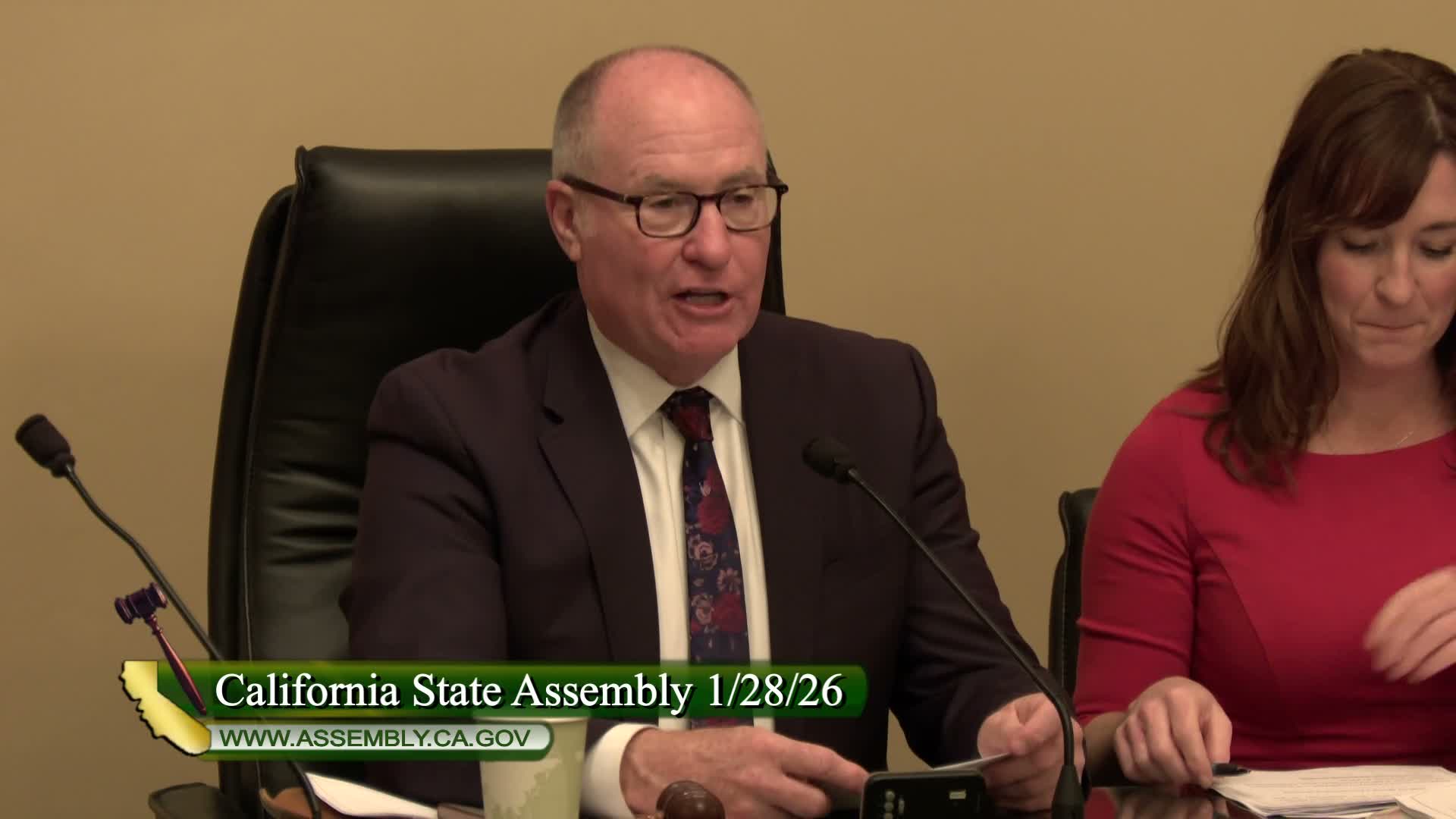
Assembly panel hears how federal funding freeze could destabilize California child care
Loading...
Summary
State and local officials, providers and parents told an Assembly budget subcommittee that a recent federal pause on major child care grants risks closing programs, forcing parents from work and creating long-term harms; California and four other states secured a temporary restraining order that has kept funds flowing while litigation proceeds.
SACRAMENTO — State and local officials, child care providers and parents told the Assembly Budget Subcommittee on Accountability and Oversight on Wednesday that a recent federal pause on major child care grants threatens immediate service disruptions and long-term damage to California's care infrastructure.
The committee heard that federal funding streams that help run subsidized child care in California include the Child Care and Development Fund, Temporary Assistance for Needy Families and the Social Services Block Grant. Dylan Hawksworth Lutzow of the Legislative Analyst's Office told the panel that the 2025—26 budget includes about $5.5 billion for child care programs and roughly $2.0 billion for related supports, and that federal CCDF and TANF funding account for a substantial share of that mix.
"Child care is not a luxury in California. It is economic infrastructure," the committee chair said in opening remarks, framing the hearing around the effect of federal actions on state budgets and families.
Jennifer Troyer, director of the California Department of Social Services, told the committee that on Jan. 6 the Administration for Children and Families sent letters pausing CCDF, TANF and the Social Services Block Grant to California and several other states. "California and the other four states jointly filed a request for a temporary restraining order on 01/08/2026, which was granted the very next day," Troyer said, and she added that the order has allowed frozen funds to continue flowing while the litigation proceeds.
Speakers across the room testified to potential harms if the freeze were to take effect. Los Angeles County Supervisor Holly Mitchell said counties lack the capacity to backfill the federal dollars and warned that the disruption would have immediate consequences for providers and families. "Kids don't wait," Mitchell said, arguing that funding interruptions force parents out of the workforce and can lead providers to close.
Multiple child care providers described fragile operating margins and rapid timelines to closure if federal payments stopped. "If I lose funding now, I will have to pull my daughter out of her senior year of college, and I will have one month before I have to shut my doors," said Amisha Griffin, who identified herself as a 24'year provider and member of SEIU Local 99 and Childcare Providers United.
Panelists and legislators repeatedly addressed program integrity. Troyer and other witnesses described state oversight tools — contract monitoring, audits, recoupment and licensing enforcement — and testified that identified improper payments in recent years amounted to a small fraction of total spending. The Department of Social Services' fiscal forecasting bureau chief said the department identified about $7,000,000 in improper payments across two years compared with roughly $6.5 billion in annual subsidy spending, a rate panelists described as under 1 percent.
Lawmakers pressed for concrete contingency steps. Several members urged the administration and legislature to develop a short-term "bridge" plan to replace federal dollars if the courts do not provide a permanent remedy. Supervisor Mitchell and other witnesses recommended state emergency funding, communication to providers and families to reduce fear and enrollment drops, and coordination with counties and community-based organizations to maintain access.
Parents and community advocates gave personal testimony about the stakes. A parent who said she relies on CalWORKs described how losing child care would force her to pause school and jeopardize a training grant; community groups described survey results showing job loss risk if subsidized care were withdrawn.
The hearing closed with lawmakers and witnesses agreeing on the need for planning and further oversight. The court'ordered temporary restraining order remains in place and the litigation over a preliminary injunction is expected to continue in the coming weeks, Troyer told the panel.