Get Full Government Meeting Transcripts, Videos, & Alerts Forever!
Get email alerts on the Environmental Health topic
No spam. Unsubscribe anytime.
Assembly passes ban on most disposable vapes after debate on fires, waste and tax losses
Summary
AB 7 62, a bill to restrict disposable vaping devices to reduce lithium-battery fires and waste, passed after floor debate where supporters cited safety and environmental harms and opponents warned of fiscal losses and illicit-market effects; final vote 47–16.
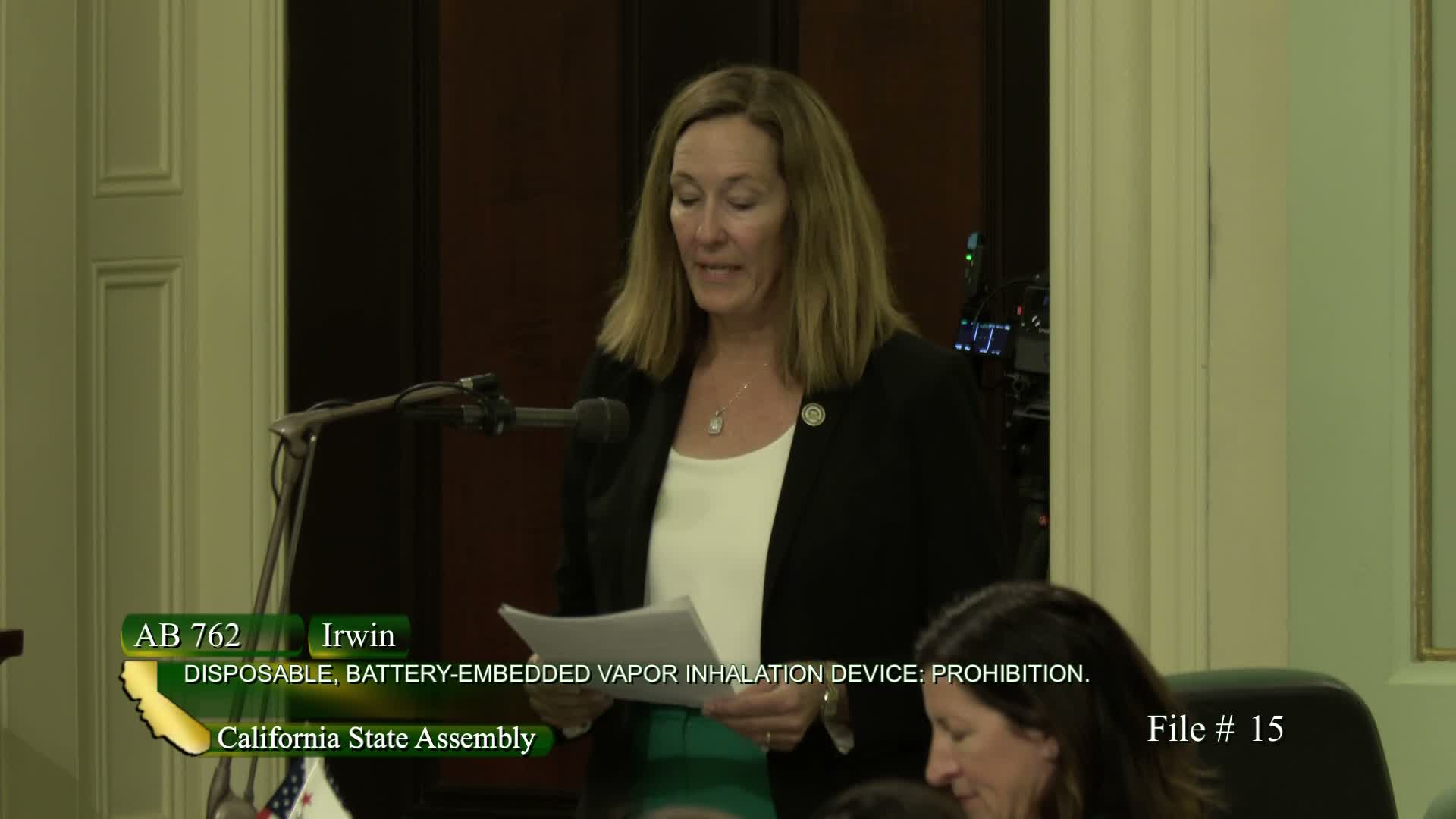
SACRAMENTO — The Assembly approved AB 7 62 on Jan. 20, a bill that would restrict the sale of disposable vaping devices to reduce lithium-battery fires, protect waste-stream workers and curb environmental harms.
Assemblymember Erwin, the author, framed the bill as an environmental- and public-safety measure, citing the rising number of fires caused by lithium batteries in landfills, sorting facilities and trucks and arguing the bill would nudge legal nicotine users toward reusable devices. "This bill nudges users of legal nicotine toward using reusable vapes as opposed to disposable vapes over a number of years," Erwin said on the floor.
Opponents raised fiscal and enforcement concerns. Assemblymember Macedo cited analyses from the California Department of Fee and Tax Administration estimating potential excise-tax revenue losses that could reach tens of millions of dollars (floor remarks referenced nearly $52,000,000 for nicotine products and nearly $70,000,000 for cannabis-related excise taxes). Critics also warned that strict bans can drive consumers to illicit markets that are unregulated and unsafe.
Supporters including Assemblymembers Bonta, Bauer-Kahan and Haney emphasized public-health and environmental benefits, and highlighted enforcement provisions and civil penalties included in the bill. The author noted past enforcement funding allocations and pledged additional enforcement efforts if the bill is implemented.
After floor debate and a roll call, AB 7 62 was adopted, 47–16. The bill now moves to the Senate for further consideration and any necessary policy adjustments.