Lyon County reviews FY2024–25 budget amendment and considers tax options to close shortfall
Loading...
Summary
At a second reading of an ordinance amending the FY2024–25 budget, county officials detailed a $2.57 million adjustment to receipts, a FEMA transfer to the road reserve, a proposed $458,766 bridge replacement and HVAC cost estimates; officials discussed three revenue options (property tax increase, occupational tax, insurance premium tax) and confirmed a new sheriff’s deputy hire.
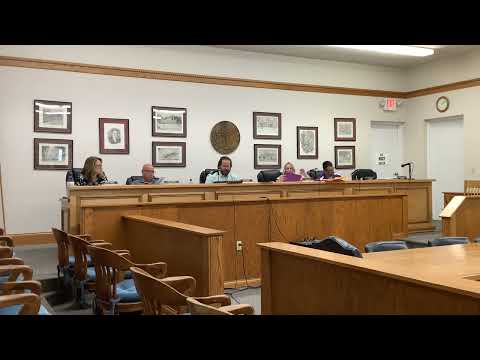
The Lyon County fiscal court conducted the second reading of Lyon County, Kentucky Ordinance No. 012025, an amendment to the FY2024–25 budget that the chair said increases certain receipts by $2,574,249.35 and adjusts related expenditure accounts.
During the reading, the chair noted that $30,510.79 of a FEMA reimbursement tied to May 2024 tornado expenses will be transferred to the road reserve rather than the general reserve. The court also reviewed a proposed bridge replacement on KY‑19 (mile 2.4) with a contractor estimate of $458,766.23 and said other county funds had been identified to offset an indicated shortfall of about $66,115.23.
The court heard operational and procurement items: the road department reported recent storm damage and replacement of 19 cross drains; facility updates included a repainted community building and replacement of a hot water heater and a toilet; and the sheriff’s office presented three HVAC replacement estimates for an in‑building unit (estimates cited in the meeting included roughly $138,010 and $19,001.50 among the options discussed).
Court staff summarized a March 19 special‑call meeting with the treasurer (Abby Guest) and finance officer (Krista Greg) where line items were reviewed. Officials reported about $60,000 available in the sheriff’s budget to hire a deputy; the deputy was said to be hired and expected to start on April 13.
Speaker 2 (chair) told the court the printed budget would be approximately $58,000 short without carryover or reserve transfers and presented three options to address the gap: a property tax increase (the chair said the maximum increase of 4% can be applied before triggering a recall petition process), an occupational tax (requires readings), or an insurance premium tax (an example 3% rate was discussed). The chair also noted timing constraints: an insurance premium tax would not take effect until July 1, 2026, if passed within required windows, and occupational tax requires statutory readings; references to KRS and a Supreme Court ruling on occupational tax were made during the discussion.
On the opioid settlement funds, the chair reiterated county guidance that those funds cannot be used for law enforcement enforcement actions and are limited to wraparound services such as transportation and treatment.
The court discussed procurement thresholds (one member recommended bidding projects rather than relying on the $40,000 threshold) and asked that any tax proposals include public hearings and broader input. The transcript does not record a final adoption vote for the ordinance during the meeting; the second reading was presented in summary form and the full ordinance is available in the Judge Executive’s office.