Department of Revenue defends issuing tax forms amid federal HR 1 changes; legislators press for clearer guidance
Loading...
Summary
Department of Revenue staff told the Senate Finance Committee that forms were issued under a practice of assuming federal conformity and an executive order increasing the standard deduction; ADOR said most taxpayers can file but urged individuals and small businesses to evaluate their situations. Legislators raised concerns about potential amended‑return costs.
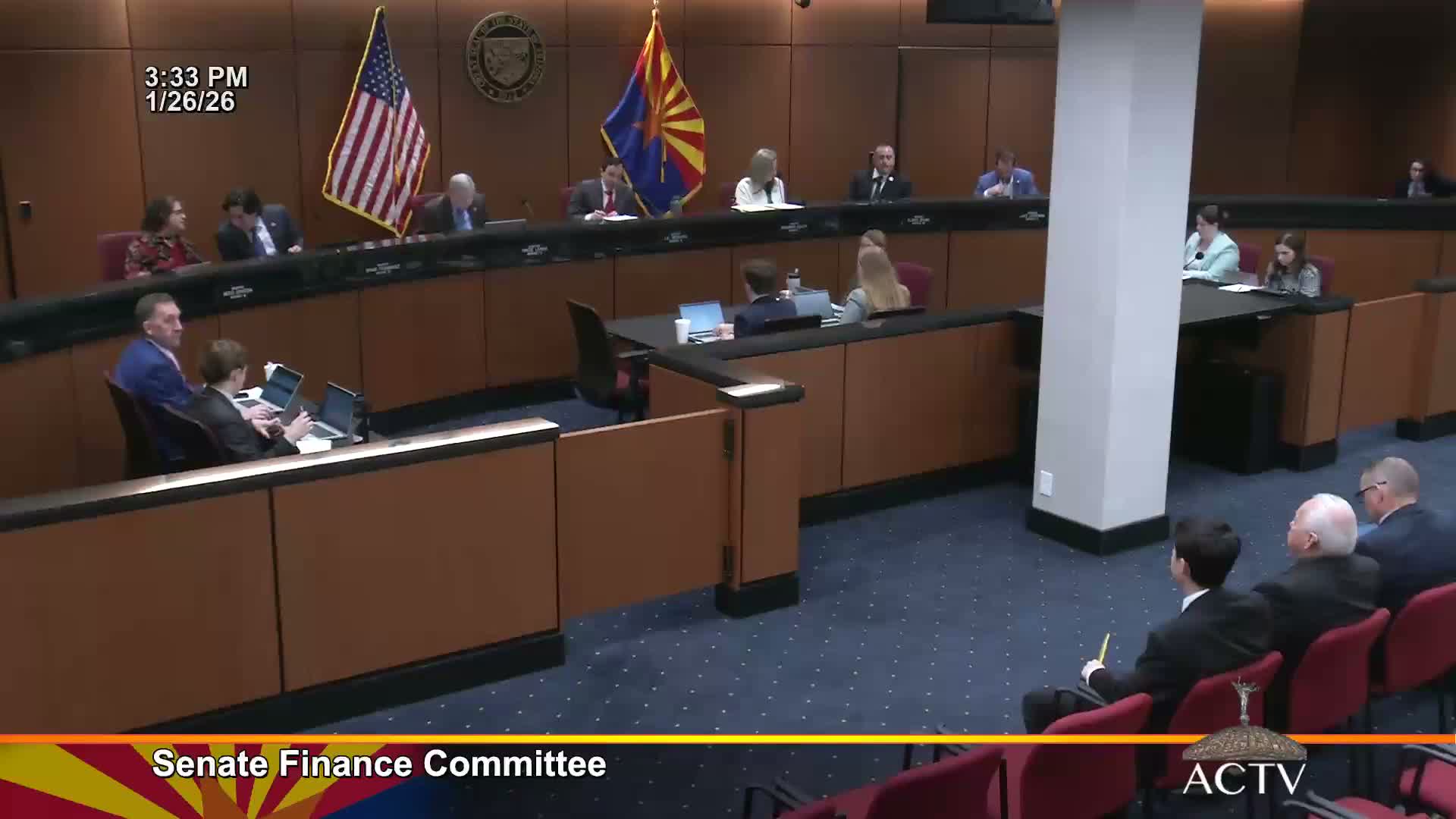
Arizona Department of Revenue officials spent more than an hour answering senators’ questions about a department press release and draft forms prepared after a governor’s executive order to align aspects of Arizona tax forms with federal changes in HR 1.
ADOR staff told the Senate Finance Committee that the department’s standard practice is to assume federal conformity when drafting state forms because Arizona income tax begins with federal adjusted gross income. They said the governor’s executive order prompted a one‑time adjustment to the standard deduction on the forms so the state figure would match the federal bump, and that the department added four below‑the‑line subtraction worksheet items at the direction of the executive order.
Committee members repeatedly pressed ADOR about taxpayer guidance and costs. ADOR staff acknowledged that some legislative changes outside the forms could require amended returns and estimated substantial administrative costs if a very large number of taxpayers amend (a prior departmental briefing referenced roughly $20 million to process 1,000,000 amended returns under current service‑level processing assumptions). Officials advised that "in most cases" taxpayers should file, that affected taxpayers can request an extension to Oct. 15, and that the department will provide follow‑up guidance if the legislature and governor adopt a different package.
Senator Epstein and others asked for more granular data on which small businesses or taxpayers would be materially affected by HR 1 conformity decisions. ADOR staff said in some cases a worksheet or next‑year reconciliation could limit the number of amended returns, but that retroactive provisions would likely require amendments.
The committee urged ADOR to revisit the press release language and to provide clearer guidance to minimize unnecessary amended filings.