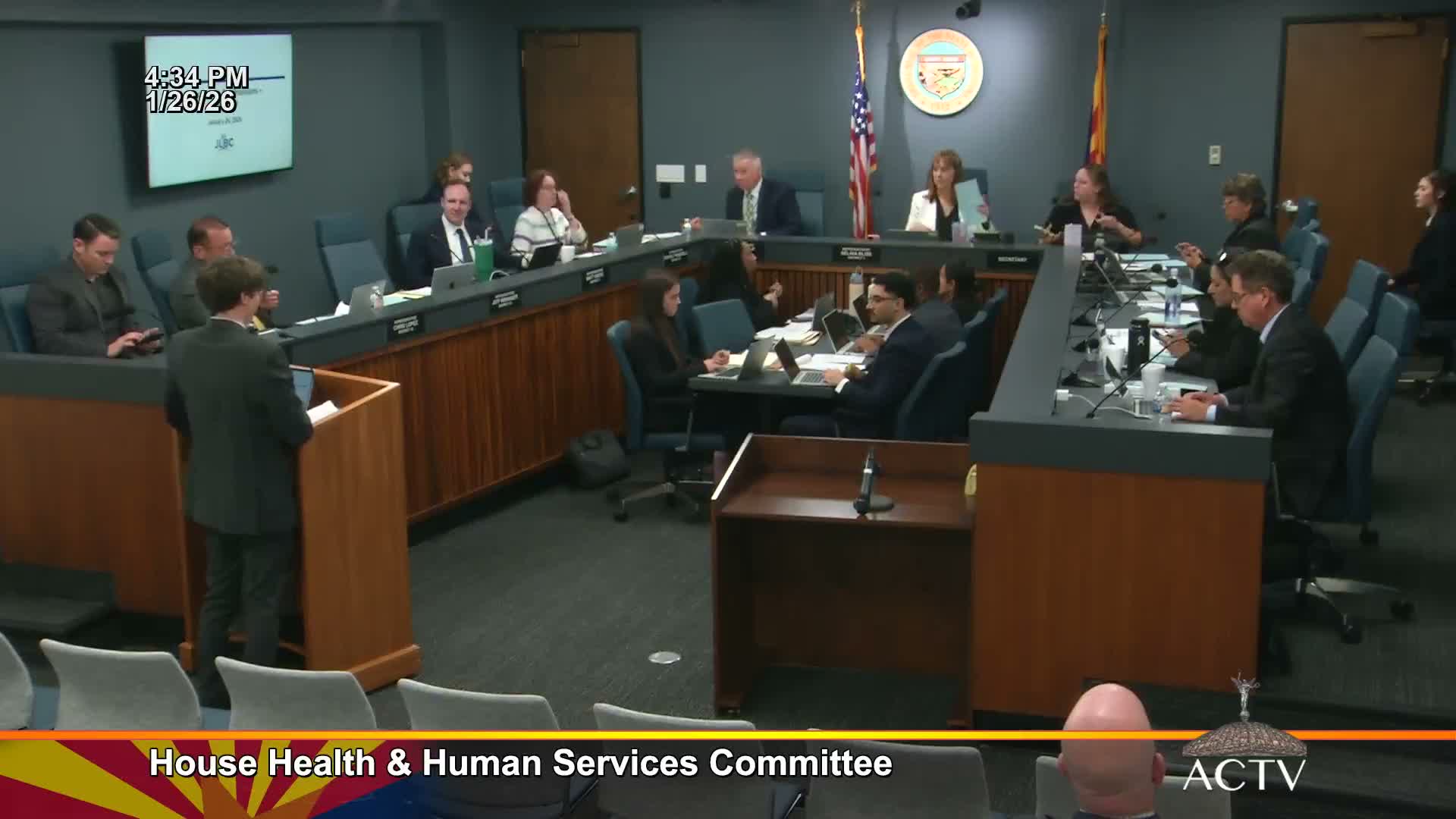
JLBC and policy groups brief committee on H.R.1 changes; compacts and the rural health fund move forward
Loading...
Summary
Legislative budget staff and policy groups told the committee H.R.1 will reshape Medicaid with community engagement rules, more frequent redeterminations and changes to provider taxes. The committee advanced interstate licensure compacts (PA compact passed 11–1) and a state bill to create oversight for the federal Rural Health Transformation Fund (HB2233 as amended, due‑pass 7–5).
The committee received two briefings on federal H.R.1 and state implications. Janet Coiner of JLBC outlined provisions that could reduce enrollment and shift costs — including community engagement (work) requirements starting 1/1/2027, semiannual redeterminations, limits on retroactive coverage, and reductions to the hospital assessment rate — and flagged speculative scoring, administrative costs and the need for data to estimate state fiscal impacts.
Roy Leonardson of the Foundation for Government Accountability framed the law as an opportunity to tighten program integrity and warned states face potential federal penalties for elevated payment error rates; he urged early action to avoid large fiscal exposure.
Following the briefings lawmakers considered bills tied to workforce mobility and the rural fund. HB2190 (PA licensure compact) received broad support from the Defense State Liaison Office and PA organizations and was returned with a due‑pass recommendation (11 Aye, 1 Nay). HB2437 (EMS personnel compact) also drew support; legislators discussed standards and background checks.
The committee debated HB2233, a vehicle to establish an Arizona Rural Health Transformation Fund and to require public meetings and JLBC review of fund use. Community colleges and ACCESS sought faster deployment; advocates and several members argued for stronger legislative oversight. The committee adopted a strike‑everything amendment and returned the bill with a due‑pass recommendation (7 Aye, 5 Nay).
What’s next: Sponsors will continue stakeholder engagement to align state actions with federal grant timing and JLBC will monitor budget impacts as HR1 implementation proceeds. The compact bills advance the state’s ability to qualify for and manage federal rural health transformation funding.