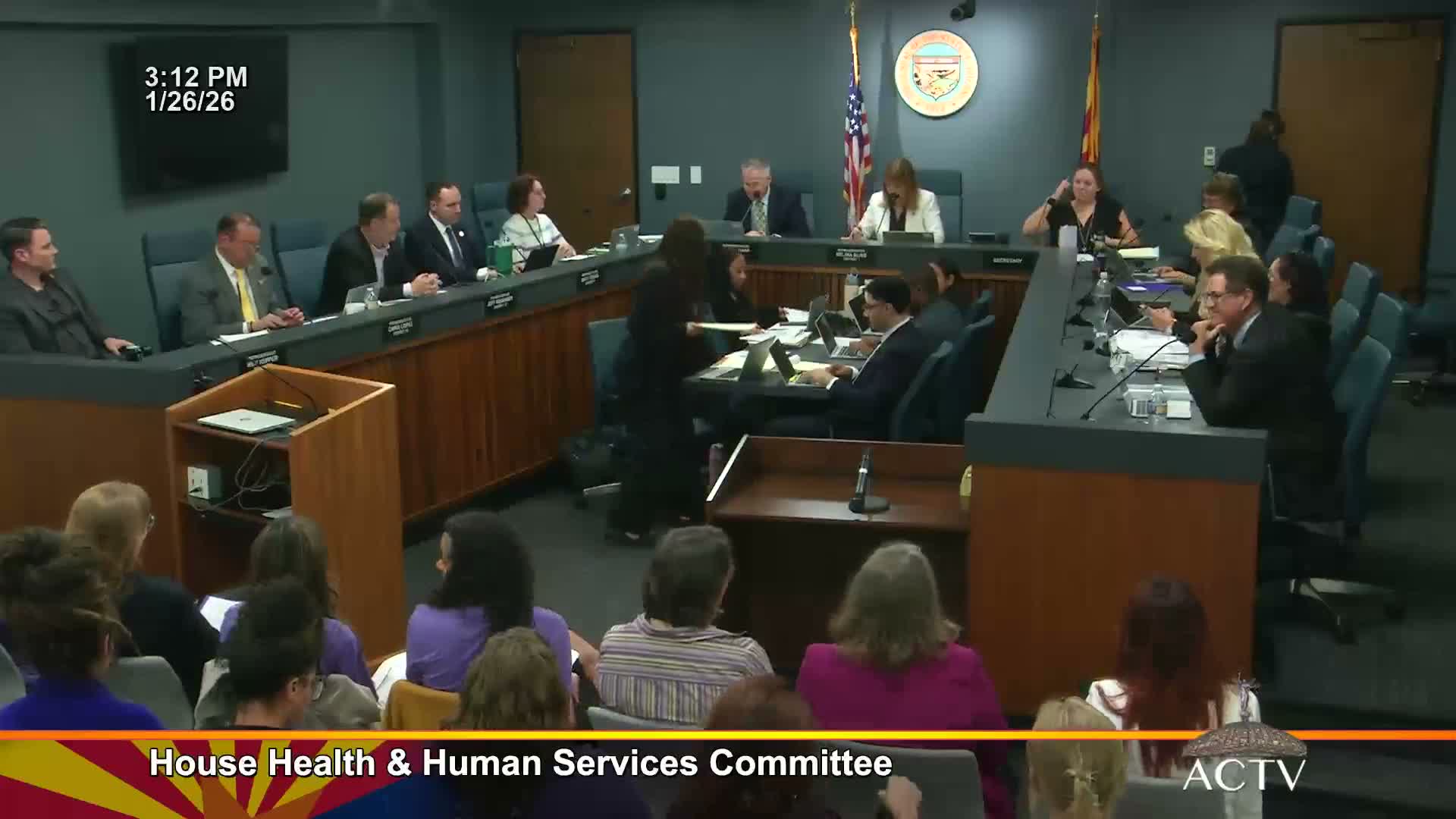
Committee holds midwifery oversight bills after intense stakeholder debate
Loading...
Summary
Lawmakers heard hours of testimony on HB2251 (the Jordan and Mac Terry Act) and HB2252 (allowing midwives to accompany patients in ambulances). Medical associations raised safety and oversight concerns; licensed midwives and families urged regulation and expanded medication access. Both bills were held for further stakeholder work and anticipated floor amendments.
Representative Bliss introduced HB2251 and HB2252, a pair of bills aimed at changing midwifery oversight and scope in Arizona. HB2251 would authorize licensed midwives with specified pharmacology training to dispense and administer certain medications, require disclosure of professional liability insurance to patients, require annual reporting to DHS, and establish an Arizona Midwifery Advisory Committee; Bliss offered the "Bliss Amendment" (dated 01/22/2026) that narrowed the initial medication list and cited the act in honor of Jordan and Mac Terry.
The committee heard lengthy and often emotional testimony from clinicians, professional groups and community members. Dr. Alana Addis (American College of Obstetricians and Gynecologists) testified in opposition to the bill as drafted, urging stronger peer review, oversight and protections around emergency escalation and transport timing. Jeremy Browning, representing the Arizona Osteopathic Medical Association, said the physician community is open to stakeholder work but emphasized patient safety concerns about certain medications and how scope of practice is set in statute.
Licensed midwives including Wendy Koechner and Morgan Burris described national credentialing and training pathways, argued Arizona’s statutory scope is narrower than national standards, and urged better access to critical emergency medications. Morgan Burris recounted the deaths of Jordan and her son Mac and called the measure a necessary step toward oversight and prevention of future tragedies.
HB2252 would allow a licensed midwife to accompany a patient in a ground ambulance and continue necessary care during transport if approved by the medical director. Supporters told rescue stories in which midwives provided continuous neonatal resuscitation or maintained critical interventions during transport; opponents (Professional Firefighters of Arizona) raised concerns about command presence, space, safety restraint and liability on rigs.
Outcome: Committee members directed continued stakeholder discussions. Both bills were held so authors and stakeholders could negotiate language addressing oversight, peer review, training hours, medication lists, emergency transport protocols and the medical‑direction out clauses. Committee staff and members said they anticipate floor amendments based on those meetings.