Committee backs 'Arizona Medical Freedom Act' after heated public-health debate
Loading...
Summary
The House Regulatory Oversight Committee gave HB2248 a due-pass recommendation (3–2) after competing testimony: sponsors framed it as protecting informed consent, while physicians and public-health advocates warned it could hinder infection-control in hospitals, schools and childcare.
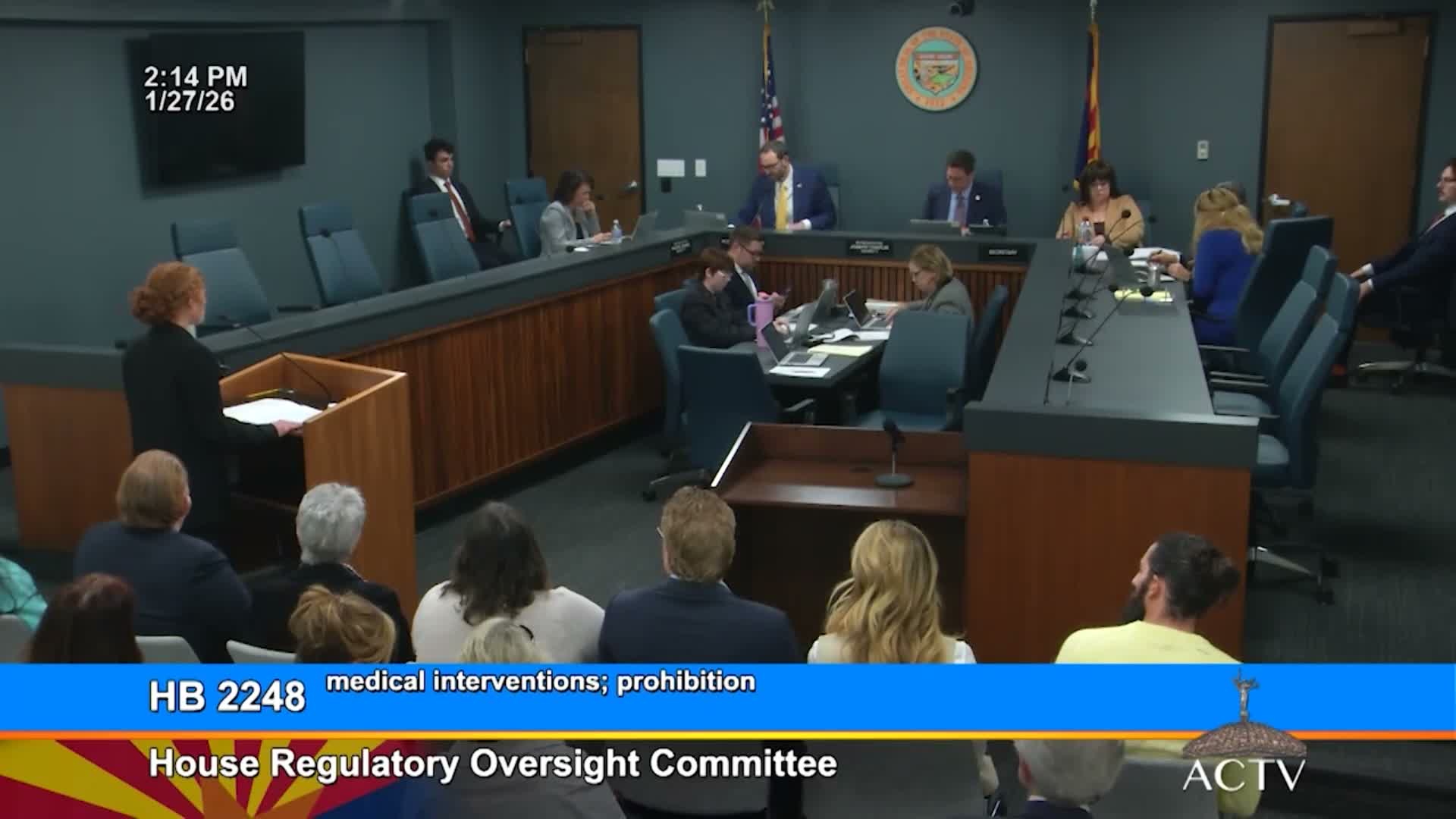
Chairman Joseph Chaplec’s Regulatory Oversight Committee advanced House Bill 22-48, labeled by its sponsor as the "Arizona Medical Freedom Act," after a two-hour hearing that divided lawmakers, physicians and community advocates.
Sponsor Representative Lisa Fink (LD 27) told the committee the bill restores individual medical decision-making by prohibiting governmental entities, businesses, schools and ticket issuers from denying employment, entry, service or other involvement based on whether a person has received or used a "medical intervention." Fink framed the measure as protecting bodily autonomy and parental rights and asked members to support it.
Physicians and public-health advocates who testified against the bill warned of practical risks if the proposal becomes law. Dr. Regan Hill, a pediatrician and public-health-trained clinician who described surviving childhood cancer, said the measure would put immunocompromised children at greater risk by limiting institutions’ ability to require preventive measures. "If there were even a single nurse or administrator who was not properly vaccinated, then just getting in within a certain range of those folks puts my patients at risk," Hill said in testimony recorded for the committee.
Opponents also included Ashley Chambers, executive director of Arizona Families for Vaccines, who said the bill’s definition of "medical intervention" is so broad it could prevent daycares or schools from excluding children with treatable, contagious conditions (for example lice or pink eye) until treatment is complete, and could undermine workplace safety practices such as testing and follow-up after bloodborne exposures.
In support, Dr. John Erthley, an executive physician, described the bill as restoring informed consent and limiting what he called "medical discrimination" driven by politics or incentives. Erthley said the bill would not prevent emergency care, PPE standards, or longstanding workplace safety measures and argued coercion undermines trust in medicine.
Committee members asked repeated questions about the bill’s definitions and practical scope. Witnesses and members agreed the statutory term "medical intervention" may require clarification in the bill’s amendment process because it could be read to include a wide range of past and future clinical measures.
Representative Lupe Contreras and Representative Hernandez voiced concerns about public-safety consequences and potential strain on hospitals and schools; Representative Rachel Keshle and other supporters emphasized individual liberty and the proper role of government in protecting rights. The committee voted to give HB2248 a due-pass recommendation by a 3–2 margin.
The bill now moves to the next step in the legislative process, where staff and members indicated they expect definitions to be clarified before floor debate.