Arizona committee backs bill to protect child influencers, set up Coogan-style trust and takedown process
Loading...
Summary
The House Commerce Committee advanced House Bill 2192, which would require revenue-sharing and Coogan-style trusts for minors who meet monetization thresholds in online content and create a takedown pathway and civil remedy for exploitative depictions; Google testified in support and committee recommended "do pass."
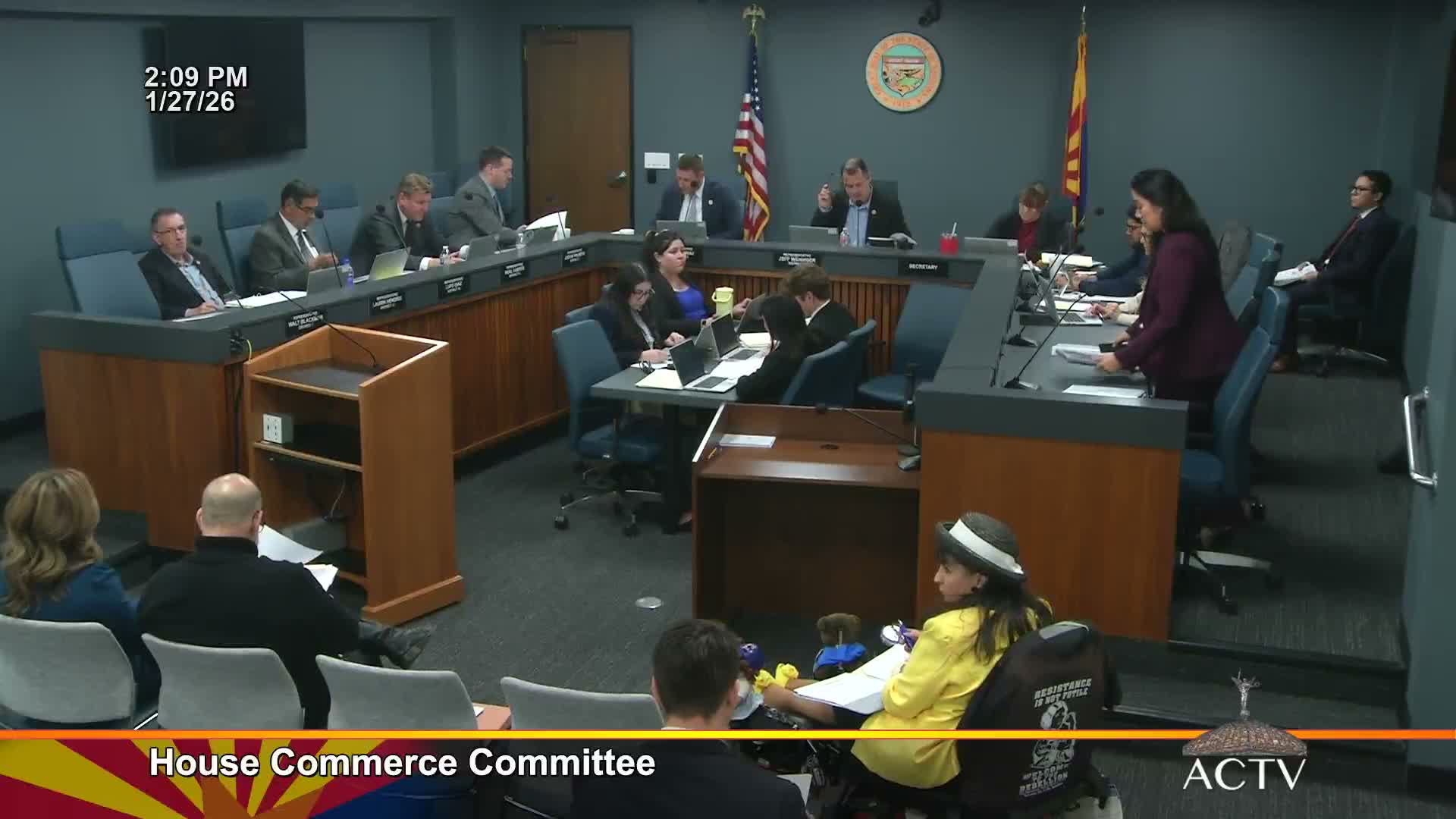
House Bill 2192, a measure to apply Coogan-style protections to minors who appear in revenue-generating online video content, earned a do‑pass recommendation from the Arizona House Committee on Commerce on Feb. 4. The bill’s sponsor, Vice Chair Webb, told the committee the bill is intended to adapt child-actor protections to 'kid influencers' and to ensure minors receive a share of revenue and can seek removal of content they later do not want public.
The bill would require parties who include minors in monetized video channels that meet certain thresholds to place a portion of earnings in a fiduciary trust so that the minor can access funds later, similar to trust protections for child performers. Witness testimony from Colin Larson, Southwest regional manager for government affairs at Google (parent company of YouTube), described three core provisions: a Coogan-style trust for qualifying minors, a platform-facilitated takedown communication pathway, and a civil right of action for exploitative depictions of minors. Larson said YouTube’s partner program already shares advertising revenue with creators and that the bill targets professionalized channels that exceed monetization and appearance thresholds, not casual viral videos.
Committee members pressed sponsors and company witnesses on details including how the trust would apply when multiple minors appear on a channel, how sponsorship payments off-platform would be handled, and the bill’s age cutoffs. Larson said the bill applies only to income paid to the content creator (typically a parent or owner of the channel) and described typical monetization triggers and the content‑creator partnership revenue-share model. He said the bill’s thresholds—such as appearing in 30% or more of content and reaching specified monetization levels—are designed to capture professionalized activity rather than casual posts.
Members also questioned the bill’s takedown provisions and age limits. Representative Aguilar said he would vote for the bill but flagged concerns about the language that allows an individual at 18 to request content removal; Aguilar and others discussed possible changes to ensure timely and practical removal options. The sponsor and Google representatives said they were open to refining language.
After testimony and brief member discussion, the committee moved that HB 2192 be returned with a due‑pass recommendation. The clerk recorded the committee’s recommendation as 9 ayes, 0 nays, 2 present. The bill will proceed to further legislative consideration with the committee’s recommendation.
Actions at the hearing included the sponsor’s motion to return HB 2192 with a due‑pass recommendation and the roll-call tally recorded by the committee clerk. Further amendments or technical edits were discussed but none were adopted in the committee.
The transcript shows advocates and industry witnesses emphasized the bill targets monetized channels and seeks consistency with other states’ laws, while some legislators sought clarified takedown language and threshold specifics before floor debate.