Committee advances PA licensure compact to speed interstate practice and boost rural access
Loading...
Summary
Senate Bill 12‑38, adopting the Physician Assistant Licensure Compact, won a due‑pass recommendation; supporters said the compact increases license portability for PAs, aids military families, unlocks federal funding opportunities and improves access in underserved and rural areas.
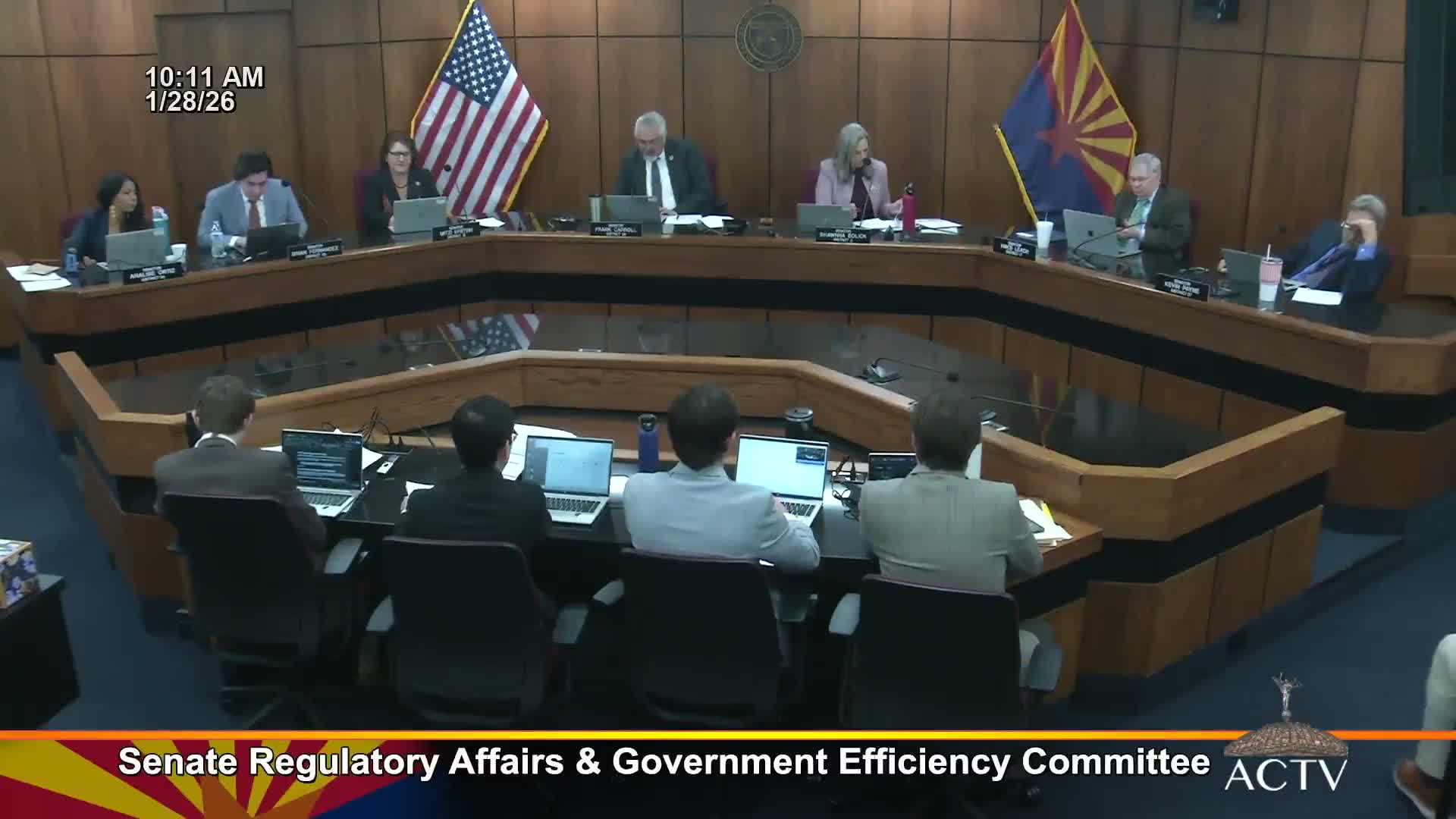
Senate Bill 12‑38, adopting the Physician Assistant Licensure Compact, received a due‑pass recommendation from the Senate Committee on Regulatory Affairs and Government Efficiency on Jan. 21.
Thomas Hartman of the Arizona State Association of Physician Assistants said the compact shortens and simplifies licensure for physician assistants (PAs) moving between member states and already has been enacted in 20 states. He told the committee the compact can increase Arizona’s score for federal health transformation funding and help unlock federal Rural Health Training Program dollars by improving licensure portability and enabling PAs to practice via telehealth in underserved areas.
Hartman also noted the compact benefits military families who move frequently and reduces relicensing costs and delays; he said the adopted compact model was formally supported by the American Academy of Physician Assistants. Committee members asked procedural questions and one senator asked about supervision requirements; Hartman confirmed PAs still practice under physician supervision as applicable under Arizona law.
A committee member moved SB 12‑38 for a due‑pass recommendation; the clerk recorded aye votes and reported the measure as having a due‑pass recommendation.
Proponents said the compact will strengthen Arizona’s health‑care workforce and expand access to care, especially in rural and underserved communities.