Senate committee backs $1 million probe into patient brokering after Native-led testimony
Loading...
Summary
The Senate Health & Human Services Committee recommended SB 11-14, a $1 million appropriation for Maricopa County to investigate patient brokering in behavioral health; Native advocates detailed social-media recruiting, trafficking and abuses and urged strong enforcement and transparency.
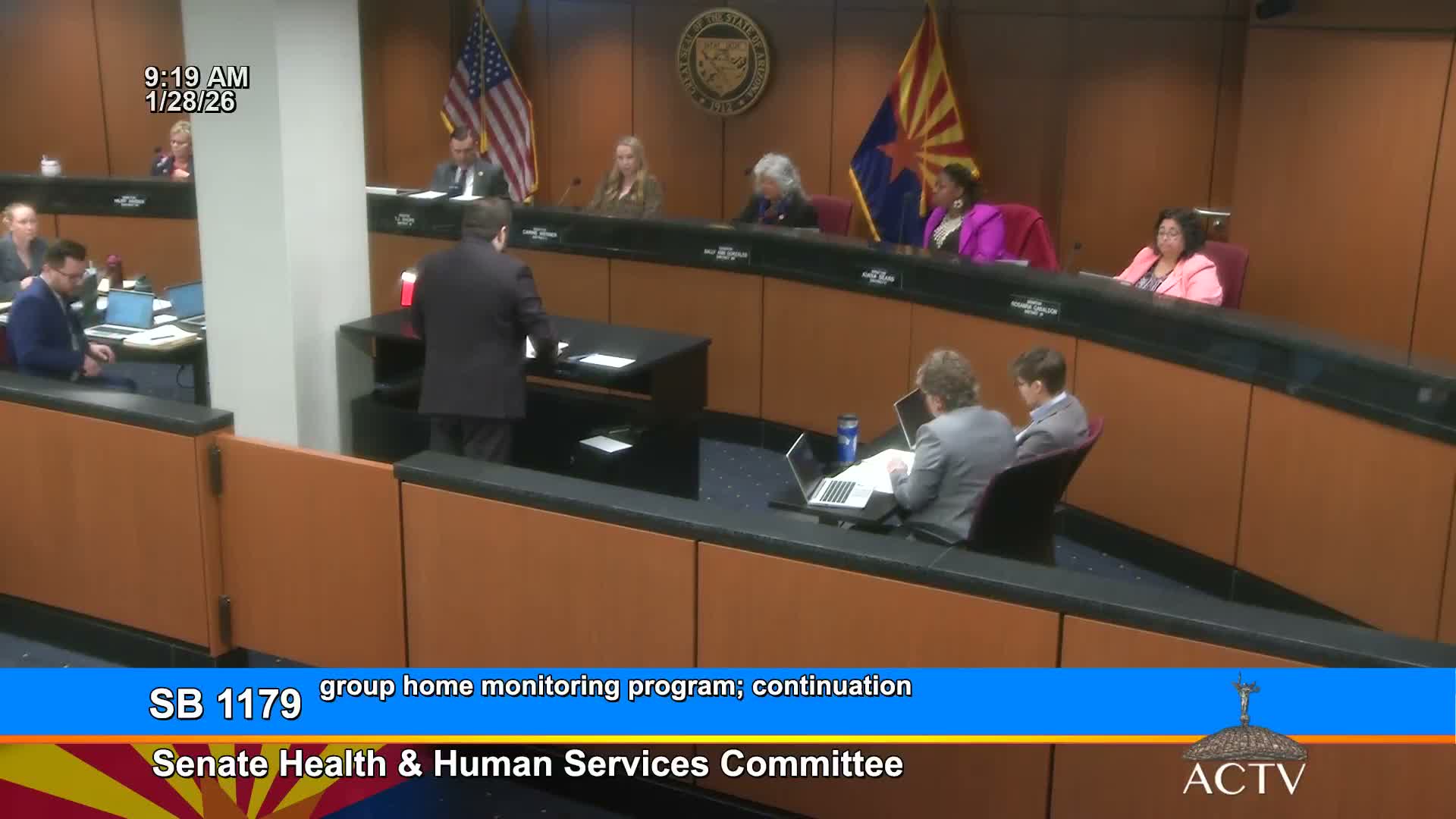
A Senate committee on Wednesday recommended SB 11-14, a bill to appropriate $1,000,000 in fiscal 2027 to the state treasurer for distribution to the Maricopa County Attorney’s Office to investigate patient brokering tied to behavioral-health and sober-living facilities.
The bill’s sponsor told the committee the measure responds to months of research into access fraud and trafficking; committee members then heard nearly an hour of public testimony focused on recruitment and exploitation of Native Americans. "Facilities continue to profit from vulnerable lives," said Reva Stewart, who identified herself as Bear Clan Navajo Nation and urged lawmakers to "include strong oversight, transparency and enforcement" instead of mere reporting requirements.
Advocates offered detailed examples of recruiters approaching people on the street and online, promising housing or payment for enrollment and using those contacts to transport clients into facilities that then failed to provide care. Jared Marquez of the San Carlos Apache Tribe described seeing recruiters carrying clipboards and offering "$5" to sign people up and blamed lax oversight for repeated harm: "Where is the justice?" he asked, recounting family members lost or harmed after placement.
Lawmakers on both sides framed the bill as a needed enforcement tool. Senator Gines, who identified her district and spoke of constituent calls, said the bill represents "a big step" toward addressing a statewide behavioral-health fraud problem. ACCESS legislative liaison Damian Carpenter testified the agency is neutral on the bill’s intent but raised implementation questions the committee asked him to answer offline.
The committee moved SB 11-14 with a due-pass recommendation. The measure now moves to the Senate floor, where members said further amendments on accountability and fiscal details might be considered.