Arizona committee advances bill to require white‑lining and more coordination for large excavations

Committee on Regulatory Affairs and Government Efficiency · January 28, 2026

Get AI-powered insights, summaries, and transcripts

Subscribe
AI-Generated Content: All content on this page was generated by AI to highlight key points from the meeting. For complete details and context, we recommend watching the full video. so we can fix them.

Summary

The Senate Committee on Regulatory Affairs advanced SB 11‑37 after stakeholders said the bill will modernize Arizona's 811 system by requiring excavators to white‑line dig areas, creating coordination meetings for large projects, and adding an interactive positive‑response tool; cities urged narrower definitions and clarity on staffing and liability.

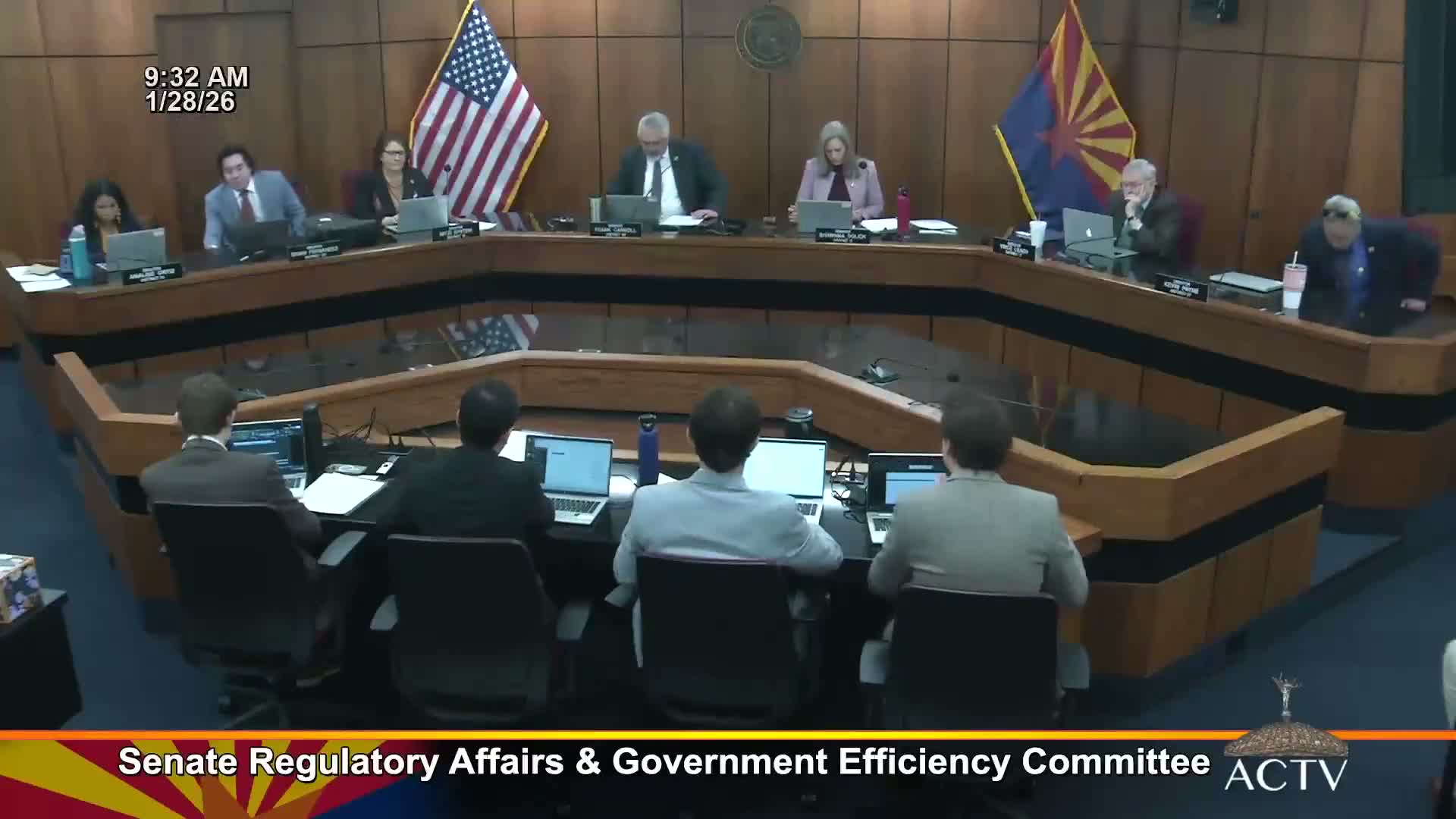
The Senate Committee on Regulatory Affairs and Government Efficiency on Jan. 21 advanced Senate Bill 11‑37, which would require excavators to clearly mark proposed dig areas with white lining before submitting a notice to Arizona 811 and would create enhanced coordination, marking and positive‑response procedures for large projects.

Proponents told the committee the changes are aimed at reducing delays and safety risks caused by missed or inconsistent facility markings. “It has become increasingly common that these are not completed on time, resulting in project delays, lost revenue for companies, and lost wages for employees,” Michelle Walker, vice president of operations for SSC Underground, said in support of the bill.

Sandra Holmes, executive director of Arizona 811, testified as neutral and provided data on current demand: she said Arizona 811 processed about “930,000 marking requests” in 2025 and issued “5,700,000 notifications” last year using the Exactix system. Holmes clarified that Arizona 811 serves as the communication and coordination center and does not perform marking; utilities are responsible for marking and the Arizona Corporation Commission Office of Pipeline Safety enforces compliance, with civil penalties up to $5,000 per violation.

The League of Arizona Cities and Towns expressed concern that the bill’s coordination and meeting requirements could create staffing and resource burdens for municipalities and asked for a narrower definition of “large project” and clearer guidance on required participants, scheduling, and operational liability. Tom Savage of the League said the current definition could capture routine projects better handled through the existing 811 ticketing system.

The Associated General Contractors and other construction stakeholders strongly supported SB 11‑37, saying the changes reflect national best practices and were developed collaboratively to address delayed responses, inconsistent markings and communication gaps that especially affect extended projects. “This legislation is not about adding unnecessary regulation or rules. In fact, it’s the opposite,” Todd Wynne, director of government affairs for the Associated General Contractors, told the committee.

After testimony and brief discussion, a committee member moved SB 11‑37 with a due‑pass recommendation; the motion passed by the committee and was reported as 7 ayes, 0 nays, 0 not voting.

The bill would require the Arizona Corporation Commission to adopt implementing rules within one year of the law’s effective date if enacted. Sponsors and proponents said they expect to continue stakeholder conversations on scope, scheduling and liability as the bill proceeds to the floor.