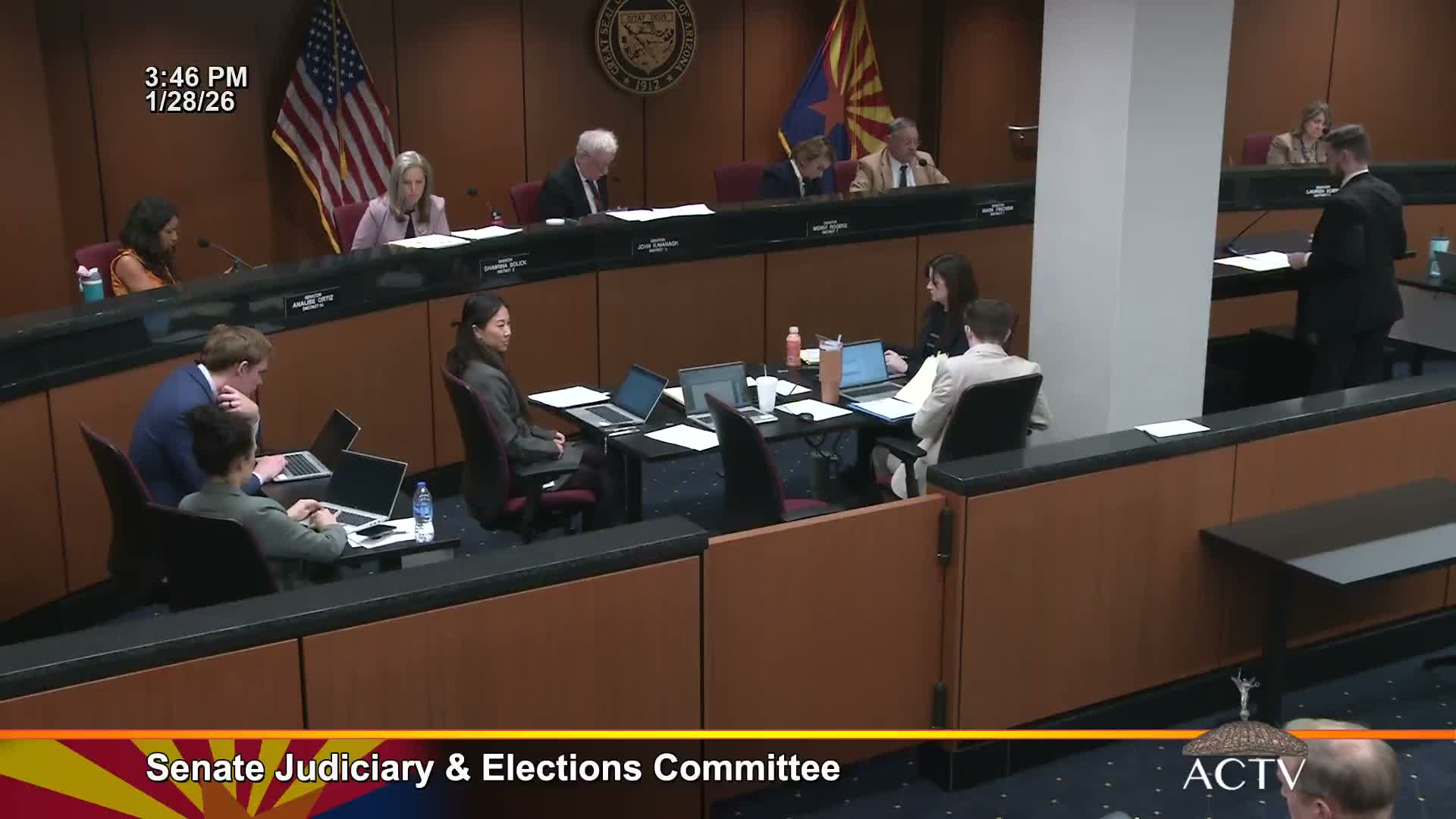
Committee advances sentencing bill after emotional family testimony; opponents warn against mandatory minimums
Loading...
Summary
SB 1170, which creates a mandatory sentencing range for selling narcotics that contribute to a minor's death, was given a due-pass recommendation after families urged accountability and criminal-justice groups cautioned against mandatory minimums and overbroad application.
SB 11 70, which establishes a sentencing range with a 10‑year minimum and up to 25 years for persons whose sale of a narcotic contributed to the death of a minor, received a due‑pass recommendation from the Senate Judiciary and Elections Committee.
Families of victims delivered emotional testimony demanding accountability for dealers. "My son had one moment of curiosity...and my son was gone forever," said Vanessa Ayala, who testified about her 17‑year‑old son and urged the committee to pass the bill. Another family member similarly asked that dealers be held accountable.
Defense lawyers and criminal-justice organizations warned the bill's mandatory minima could sweep in peers, people with addiction, or those sharing pills, and that existing homicide statutes (negligent homicide, manslaughter) already allow prosecution. Robert McWhorter said mandatory minimums remove judicial discretion and risk imprisoning people who should not receive lengthy sentences.
Committee action: After testimony from many witnesses on both sides, the committee voted 4–3 to give SB 11 70 a due-pass recommendation. Several senators emphasized concern about mandatory minimums and asked for further discussion on proportionality and alternatives.
Next steps: The bill advances to the Senate floor. Supporters framed it as an accountability measure; opponents urged caution about mandatory penalties and urged investment in prevention and treatment.