
Committee advances paired bills to change renewal and notice process for court‑ordered treatment
Get AI-powered insights, summaries, and transcripts
Subscribe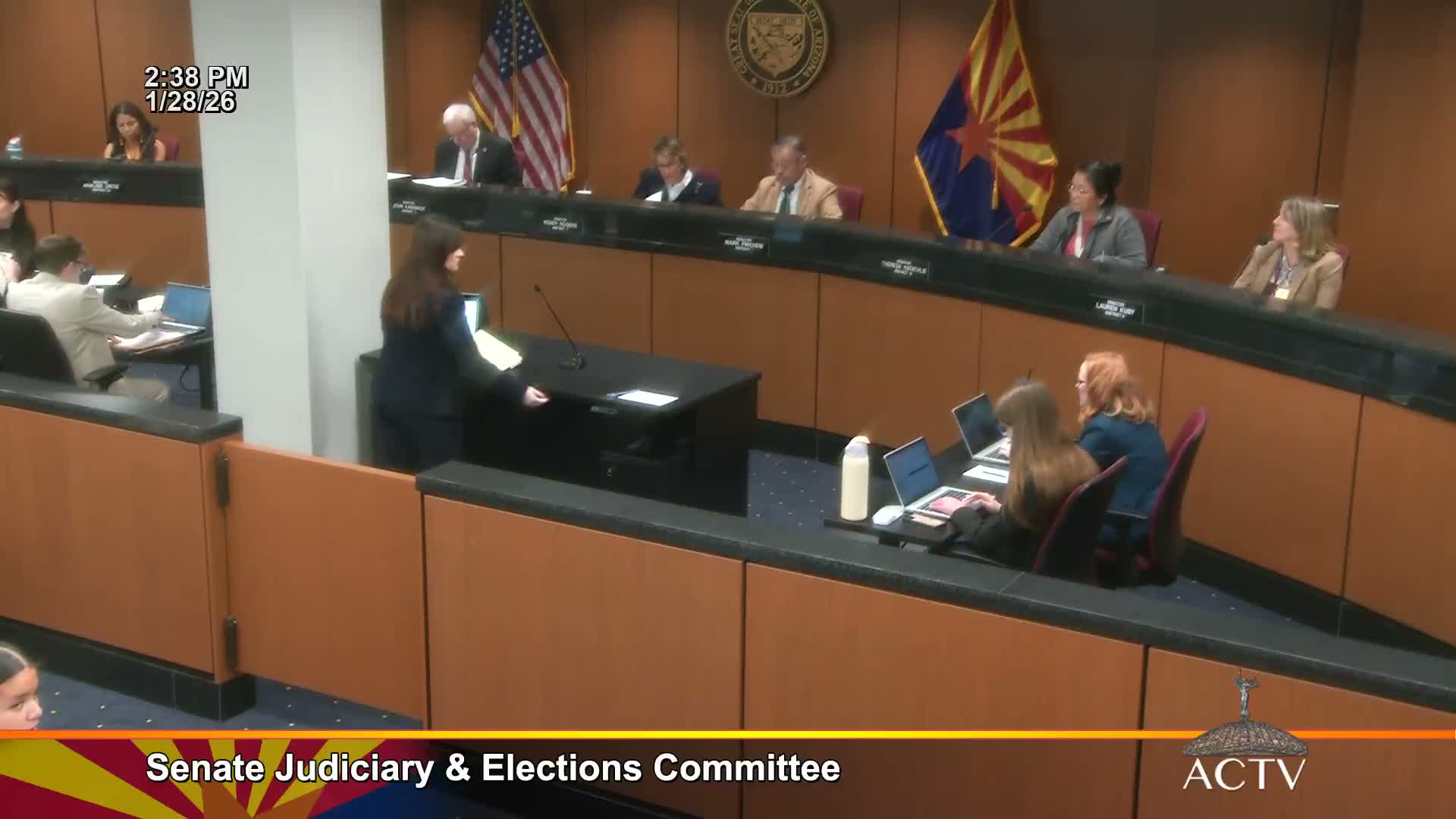
Summary
SB 1243 and SB 1244 were given due-pass recommendations after families and advocacy groups described systemic lapses in court‑ordered-treatment renewals; civil‑liberties groups warned the bills could reduce due process and enable indefinite involuntary confinement without added safeguards.
Two related bills addressing court-ordered treatment (COT) stepped forward from the Senate Judiciary and Elections Committee.
SB 1243 would require notification to guardians when a medical director intends to release a person subject to court-ordered treatment and would give guardians a right to seek independent evaluation and petition for continued COT in certain circumstances. SB 1244 would create a process to convert consecutive renewals into continuing court-ordered treatment and remove statutory maximums for continuing orders, with annual reporting requirements from medical directors.
Family members and advocacy groups described repeated failures of clinics to renew COT orders, producing what speakers called a "carousel" of patients cycling into hospital, jail or homelessness. Testimony from parents and the "mad moms" network recounted tragic outcomes when court-ordered treatment was not renewed. Supporters argued both bills close administrative gaps and keep the most seriously ill patients in needed treatment.
Opponents including the ACLU and Arizona Attorneys for Criminal Justice warned both bills could diminish due process protections, permit indefinite confinement and enable escalation to involuntary treatment; they urged amendments to ensure court-appointed counsel and stronger procedural safeguards.
Committee action: The committee adopted amendments (including a Rogers amendment on SB 1244), debated due-process concerns, and ultimately recommended both bills for passage (SB 1243: 7–0; SB 1244: 6–1). The committee recorded requests for follow-up language to clarify attorney appointment and procedural protections.
Next steps: Both bills move to the Senate floor. Legislators and civil‑liberties groups signaled readiness to negotiate technical fixes before final passage.