Committee backs $400,000‑scale pilot to trial AI tools for veterans' claims; members demand guardrails
Loading...
Summary
Lawmakers recommended a due‑pass for HB2245, an appropriation to pilot AI‑assisted claims review at the Arizona Department of Veterans Services. Private attorneys and veterans lauded the time savings and benefit recoveries, while members sought limits to ensure human final authority and tribal/technical safeguards.
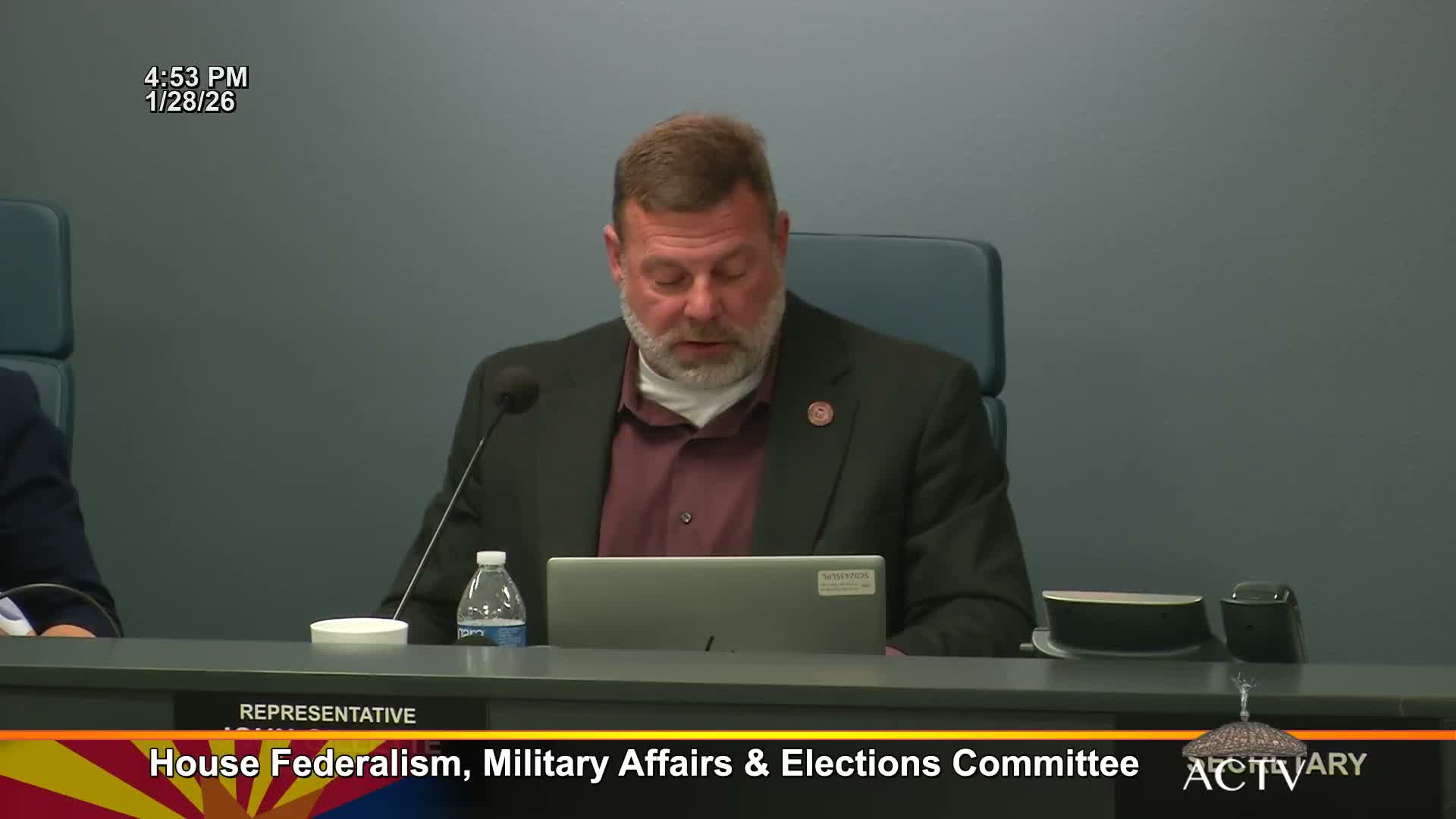
House Bill 2245, a pilot program to integrate AI‑assisted digital review tools into Arizona’s veterans benefits process, advanced out of committee with a due‑pass recommendation after technical expert testimony and extensive member questioning.
Committee testimony from private practitioners and tech advisors described AI systems that organize voluminous claims files, identify secondary service‑connection theories and assemble VA‑ready packages to reduce counselor time. "Since that time, we have filed 6 times more appeals than the 3 years prior, and we have obtained $22,000,000 in past due benefits for our veterans," attorney Derek Davis told the committee when describing private‑sector experience with the tools.
Sponsor Representative Blackman and supporters framed the pilot as focused, time‑limited and measurable; language in the bill sunsets the pilot on 06/30/2027. Members pressed on vendor provenance, the underlying models, whether large language models or other architectures would be used, data security/HIPAA compliance, training for veterans benefits counselors (VBCs) and tribal participation. Experts said the procurement would be competitive (RFP) and include on‑the‑ground training as part of vendor deliverables.
Several lawmakers sought explicit guardrails in statutory language to ensure AI systems do not make final determinations and that humans retain decisive authority over claims and signatures; sponsor agreed to tighten language to preserve human final authority and to include sunset and metrics to evaluate success.
The committee voted to give HB2245 a due‑pass recommendation (6–1). The bill’s backers emphasized a modest initial appropriation (committee discussion referenced a $400,000 figure for pilot onboarding and training) and metrics to measure accuracy and the speed of delivery; potential federal benefit recoveries were cited as offsetting the state investment.
Next steps: Appropriations will review budget figures and the committee asked sponsors and the Department of Veterans Services to provide final procurement, training and tribal‑engagement plans prior to floor action.