
Panel advances bill to create state office to pursue fraud claims linked to foreign‑adversary technology
Get AI-powered insights, summaries, and transcripts
Subscribe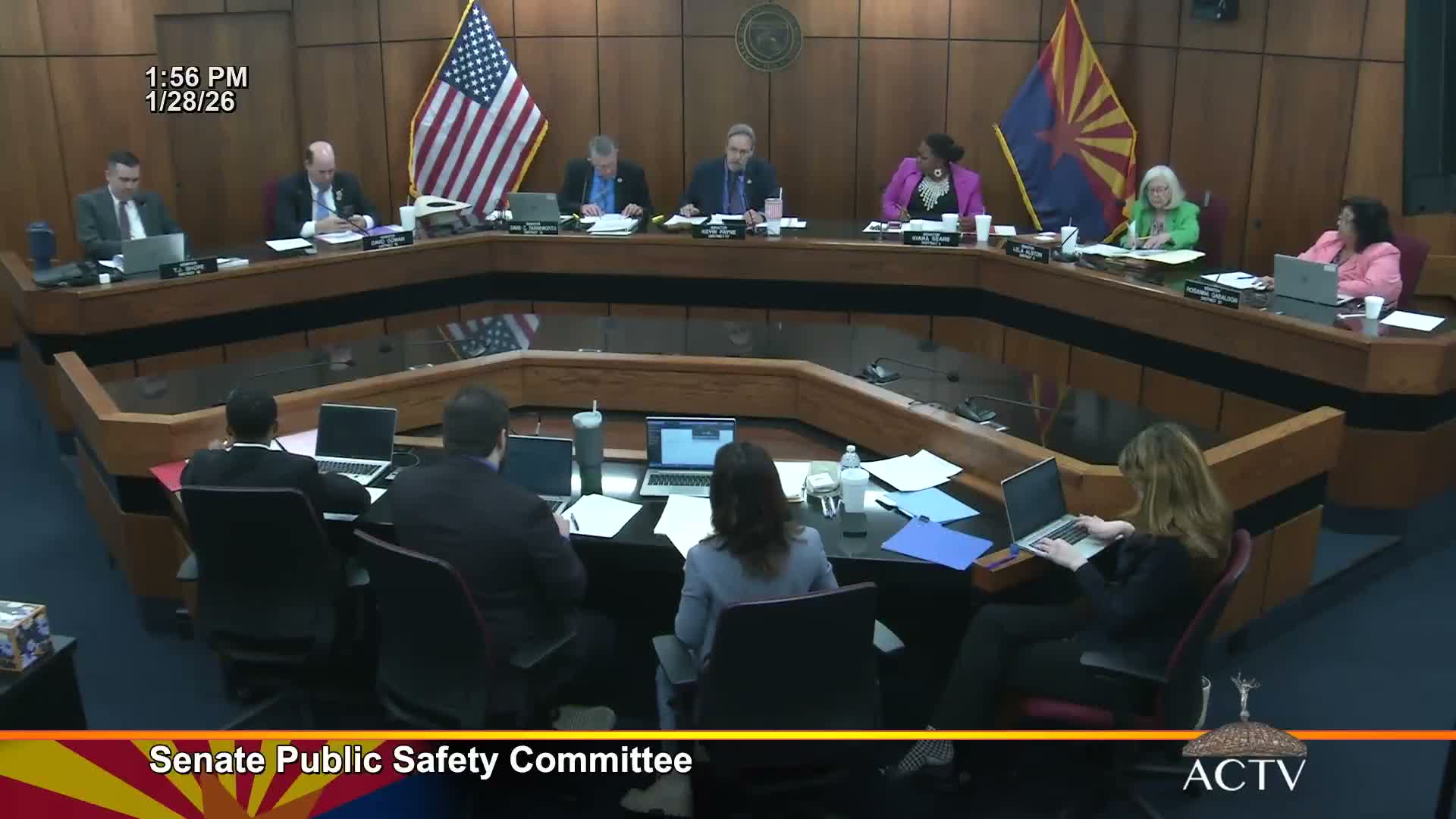
Summary
SB 13‑08 would create a Foreign Adversary Fraud Office in the attorney general’s office, a fraud fund and a rip‑and‑replace fund to remove and replace critical infrastructure technology produced by foreign adversaries; the committee gave the bill a due‑pass recommendation after stakeholder testimony about security risks from relabeled devices and solar inverters.
The Arizona Senate Public Safety Committee voted to advance SB 13‑08, a bill to establish a Foreign Adversary Fraud Office within the attorney general’s office and to create two funds: a Foreign Adversary Fraud Fund for investigations and litigation and a Rip and Replace Fund to replace critical infrastructure technology produced by foreign adversaries.
Presenter materials say the measure would require the attorney general to appoint an office director, administer the fraud fund, and transfer fraud‑fund monies above a statutory threshold into the rip‑and‑replace fund. The bill includes an initial appropriation of $500,000 from the state general fund for FY2027 and sets repeal dates for the office and the rip‑and‑replace fund in the early 2030s.
Senator remarks framed the office as a state counterpart to the federal Committee on Foreign Investment in the United States (CFIUS). Michael Lucci, founder of State Armor, testified the risk is concrete, citing relabeled cameras that have appeared on U.S. critical infrastructure, reporting tying solar inverters to backdoors into power grids, and recent federal sanctions related to battery makers. Lucci characterized some of these incidents as both national‑security risks and potential consumer fraud when buyers are not informed of foreign‑adversary ties.
Supporters argued the office would provide state‑level authority to pursue civil claims, fund litigation and help replace compromised equipment in state‑owned critical infrastructure (examples cited included cameras, solar inverters and batteries). The committee moved the bill and recorded a 7‑0 roll call in favor of a due‑pass recommendation.
The committee record shows the bill advances to further legislative consideration. The transcript contains a garbled numeric reference to a statutory transfer threshold that was not clearly articulated; articles avoid repeating the unclear figure and instead report the bill’s specified $500,000 FY2027 appropriation and the general transfer requirement described by the presenter.