
Arizona committee advances bill aimed at stopping manufacturers from ‘bricking’ consumer devices
Get AI-powered insights, summaries, and transcripts
Subscribe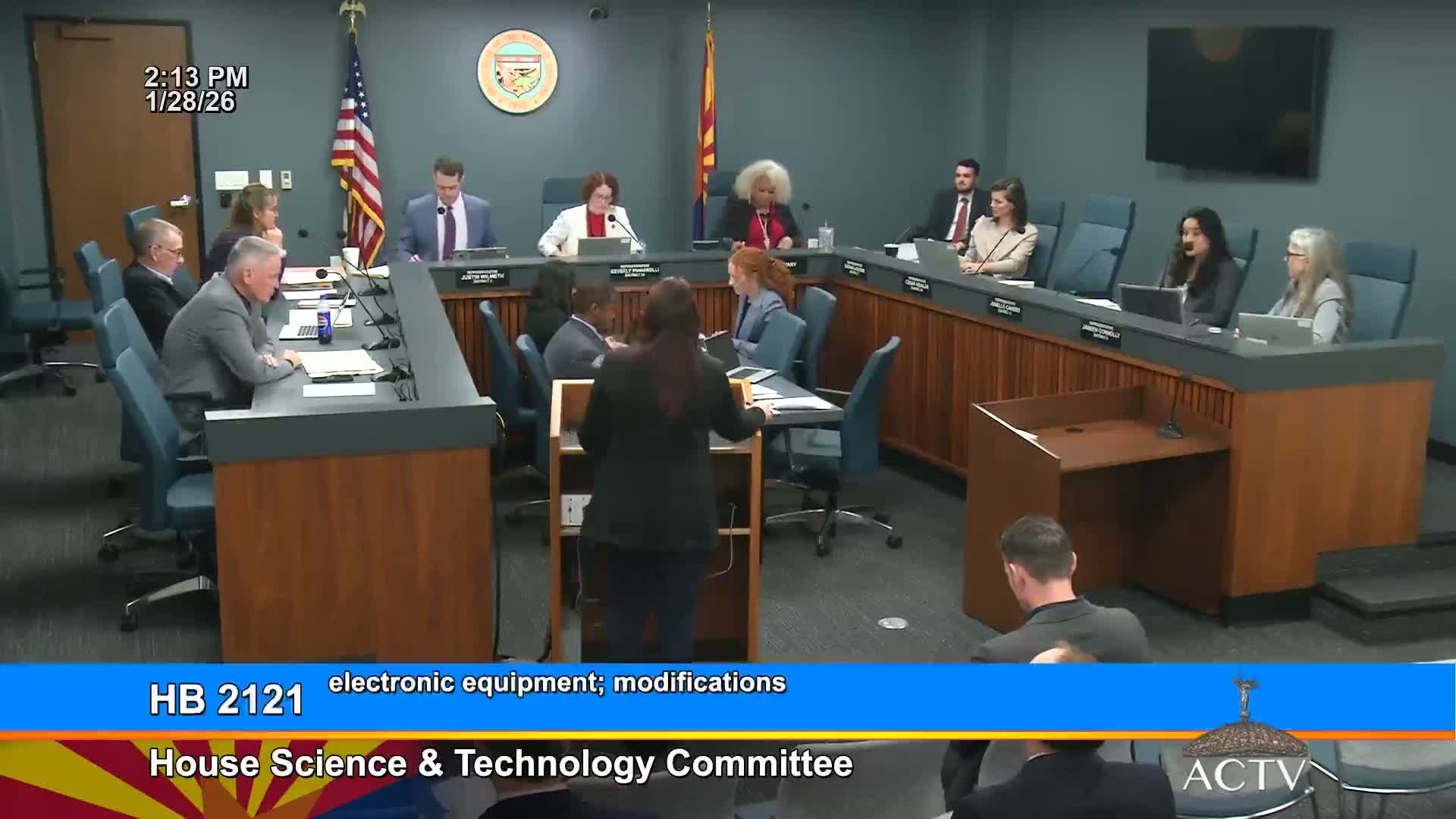
Summary
The Science and Technology Committee returned HB 21‑21 (the "True Ownership Act") with a due‑pass recommendation after members adopted a Representative Fink amendment narrowing exemptions for commercial and industrial equipment. Supporters said the bill protects consumers who install third‑party parts or modify device firmware; members asked for further technical safeguards on security and manufacturing impacts.
The Arizona House Committee on Science and Technology on Jan. 27 advanced House Bill 21‑21, the so‑called True Ownership Act, a consumer‑protection measure that would bar original‑equipment manufacturers from disabling electronic devices sold or used in Arizona after an owner makes modifications such as installing third‑party parts or applying firmware changes.
Sponsor remarks framed the proposal around everyday examples. "Certain printers…if you buy them and you want to install your own third‑party ink cartridge, they will brick your device," the sponsor said, arguing that owners should retain meaningful control over devices they purchase. The committee adopted a four‑page amendment in Representative Lisa Fink’s name that narrows exemptions for equipment intended for commercial, industrial, business‑to‑business use or for some off‑road or specialized products.
Members pressed the sponsor on possible manufacturing and supply‑chain effects. Representative Chanel Cabrero said she worried the bill could increase inventory‑carrying costs and complicate sourcing for products that include components from multiple suppliers. The sponsor responded that the bill addresses software controls rather than hardware sourcing and that carve‑outs and legal exceptions are included for cases where modifications would violate law or create security risks.
Staff noted the bill would allow an owner—or the state attorney general—to bring a civil action in superior court to seek damages for violations. Tasha McMaster, committee research staff, told members the amendment would exempt certain categories of non‑consumer equipment and that staff would provide a copy of the committee rules and the amendment text for review.
After brief follow‑up questions about security and implementation the committee voted to adopt the amendment and returned HB 21‑21 as amended with a due‑pass recommendation. The roll call showed seven ayes, one nay and one present.
The bill will next proceed to the House floor where members who voted no or present said they may seek further amendments or discussion.