
Providers tell lawmakers ADHS enforcement is punishing technical violations; tribal advocate calls for accountability
Get AI-powered insights, summaries, and transcripts
Subscribe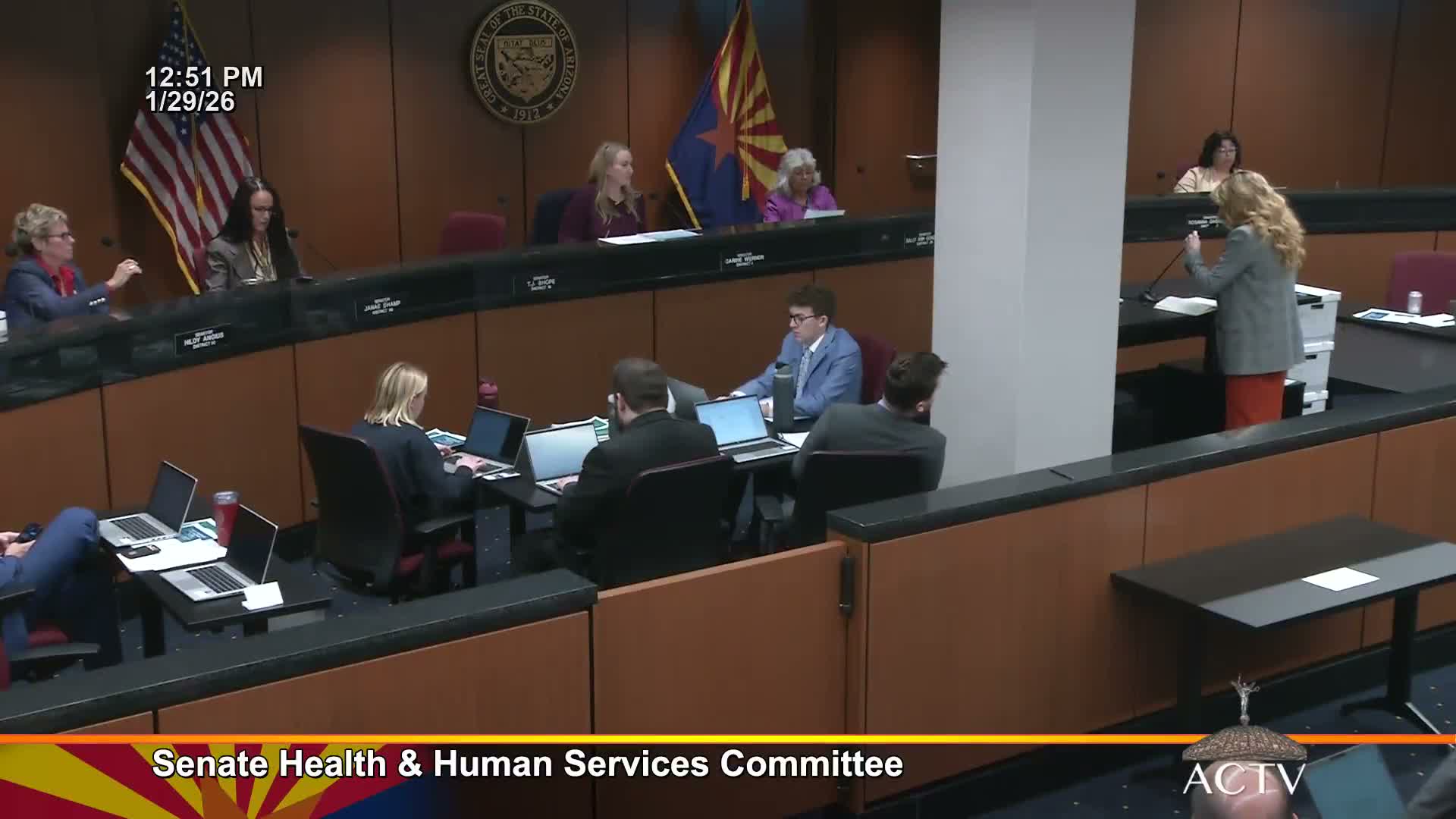
Summary
Behavioral health operators and a Navajo Nation advocate told the committee that enforcement and unlicensed patient-brokering have harmed patients and good operators alike; ADHS and Access described technical assistance, new systems and outreach but members pressed for clearer statutory tools and timelines.
Attorneys and providers testifying at the hearing asked legislators to distinguish technical paperwork errors from health-and-safety violations and to give operators an opportunity to correct low-risk deficiencies before formal enforcement. Heather Dukes, who said she represents behavioral-health and sober-living operators, told the Senate committee that ADHS sometimes bypasses corrective-plan steps and sends operators directly to enforcement or administrative hearings. "We want to enact a statute... which distinguishes between technical violations... versus critical violations that rise to the level of jeopardizing the health, safety, and welfare of residents," she said.
A public commenter, Reva Stewart (Bear Clan, Diné), described organized recruitment and patient brokering that targets vulnerable people via social media and alleged trafficking into unsafe placements since at least 2019. "This recruitment is happening in plain sight," Stewart said, and urged audits of Medicaid billing, investigations into social-media recruitment and enforceable oversight rather than symbolic penalties.
Agency responses: Tiffany Slater, Deputy Assistant Director, Division of Licensing at ADHS, told legislators complaint volumes have diverted staff from annual compliance inspections and described recent tools that increase enforcement authority for sober-living operations. Slater said the licensing-management system upgrade helps flag problematic licensing histories, but cautioned that fingerprinting may not preemptively catch all bad actors if no prior criminal history exists.
Committee concerns and requests: Members pressed for concrete examples of technical violations and for a member list of examples from Dukes; they asked ADHS and Access for more timely data on unlicensed locations, clarification on why so many operators remain unlicensed and documentation on how enforcement decisions and inspections were scheduled and recorded. The committee requested a list of technical-violation examples and follow-up materials from ADHS.