Mobile council reviews $1.1 million funding request to sustain DA office’s backlog reductions
Loading...
Summary
The Mobile City Council heard a request from Mobile County District Attorney Keith Blackwood for an intergovernmental funding agreement to continue temporary aid that halved the COVID-era case backlog; council members pressed for long-term fixes and noted $1.1 million is already budgeted in the general fund.
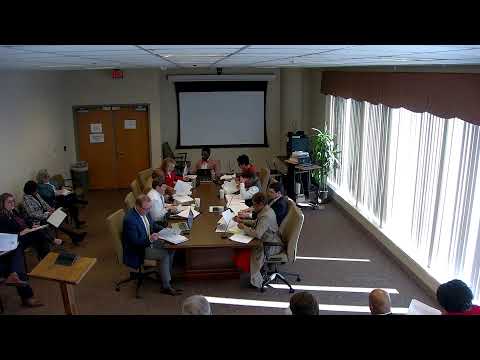
Mobile City Council members on Feb. 3 heard a request to continue municipal funding that the Mobile County District Attorney sked to sustain reductions in the office—s case backlog and to avoid staff layoffs.
The council considered resolution 01121, an intergovernmental agreement authorizing the city to provide funding assistance to the District Attorney—s Office. A representative of the office said temporary funding provided three years ago helped eliminate a COVID backlog in about a year and cut the overall backlog in half; without continued support, the office expects caseloads and pretrial jail populations to rise and time-to-trial to lengthen.
Why it matters: Council members repeatedly framed the request as a short-term stopgap that preserves progress while the DA and state lawmakers pursue a longer-term funding solution. Members emphasized the city—s budgeting trade-offs and the need to pressure state leaders to assume greater responsibility for statewide prosecutorial funding.
Details and debate: The DA—s representative told the council the office receives roughly 20.7% of its funding from the state and about 50.1% from the county; the remainder is raised from fees and grants. When asked whether the DA—s office could operate without city funds, the representative said, "We could. I believe that the numbers will go back up," adding the office has struggled to retain attorneys and that "worst case scenario, there would be layoffs." The representative said the funding request would maintain recent progress but would not immediately deliver staffing at American Bar Association standards; he estimated it would take about $5.3 million to double prosecutors to desired staffing levels.
Council members pressed multiple angles: what percentage of the DA budget the request represented (the DA estimated about 18%), whether other municipalities had been asked to assist (some have, but not at Mobile—s level), and whether statutory differences in county funding explain variations across circuits. Several members emphasized collaboration with Mobile County and plans to lobby state legislators; one councilmember said $1.1 million was already budgeted in the city—s general fund for this purpose.
What happens next: Council members said they would seek a short-term path to fund the DA while continuing to advocate for a statewide funding solution; several pledged to join lobbying efforts to press the legislature and to coordinate with county officials. The resolution was presented and discussed during the meeting; no final roll-call vote was recorded on the transcript.