Get Full Government Meeting Transcripts, Videos, & Alerts Forever!
Get email alerts on the Mosquito Control topic
No spam. Unsubscribe anytime.
Local business proposes volunteer-led BTI 'mosquito dunk' program for South Lyon parks
Summary
Owners of Witches Hat Brewing Company proposed a volunteer program to deploy BTI 'mosquito dunks' in city parks as a low‑cost larvicide alternative to spray treatments; presenters offered to donate start-up materials and coordinate student volunteers while DPW and council asked for more data and will review the packet.
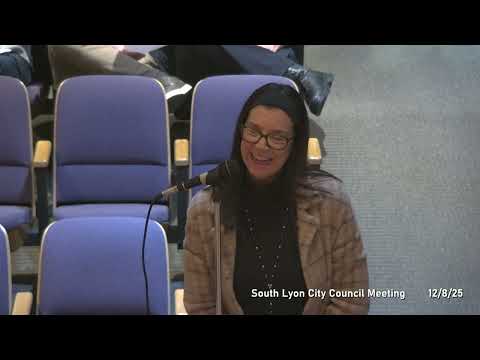
Erin and Ryan, founders of Witches Hat Brewing Company and South Lyon residents, sought council approval to pilot a volunteer-run mosquito-control program that uses BTI (Bacillus thuringiensis israelensis) "mosquito dunks" to kill mosquito larvae in park water sites rather than relying on chemical spraying.
The presenters said 380 people responded to a downtown branding survey and described plans to donate buckets and initial materials for a trial. They estimated treating the roughly 50 acres that have been treated in prior years (city parkland totals about 200 acres) would cost about $800 for the first season under a worst-case scenario, with ongoing annual costs around $200 after initial hardware purchases. Witches Hat proposed working with Martin's Hardware to purchase dunks and using South Lyon High School Key Club and NHS student volunteers to assemble and place buckets in park areas; they said students would maintain the program monthly through the mosquito season.
"There's no cost to you to try this," a presenter said, adding that BTI targets mosquito larvae, is widely used by other municipalities and universities, and is less harmful to pollinators than adulticides. The presenters handed council a packet of sources and offered to provide an electronic copy for staff review.
Council members asked operational questions about scale and security. One council member summarized deployment needs as about two buckets per acre and asked how volunteers would prevent buckets from being dumped or stolen; presenters said they would site buckets away from high-traffic areas, attach or anchor them where recommended by vendors, and create a map of approved locations.
DPW information shared at the meeting noted the city's current contractor (D & G Nature's Way) treats creek-adjacent areas four times annually using a bifenthrin product mixed at about 0.3 fluid ounces per gallon (presented as roughly 0.23% active ingredient for that application). DPW indicated it is open to reviewing alternatives if presenters provide sources and operational plans.
Council members asked whether BTI is as effective as spraying for population control and whether it addresses ticks or other pests. Presenters and councilors agreed BTI targets mosquito larvae in standing water and would not control ticks; council members asked staff to evaluate metrics and evidence cited by the presenters before any citywide change.
No formal policy or contract was approved. The council asked that the presenters submit the electronic packet and sources to the DPW superintendent for review and return with additional information for future consideration.