Get Full Government Meeting Transcripts, Videos, & Alerts Forever!
Get email alerts on the Animal Care Facility topic
No spam. Unsubscribe anytime.
Kyle council approves interlocal deal and design contract for regional animal-care facility after tense debate over costs and governance
Summary
After extended public and council questioning about costs, service areas and governance, Kyle voted 6–1 to approve an interlocal agreement with Hays County and Buda to host a regional animal-care facility and separately approved a $1.66 million design contract; councilmembers pressed for clearer caps and stepped approvals before construction.
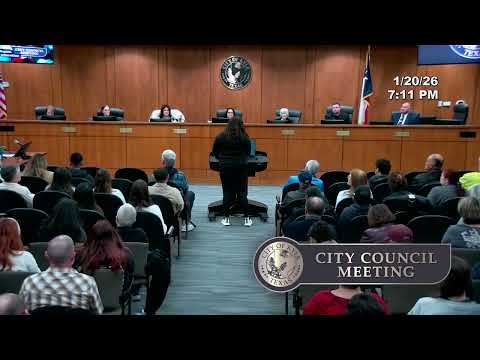
The Kyle City Council voted on Jan. 20 to enter an interlocal partnership with Hays County and the City of Buda to develop a regional animal-care facility on a site east of I‑35, and to award a $1.66 million design contract to Jackson & Ryan Architects to produce construction documents.
What the council approved: By roll-call vote (6–1), the council approved a resolution authorizing Kyle to participate in a joint animal-care facility with Hays County and Buda. City staff said the service area would cover a large portion of the county but that Kyle would retain ownership and operation of the facility. Later the council approved the design contract for $1,660,000; Kyle’s share of the design contract was listed as $542,820 under the ILA cost-sharing arrangement.
Key fiscal and governance issues raised: Council members and residents repeatedly asked for clearer, fixed cost numbers rather than percentage splits. Staff and county representatives said planning-level cost ranges for the full service-area facility are approximately $14 million–$24 million, and that Kyle’s portion of the capital cost would likely be about $4.5 million–$8.0 million (planning-level estimates). Estimated annual operations for the regional facility were discussed in wide ranges; staff said the total operations for the full service area could range in the low millions, and Kyle’s operational contribution was estimated roughly at $650,000–$1,500,000 annually under the ILA, depending on intake and program choices.
Why partners back the plan: Hays County officials said a regional approach spreads costs, avoids duplicative countywide expense, and enables coordinated programming and higher live-outcomes for animals. County commissioners also said the county plans satellite facilities in areas with different needs but sees Kyle’s facility as the principal catchment hub.
Council controls and safeguards: Staff emphasized that the city will control operations and must bring future decisions (construction contracts, final scope) back to the council; the ILA includes termination and defeasance language intended to protect partners from unilateral withdrawal. Council members asked staff to return with clearer caps and to ensure major cost increases would require further council approval.
Vote details and next steps: The ILA passed by roll call 6–1 (Mayor Flores Kale voted no). Council later approved the design contract (motion by Mayor Pro Tem Tobias, second McKinney) by voice vote (6–1). Staff said the first month of design will confirm program and intake numbers; full construction documents and permitting will follow with additional council approvals before construction funding is committed.