Get Full Government Meeting Transcripts, Videos, & Alerts Forever!
Get email alerts on the Land Use Rezoning topic
No spam. Unsubscribe anytime.
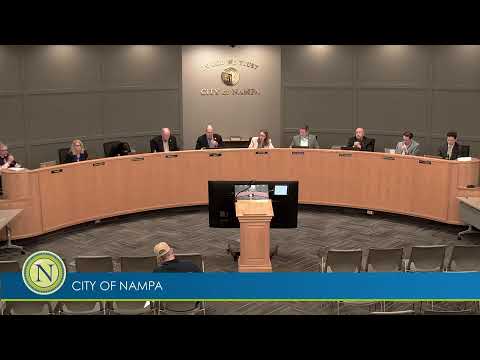
Nampa council narrowly approves rezoning at 602 Chicago Street amid septic and shared-drain concerns
Summary
After extended questioning about sewer availability and a proposed shared drain field, the Nampa City Council approved a rezoning from RA to RS-6 for a lot split at 602 Chicago Street. Council required agency approvals and recorded agreements before permits proceed.
The Nampa City Council voted to rezone a parcel at 602 Chicago Street from RA (rural/agricultural) to RS-6 (single-family residential), clearing the way for a planned lot split and construction of a new single-family home on the southern portion of the property.
The vote followed a lengthy public hearing and detailed staff review about utilities and site constraints. Rodney Aspie, planning and zoning director, told the council the property has no sewer available and that “prior to splitting the lot owner shall provide proof from Southwest District Health of approval.” Staff also noted required setbacks, frontage improvements, and that any new lots must meet RS‑6 bulk standards.
Applicant Dylan Stively and property owner Denise Smith described steps taken with the health district and a certified site survey. Smith said Southwest District Health already had personnel on site and that the district ‘‘has said, yes, it is possible to put another house there’’ but that a second drain field or an expanded drain field would be needed. Stively provided a site plan and said the proposal would place a new house where an accessory structure now sits and expand the drain field to support two homes.
Several council members pressed staff and the applicant on long‑term maintenance and risk. Councilman Dale Reynolds warned about shared drain fields, calling them ‘‘a nightmare’’ and saying that a joint drain field could create problems for neighbors if one household fails to maintain its system. Reynolds urged caution and asked that any shared‑septic arrangement be formalized and recorded.
Staff and legal counsel said those protections are standard. City staff indicated the council could require recorded maintenance and easement agreements and that Southwest District Health would not approve septic arrangements without alternate drain‑field locations and documentation. City staff said recorded agreements would be required before issuance of building permits or certificates of occupancy.
The council’s motion to approve the rezoning included the recommended conditions of approval: proof of health‑district approval for septic arrangements, conformity with building and engineering requirements, and recorded agreements governing access and maintenance for any shared drain field. The motion passed in roll call voting with a majority in favor.
Next steps: the applicant must provide a letter or approval from Southwest District Health confirming feasibility of the expanded/shared drain field and submit any required easement documents for city review before the city will issue building permits or record final lot splits.