
Wilsonville agencies place Coffee Creek land-assembly authority on consent; amendment added to urban renewal plan
Get AI-powered insights, summaries, and transcripts
Subscribe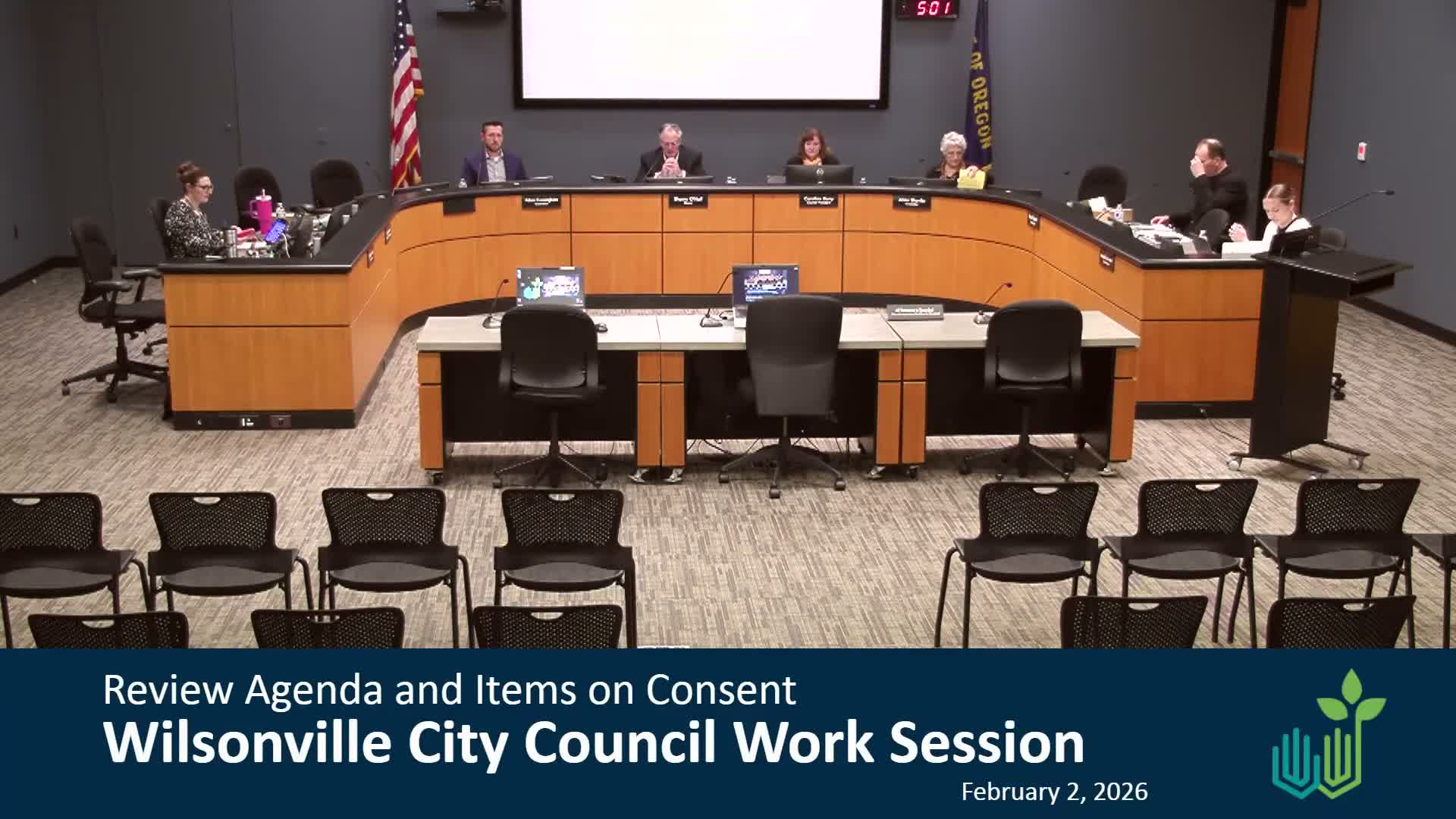
Summary
City staff presented an amendment to the Coffee Creek Urban Renewal Plan to allow the agency to acquire, aggregate and dispose of property for industrial redevelopment; the change was included on the Urban Renewal Agency and City Council consent agendas and adopted. Staff emphasized purchases would be from willing sellers and any transaction would return to council for approval.
Wilsonville officials agreed on Feb. 2 to place and adopt an amendment to the Coffee Creek Urban Renewal Plan that authorizes the Urban Renewal Agency to acquire, aggregate, prepare and dispose of property in the Coffee Creek Urban Renewal Area to support industrial development.
City economic development manager Matt Lorenzen told the council the amendment responds to long-standing barriers to development in the Coffee Creek area — fragmented parcel ownership, zoning that allows contractor establishments, and land-value discrepancies that make it difficult for developers to assemble sites. Lorenzen said the amendment would allow staff to negotiate potential transactions and prepare a land-aggregation strategy that would be disposed through a public RFP process, not by setting sale prices in advance.
Lorenzen said the amendment would let the agency bridge the gap between owners’ asking prices and developers’ ability to pay; because the city already participates in the states regionally significant industrial sites program, an amendment to the existing contract with Business Oregon would make the agency eligible to seek reimbursement for some site-readiness costs. He emphasized the city would only negotiate with willing sellers and that staff would bring any proposed purchase or disposition contract to council for final approval.
Zach Weigel, the city engineer, framed one related funding question: a separate Day Road stormwater improvements project is an existing $12,000,000 project that corrects local flooding and provides capacity for Coffee Creek development; Weigel said removing that project from the stormwater utility analysis would reduce utility-rate pressure by roughly $0.10 per month but could constrain the urban renewal districts ability to support concurrent infrastructure needs.
The amendment language was included on the Urban Renewal Agencys consent agenda (URA resolution 357) and on the City Council consent agenda as resolution 3236. Both bodies adopted the consent agenda items without discussion. Councilor Anne Chevlin, who chaired the task force that reviewed the change, said the groupfelt the amendment was appropriate to recommend to council.
Next steps include finalizing the Business Oregon contract amendment (staff said a draft was expected from the agency) and, when staff identifies potential willing-seller transactions, returning to council with proposed purchase and disposition agreements for approval. Staff reiterated the amendment does not authorize immediate property purchases or the expenditure of funds without subsequent council action.