Get Full Government Meeting Transcripts, Videos, & Alerts Forever!
Get email alerts on the Dpa Investigations And Recommendations topic
No spam. Unsubscribe anytime.
DPA urges technology, staffing and policy upgrades for San Francisco jails; board approves Q1 report
Summary
The Department of Police Accountability presented investigative findings and recommended investments in IT, surveillance, body‑worn cameras, use‑of‑force documentation and pilot health-monitoring tech; the board voted 4–0 to approve its SDOB Q1 report and approved a revised 2025 meeting calendar.
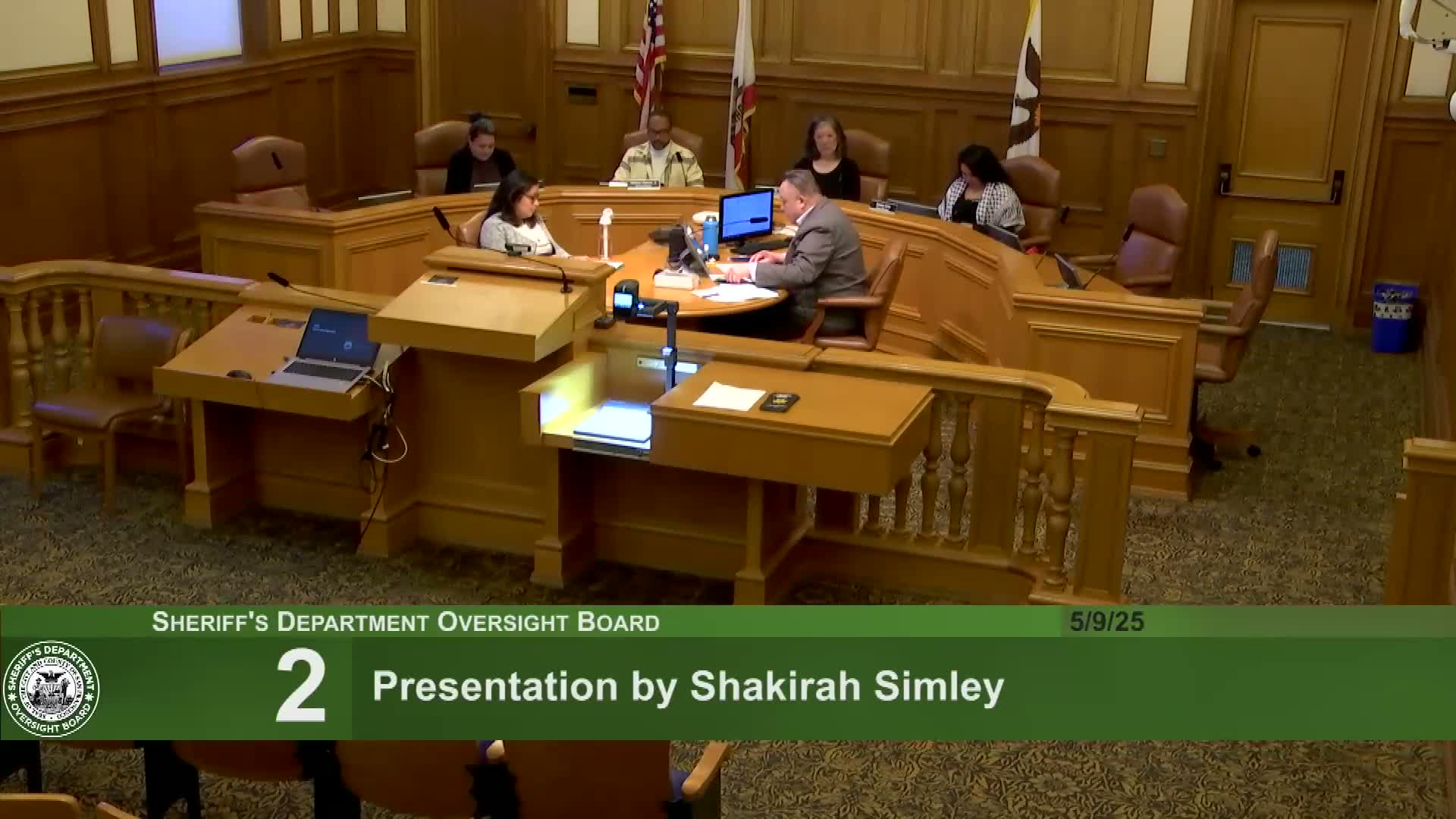
Marshall Kine, representing the Department of Police Accountability, presented the DPA's 2024 investigative findings and a prioritized list of recommendations to the Sheriff's Department Oversight Board on May 9. The presentation framed oversight history, explained DPA jurisdictional agreements with the sheriff's office, and highlighted resource constraints and recent staffing challenges in the inspector-general function.
Kine emphasized several near-term priorities. He called for modernizing antiquated recordkeeping and adopting an integrated, digitized case-management system to eliminate repetitive data entry and speed investigators' access to information. He described a recent surveillance-system failure and urged higher-resolution cameras, more coverage of blind spots, secure cloud storage, audio recording, and longer retention than the current roughly six months so footage is preserved for investigations.
On safety and health monitoring, DPA recommended exploring piloting wearable or room-mounted monitors that sense respiration and heart rate to alert deputies to acute medical crises — a proposal Kine said is already in use in other jurisdictions. For incident documentation, Kine urged implementing a centrally stored digital use-of-force log (BlueTeam) to replace siloed handwritten logs; he said the sheriff's office has initiated BlueTeam implementation and included DPA in the process.
Kine also raised policy and equity concerns about body-worn cameras. He noted not all deputies are outfitted with cameras, making consistent evidence capture difficult, and recommended tightening policy language (changing some "should" requirements to "shall") and reconsidering exceptions that allow cameras to be turned off during safety-cell incidents when people are undressed — an event that generates numerous complaints.
Kine described DPA's authority and limits: the DPA investigates sworn sheriff deputies under letter agreements (including in-custody deaths); it recommends investigative findings but does not impose discipline or issue subpoenas. The Office of the Sheriff's Inspector General (charter authority) will have broader investigatory and subpoena powers once fully staffed.
Board action and votes: The board approved the SDOB 2025 Q1 report on a 4–0 roll-call vote (Carryon, Ortiz, Palmer and President Hsu voted aye). The board also approved a revised 2025 meeting calendar (moving July and November meetings and adjusting January 2026) by the same 4–0 margin. Earlier in the meeting the board had failed to approve the March minutes (3 ayes, 1 no) and instead voted to continue approval to the next meeting; that continuation passed 4–0.
Kine concluded with ongoing projects the DPA is pursuing: cloud migration of case files, implementation of BlueTeam, publication of public data dashboards for sheriff cases, tablet-based complaint integration with the Nucleos vendor, and a comprehensive jail-wide survey developed for tablets with input from the Jail Justice Coalition. He warned that funding will be the main obstacle to many recommendations and that DPA's investigative staff are carrying heavy caseloads.
Quote: "We only recommend investigative findings. We do not recommend discipline," Kine said, underscoring the DPA's advisory role and the limits of its current authorities.
What happens next: Kine said the DPA will continue to work with the sheriff's command staff on IT upgrades, BlueTeam rollout and the tablet survey; the board identified IT funding and recruitment as future agenda items and signaled willingness to advocate for resources.