
Highlands workshop reviews academy code changes, 90% attendance threshold and due-process timing
Get AI-powered insights, summaries, and transcripts
Subscribe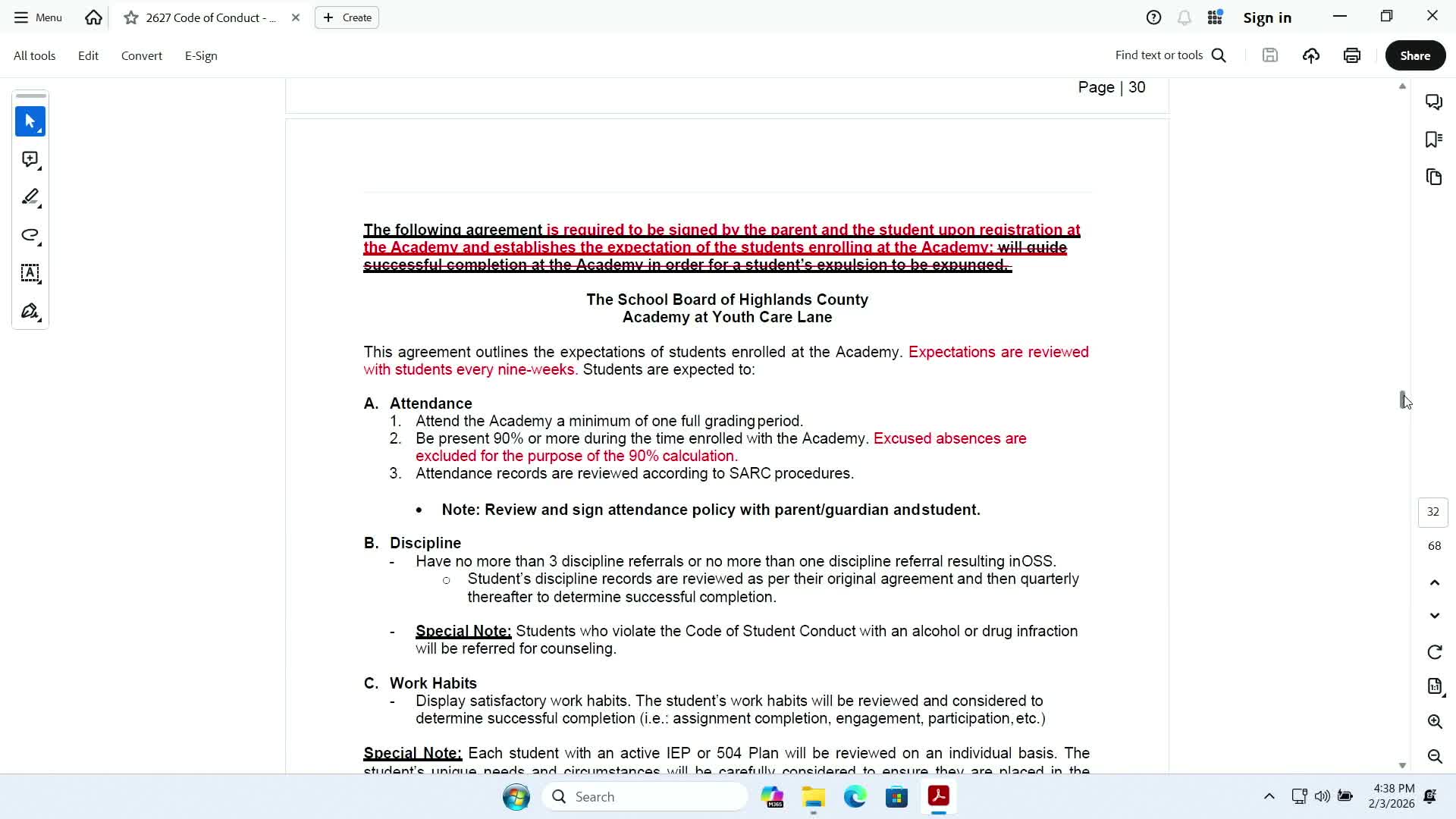
Summary
Administrators reviewed proposed code-of-conduct edits for the Highlands academy that formalize a 90% attendance threshold for early-release eligibility, a nine-week review cycle, procedures to expedite hearings, and new food-and-drink safety language; officials asked for a follow-up workshop to refine wording.
Speaker 1, a staff member, opened a workshop to review minor but consequential edits to the Highlands academy code of conduct, emphasizing a clarified student-parent agreement that would be signed at registration and a policy of reviewing student progress every nine weeks. "This agreement outlines expectations of students enrolled at academy. Expectations are reviewed with the student every 9 weeks," Speaker 1 said.
Why it matters: The changes would govern when students assigned to the academy are eligible for early release back to their home school and how administrators and the board measure attendance, discipline and academic progress. Speaker 6 warned the panel to preserve students' procedural protections: "The students themselves have due process rights. They have a right to an education within the school district," Speaker 6 said, underscoring that timing for hearings can delay decisions and affect a student’s access to school.
Attendance and review cadence: Administrators proposed a 90% attendance threshold during the time a student is enrolled in the academy as a baseline for being "on track" for return. Speaker 6 read the draft language aloud: "It currently says be present 90 or more during the time enrolled with the academy," and participants discussed how the policy treats excused absences such as court appearances. Speaker 1 said the nine-week reviews are intended to spot students who have "dug [themselves] such a hole that [they] will never get out of that hole" without periodic reassessment.
Hearing scheduling and timing: The group discussed practical scheduling issues that can delay formal hearings and thus affect how long a student is out of school. Speaker 4 described efforts to set recurring hearing dates and to use the superintendent’s contacts to reach parents quickly, saying the new format "has really sped it up." Participants noted that if a parent requests a hearing late in the allowable window, the scheduling process can "eat into" the nine-week period, a point that prompted Speaker 6 to reiterate due-process limits on disciplinary timing.
Monitoring and data-sharing: Speaker 8 described a shared tracking spreadsheet maintained by Ms. Gooch that logs attendance, grades and discipline and color-codes students as "on track" or not. That sheet, administrators said, helps prepare re-enrollment quickly when families return students to the program.
Food and drink safety: Speaker 1 proposed stricter food-and-drink language to reduce safety risks and ambiguity: students may only consume items provided by a parent/guardian, purchased from school, or from an approved vendor; students who accept items from peers "do so at their own risk" and could be held responsible for prohibited substances found in those items.
Next steps: Several participants asked for a dedicated follow-up workshop to craft a clearer vision and tighter wording for academy procedures. "I really think we need to workshop out, you know, just the academy and get a true... vision, mission," Speaker 7 said. Speaker 1 agreed to further discussion and then adjourned the workshop.