Get Full Government Meeting Transcripts, Videos, & Alerts Forever!
Get email alerts on the Connected Vehicle Services topic
No spam. Unsubscribe anytime.
Judiciary committee recommends "ought not to pass" on bill letting survivors disable abusers' connected-vehicle services
Summary
The committee voted to recommend 'ought not to pass' on LD 2120, a bill that would allow survivors to request manufacturers disable an abuser's access to connected-vehicle services. Members cited timing, technical challenges and concerns about operational burdens on manufacturers and law enforcement.
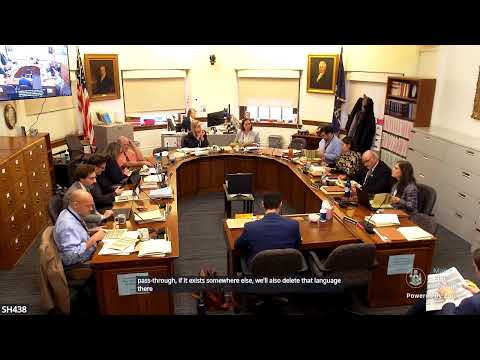
The Joint Standing Committee on the Judiciary on Thursday recommended "ought not to pass" for LD 2120, a bill that would let a survivor of certain crimes ask a vehicle manufacturer to terminate or disable an abuser’s access to connected‑vehicle services.
OPLA analyst Janet Stocco outlined the bill in detail, saying a survivor would submit a vehicle identification number, the abuser's name and documentation demonstrating sole ownership or exclusive legal possession or a court order. "A survivor is defined as an adult against whom one of the following acts either has been committed or allegedly committed," Stocco said in committee, adding the bill specifically provides that a criminal conviction is not required for survivor status.
Advocates urged a survivor‑focused approach. Andrea Mancuso of the Maine Coalition to End Domestic Violence recommended combining California’s and New York’s approaches: allow someone with sole ownership to request termination, or allow survivors who can "attest" to victimization plus some proof of legal possession to seek disconnection. Mancuso said the goal is to make the remedy accessible without creating new barriers for survivors.
Automakers’ representatives warned of operational and liability questions. Elizabeth Frasier, speaking for auto manufacturers, said manufacturers and dealers face practical difficulties when a vehicle is co‑owned or used commercially and said statutory protections help mitigate litigation risk: "...the litigation shield is in there." Committee members also raised whether shutting off telematics could impede law enforcement from locating a survivor in emergencies; Stocco noted current law allows law enforcement to access phone location in some emergency circumstances but that it is unclear whether telematics would be treated the same.
Representative Adam Lee moved the committee report recommending 'ought not to pass.' After discussion about the bill's timing and the relative scarcity of fully connected vehicles in Maine today, the motion carried among members present. Clerk Pannett recorded 10 yes, 0 no and 4 absent.
What’s next: The committee closed the work session on LD 2120. Proponents and opponents said they would continue working on language that better protects survivors while addressing manufacturers’ operational concerns.