Florida House approves constitutional amendment to enshrine religious expression protections in public schools

Florida House of Representatives · February 4, 2026

Get AI-powered insights, summaries, and transcripts

Subscribe
AI-Generated Content: All content on this page was generated by AI to highlight key points from the meeting. For complete details and context, we recommend watching the full video. so we can fix them.

Summary

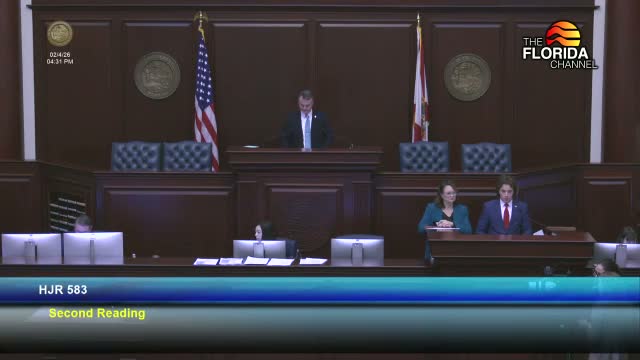
The Florida House on Feb. 4 approved House Joint Resolution 583 to place a proposed constitutional amendment before voters that would codify existing statutory protections for student and school‑personnel religious expression; the vote was 93‑17 after extended debate over scope, definitions and potential legal consequences.

The Florida House approved House Joint Resolution 583 on Feb. 4, moving a proposed constitutional amendment to the ballot that would codify protections for student and school‑personnel religious expression in public schools.

Sponsor Representative Tremont said the measure “takes existing state statutes that protect religious liberty and expression in schools, and let[s] the voters decide” whether to enshrine them in the state constitution. He argued codification would make the protections harder to reverse.

Opponents raised constitutional and practical concerns. Representative Eskamani warned in debate that placing statutory language into the constitution “goes way beyond codification” and could erode the separation of church and state. Representative Gottlieb and other critics cited federal case law — including Engel v. Vitale, Lee v. Weisman and Santa Fe Independent School District v. Doe — to argue that some forms of school‑sponsored prayer have been found unconstitutional and that the resolution lacks implementing detail.

Members debated specific language in the proposal, including whether the terms “religious viewpoint” or “religious expression” are statutorily defined and whether protections would extend to hairstyles or to speech that some might find offensive. Representative Jacques, a sponsor who answered numerous procedural questions in debate, repeatedly said the resolution mirrors existing statutory language and does not add new categories of protected conduct.

Supporters described the measure as restoring protections for religious speech in school events and preventing what they called the exclusion of faith in public life. Representative Black said the resolution “adds nothing to existing statutes” but “places an exclamation point at the end.”

After structured debate and a motion to waive rules for third reading, the clerk announced a recorded vote of 93 ayes and 17 nays; the House showed the resolution passed. The next step is placement on the ballot, where voters would decide whether to amend the Florida Constitution.

Legal analysts and several members noted that the measure’s constitutional placement could invite litigation to define its boundaries if adopted; the resolution’s text refers to current statutory language rather than creating new statutory mechanisms. The House record shows repeated questions about definitions and enforcement that sponsors said would remain governed by existing statutes if voters approve the amendment.